
 Español




Stretch Wrap Roll Manufacturers
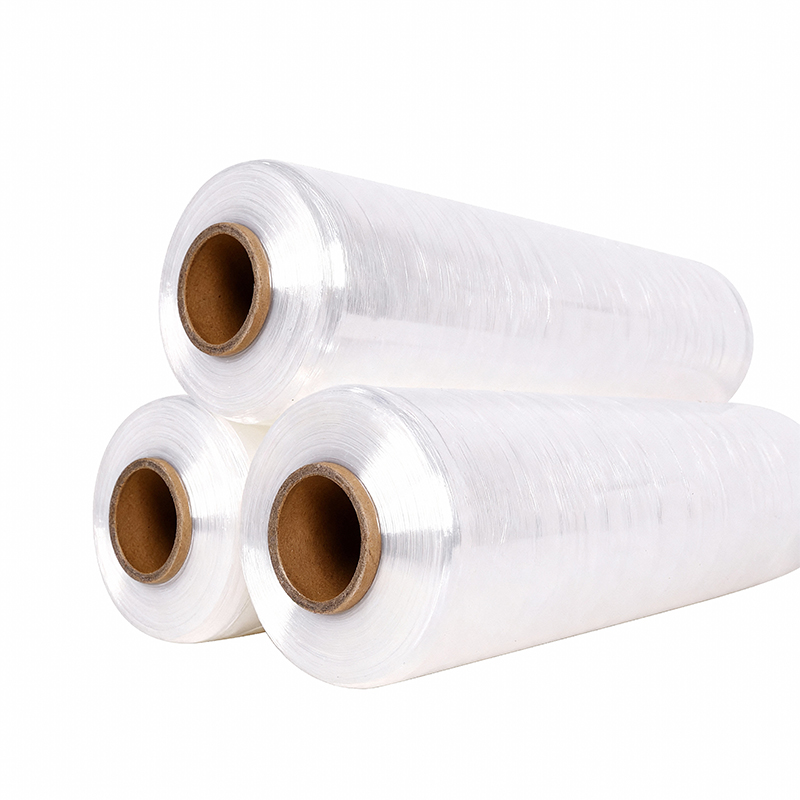
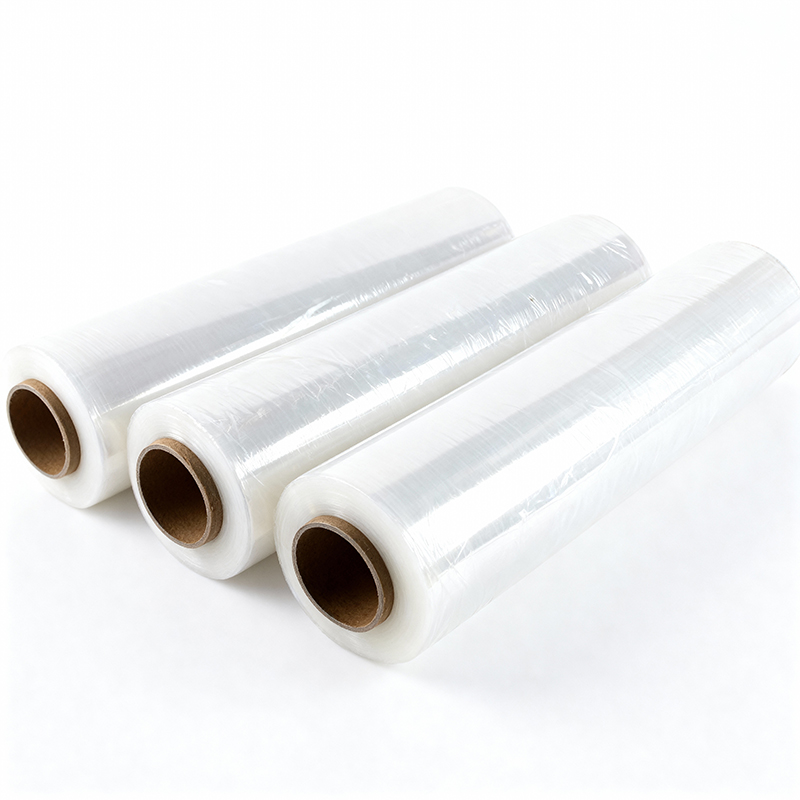
Our Stretch Film is the essential solution for pallet unitization and stabilization. Made from premium LLDPE, it delivers superior cling, puncture resistance, and consistent force-to-load to secure irregular or heavy stacks. Available in various gauges, widths, and cling levels, it is designed to improve handling safety, reduce product damage, and optimize warehouse and shipping efficiency for a wide range of industries.

Shanghai We Pack Co., Ltd.
Founded in 2019, Shanghai We Pack Co., Ltd. is a subsidiary of Shanghai Mengmao Packaging Technology Co., Ltd. is an integrated packaging company specializing in cargo securing, transport protection, and loading optimization solutions. Stretch Wrap Roll Manufacturers and Custom Stretch Film Suppliers in China.
With a 10,000 m² facility, 120 employees, dedicated R&D, testing, and quality control teams, and 9 production lines, wepack offers end-to-end capabilities from design and testing to mass production.
Driven by an engineering approach, wepack strictly controls every key stage—from raw materials to finished products—to ensure reliable performance in real transport conditions.
We Pack’s core products include paper edge protectors, container dunnage air bags, and lashing systems. Wholesale Pallet Wrapping Film. Through joint ventures and industrial collaboration, our portfolio has expanded to paper pallets, plastic pallets, slip sheets, carton sealing tapes, bubble wrap, stretch film, strapping, and packaging equipment.We provide one-stop packaging and transport protection solutions tailored to different cargo types and logistics scenarios.
All We Pack products comply with AAR, SGS, TUV, and other international transport test standards. We support OEM / ODM customization, offering product design and free packaging solution planning based on cargo type, loading method, load requirements, budget, and printing needs—helping customers reduce total logistics costs by 15–30% while ensuring transport safety.
Certificate
Certificate of Honor


WHAT WE
HAPPENED
Checkout Our Current
News
Industry knowledge
Shanghai We Pack Co., Ltd. is a China-based packaging manufacturer working in cargo securing, transport protection and loading optimization. Our Stretch Film manufacturer range covers the two working methods that dominate pallet unitization: high-tensile LLDPE film built for automated wrapping equipment, and hand-grade film for manual and semi-manual wrapping. Both sit inside a one-stop portfolio that also includes dunnage bags, paper corner protectors, slip sheets, strapping and packaging tools, so a load can be edge-protected, void-filled and stabilized from a single technical contact.
Founded in 2019 as a subsidiary of Shanghai Dreammao Packaging Technology Co., Ltd., we run a 10,000 m² facility with 120 employees, dedicated R&D, testing and quality control teams, and 9 production lines. Stretch film joins our core paper edge protectors, container dunnage air bags and lashing systems through joint ventures and industrial collaboration, which is how we hold one specification standard across an entire load-securing package rather than selling film as an isolated consumable.
The Stretch Film Range We Supply
Two product families, each engineered around a different wrapping method and a different balance of force-to-load, unwind behaviour and cost per pallet.
- Machine Use Stretch Film — high-tensile LLDPE film for high-speed automated wrapping equipment, optimized for consistent roll conformation and precise tension control so feeding stays uninterrupted at production-line speeds.
- Handling Use Stretch Film Factory — hand-grade film for general pallet wrap, balancing sufficient holding force with easy unwind and manageable roll weight for in-plant transfer, short-distance trucking and retail restocking.
Both families are supplied in the widths, gauges, roll lengths and core sizes that match the customer's wrapper or dispenser, and both can be printed or colour-coded for load identification.
Matching Film Grade to the Wrapping Method
| Film family | Wrapping method | Typical load profile | Configuration focus |
|---|---|---|---|
| Machine Use Stretch Film | Turntable, rotary-arm and ring wrappers; inline end-of-line systems | Uniform, high-volume pallet loads; DC and distribution centre output | Roll conformation, pre-stretch ratio, tension consistency, core ID, roll diameter |
| Handling Use Stretch Film | Hand dispensers, manual wrap, low-speed semi-automatic wrapping | Mixed and irregular loads, in-plant transfer, short-haul trucking, restocking | Unwind force, cling balance, roll weight, tear resistance at the film tail |
| Printed or colour film | Either method | Loads needing identification, tamper evidence or customer branding | Print repeat, ink adhesion, opacity, colour match |
Critical Specifications We Build Around
Stretch film performance is a system result, not a single number. These are the variables we confirm before a roll is specified.
- Thickness / gauge — expressed in microns; determines metres per roll, wrap count per pallet and cost per load.
- Width — matched to the wrapper carriage or hand dispenser, typically from narrow hand rolls to wide machine rolls.
- Roll length and roll weight — set by the number of pallets per roll change and by manual handling limits.
- Core inner diameter — must match the chuck or dispenser mandrel; a mismatch causes slip, wobble and uneven tension.
- Elongation and tensile strength — the basis of pre-stretch behaviour and holding force after relaxation.
- Puncture and tear resistance — governs survival against sharp corners, strapping edges and pallet nails.
- Cling — one-sided or two-sided, tuned so layers bond without blocking on the roll.
- Opacity and colour — transparent, black or coloured film for concealment, UV screening or load coding.
Resin and Film Structure: What Drives Performance
Our stretch film is built on linear low-density polyethylene (LLDPE), with metallocene and blended resin grades selected according to the required balance of stretch, cling and tear resistance. Skin layers carry the cling and slip behaviour; the core carries the load-bearing strength. Cast and blown structures behave differently on the same wrapper, so the structure is chosen against the wrapping method rather than against a generic grade name.
Higher pre-stretch ratios reduce film consumed per pallet but narrow the tolerance window on the wrapper. We set the recommended pre-stretch range together with the film specification, so the load is held at the intended containment force instead of relying on operator feel.
Load, Cargo and Environment Considerations
Film that performs on a test pallet can fail on a real one. These are the load and route conditions we work from.
- Load weight and stability — heavy, rigid stacks and light, tall or top-heavy stacks need different containment force and wrap patterns.
- Sharp edges and corners — cartons, metal parts and timber cut film from the inside; Paper Corner Protector profiles are often specified alongside the film to spread the wrap load.
- Irregular shapes — bagged goods, drums and mixed pallets need higher puncture resistance and more overlap.
- Pallet or palletless handling — slip sheet loads sit lower and wrap differently from timber pallets.
- Climate and storage — cold-store wrapping, condensation, dust and outdoor staging all change cling and unwind behaviour.
- Transport mode — ocean freight, rail and long-haul road each impose different vibration and humidity exposure.
Wrapping Line Integration and Consumable Compatibility
Machine film is only as good as its fit with the wrapper. We match roll diameter, core ID, roll weight and film width to the carriage and chuck of the installed equipment, and we align the recommended pre-stretch with turntable or arm speed so the film is neither starved nor over-tensioned at the film tail.
Because the same engineering team handles strapping, tools and protective materials, film can be specified together with the rest of the line consumables — strapping, dispensers, corner protection and void fill — so the pallet leaves the line with one consistent securing method rather than three competing ones.
Quality Assurance and Acceptance Testing
Products across our range are tested against AAR, SGS, TUV and other international transport test standards, supported by ISO 9001 management systems and in-house laboratory and quality control functions. Stretch film is checked at the roll level, not only at the batch level.
- Thickness and width verification across the roll, including edge trim.
- Tensile strength and elongation testing to confirm the pre-stretch window.
- Puncture and tear resistance checks against the intended load type.
- Cling and unwind force assessment on the customer's wrapper where a sample line trial is possible.
- Roll conformation and winding consistency to prevent telescoping and feed jams.
- Third-party test reports from SGS or TUV available for project documentation.
Customization, Printing and OEM/ODM Support
We support OEM and ODM customization across size, load capacity, material grade and printing. Film can be produced to a customer's own width, gauge, roll length and core specification, with printed branding or colour coding applied to the film surface. Our engineering team develops against drawings or physical samples, and free packaging solution planning is provided based on cargo type, loading method, load requirements, budget and printing needs.
Standard minimum order quantity starts at 100 pieces, which keeps trial orders practical while the 9 production lines and company-wide annual output of over 20,000 tons support repeat and large-volume programmes. Integrated manufacturing and multi-product sourcing are what allow us to reduce total logistics costs by 15–30% without trading away transport safety.
Information We Use to Configure Your Solution
A usable film specification comes out of the working point, the load and the route. This is the input set our proposal is built on.
| Project input | Why it drives the specification | What we return |
|---|---|---|
| Pallet footprint, load height and load weight | Sets required containment force and wrap count | Recommended gauge, width and wrap pattern |
| Wrapping method and equipment model | Determines core ID, roll diameter and pre-stretch window | Machine-grade or hand-grade film selection |
| Pallets per shift and rolls per change | Balances roll length against handling weight | Roll length, roll weight and packing format |
| Cargo type, edges and surface condition | Drives puncture and tear requirements | Resin and structure recommendation, plus corner protection where needed |
| Climate, storage and transport mode | Affects cling, unwind and UV exposure | Additive and colour options |
| Printing, branding and compliance documents | Sets artwork, repeat and test evidence | Print proof, batch records and third-party test reports |
Packaging, Documentation and Delivery Scope
Film ships on pallets or in cartons according to roll size and handling method, with roll count, gauge, width and batch marked on the outer packaging. Export documentation, test reports and material data sheets are issued with the shipment so incoming inspection can be completed against the agreed specification. Our operations centre sits in Fengxian District, Shanghai, roughly 25–35 km from Shanghai Port and close to Pudong International Airport, which keeps export lead times short for repeat programmes.
Frequently Asked Questions
What is the difference between machine-use and handling-use stretch film?
Machine-use film is formulated for high-speed automated wrapping equipment: it holds tension consistently, unwinds without surging and keeps its roll conformation through long production runs. Handling-use film is formulated for manual and semi-manual wrapping, where easy unwind, moderate holding force and a manageable roll weight matter more than maximum pre-stretch. The two are not interchangeable on the same wrapper without re-setting the pre-stretch and tension parameters.
Which thickness should we specify for our pallet loads?
Thickness is chosen from load weight, load stability, wrap count and the required containment force, not from a default value. A heavier gauge reduces wrap count but raises cost per pallet and roll weight; a lighter gauge with higher pre-stretch can achieve the same containment on a well-formed load. We calculate the working point from your pallet footprint, load height and transport mode, then confirm it with a sample trial.
Can you supply film that fits our existing wrapping machine?
Yes. We match core inner diameter, roll diameter, roll width and roll weight to the carriage and chuck of the installed wrapper, and we align the recommended pre-stretch range with the machine's turntable or arm speed. Where a line trial is possible, we assess unwind and cling behaviour on the actual equipment before the specification is frozen.
Do you offer printed or coloured stretch film?
Printed and coloured film is available as part of our OEM and ODM service, covering width, gauge, roll length, material grade and printing. Printed film is typically used for load identification, tamper evidence or customer branding, and colour film for load coding or light screening. Artwork is confirmed against a print proof before production.
What test evidence comes with a stretch film order?
Film is checked for thickness, width, tensile strength, elongation, puncture and tear resistance, cling and roll conformation, with batch records retained for traceability. Products across our range are tested against AAR, SGS, TUV and other international transport test standards under ISO 9001 management systems, and third-party reports can be issued with the shipment for project documentation.
Can stretch film be combined with other securing products in one order?
Yes, and that is usually the better configuration. Stretch film is frequently specified together with paper corner protectors, slip sheets, dunnage bags and strapping so the whole load-securing method is consistent. Because these products come from the same manufacturing and engineering base, one specification discussion covers the pallet from edge protection through to final wrap.

PRODUCT
CONTACT INFO
-
 +86-137 7421 9489
-
 +86-021-67558008
-
 [email protected]
-
 No.769 ,23# building, Fengliang Road,Fengcheng town,Fengxian District,Shanghai,China
MOBILE QR CODE

