
 Español




Anti-slip Paper Manufacturers
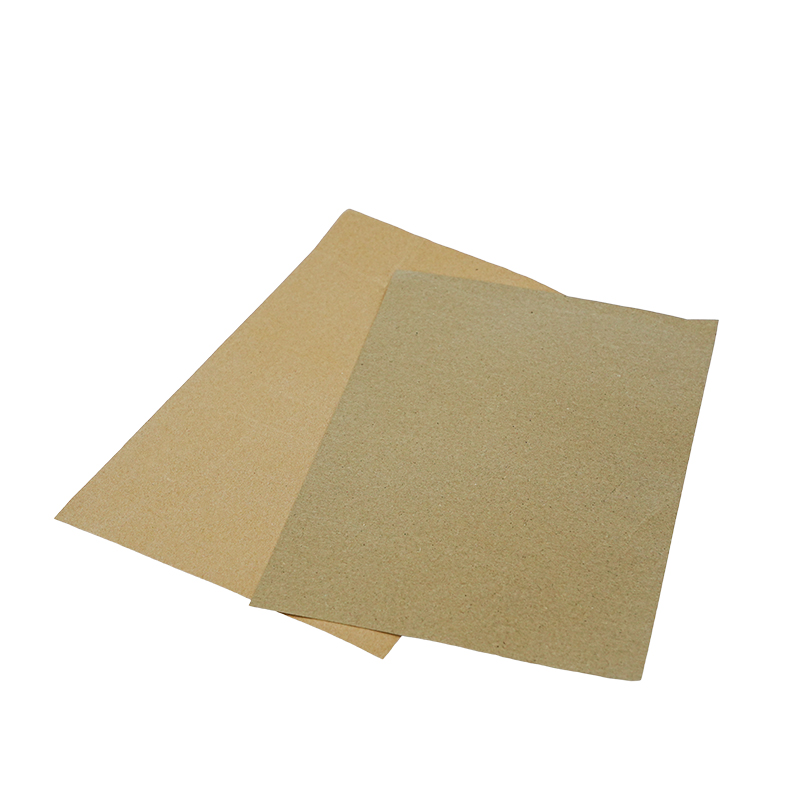
This specialty paper features a high-friction coating applied to one or both sides. Placed between layers of boxes or products, it effectively prevents load shifting and slippage during transportation, enhancing cargo safety.
Our Anti-slip Paper provides a reliable and economical method to secure cargo without adhesives or complex tools. The micro-particle coating creates a high friction surface that locks cartons and packages in place, preventing movement caused by vibration or tilting. It is easy to cut and apply, reduces damage rates, and is an environmentally friendly alternative to plastic films or bulky dunnage.

Shanghai We Pack Co., Ltd.
Founded in 2019, Shanghai We Pack Co., Ltd. is a subsidiary of Shanghai Mengmao Packaging Technology Co., Ltd. is an integrated packaging company specializing in cargo securing, transport protection, and loading optimization solutions. Anti-slip Paper Manufacturers and Custom Anti Slip Pallet Paper Factory in China.
With a 10,000 m² facility, 120 employees, dedicated R&D, testing, and quality control teams, and 9 production lines, wepack offers end-to-end capabilities from design and testing to mass production.
Driven by an engineering approach, wepack strictly controls every key stage—from raw materials to finished products—to ensure reliable performance in real transport conditions.
We Pack’s core products include paper edge protectors, container dunnage air bags, and lashing systems. Custom Anti Slip Paper Sheets. Through joint ventures and industrial collaboration, our portfolio has expanded to paper pallets, plastic pallets, slip sheets, carton sealing tapes, bubble wrap, stretch film, strapping, and packaging equipment.We provide one-stop packaging and transport protection solutions tailored to different cargo types and logistics scenarios.
All We Pack products comply with AAR, SGS, TUV, and other international transport test standards. We support OEM / ODM customization, offering product design and free packaging solution planning based on cargo type, loading method, load requirements, budget, and printing needs—helping customers reduce total logistics costs by 15–30% while ensuring transport safety.
Certificate
Certificate of Honor


WHAT WE
HAPPENED
Checkout Our Current
News
Industry knowledge
As an Anti-slip Paper manufacturer in China, Shanghai We Pack Co., Ltd. produces high-friction kraft paper for palletized and containerized cargo at our Shanghai facility. The material carries a micro-particle coating on one or both faces; laid between cartons, bags or stacked units, it raises interlayer friction so a load resists shifting under vibration, braking and container tilt. We supply rolls and cut sheets in natural kraft or white, and configure grammage, width, coating and packing around the cargo and the loading method.
Product Range and Positioning
Anti-slip paper works between the load and the surface beneath it, or between two layers of cargo. It is a consumable rather than a structure: its function is to make a stack of separate units behave as one mass. No adhesive, tooling or curing time is involved, so it is applied during loading and removed together with the packaging.
- Base material: kraft paper, degradable and recyclable.
- Coating: high-friction micro-particle layer, single-sided or double-sided.
- Friction coefficient: static ≥ 0.6 in dry condition.
- Grammage: 80, 100, 120 and 150 gsm as standard, with custom weights for higher load-bearing requirements.
- Roll width: 500 mm, 1000 mm, 1200 mm and 1500 mm, with custom slitting.
- Roll length: 100 m and 200 m, with custom lengths available.
- Colour: natural kraft or white.
- Tensile strength: longitudinal and transverse strength higher than standard kraft paper.
- Certification: FSC-certified grades available.
Where the Material Fits in the Load
Typical placements are the container floor or trailer bed before loading, the pallet or shelf surface under the first layer, and the interfaces between carton layers, bag layers or stacked units. On a container floor, a layer of anti-slip paper reduces the tendency of the whole block to slide during cornering and rail shunting; between cartons it stops individual cases from creeping out of alignment as the stack settles.
- Palletized cartons: between each carton layer and under the bottom layer.
- Bagged cargo: between bag layers, where smooth woven surfaces otherwise slide easily.
- Container and trailer floors: full or partial coverage before the first unit is placed.
- Racking and shelving: cut sheets laid on shelf surfaces to hold cartons and totes in position.
- Stacked panels, boards and profiles: interleaved to prevent layer-to-layer movement.
Because the paper is soft and non-abrasive, it can sit directly against printed cartons, film-wrapped packs and finished surfaces without marking them.
Matching the Grade to Cargo and Loading Method
Grammage and coating are selected from the weight of the units, the friction between the surfaces in contact and the transport mode. The table below shows how we normally map a loading scenario to a specification.
| Loading scenario | Typical grammage | Placement | Products specified with it |
|---|---|---|---|
| Palletized cartons, medium weight | 100–120 gsm | Between carton layers and under the bottom layer | Stretch film, packing strap |
| Heavy cartons, dense units, machinery parts | 150 gsm or custom | Between every layer, doubled at the base | PET strap, paper corner protector |
| Bagged resin, fertilizer, cement | 120–150 gsm | Between bag layers and on the container floor | Dunnage bag |
| Container floor or trailer bed liner | 150 gsm and above | Full or partial floor coverage before loading | Slip sheet, dunnage bag |
| Racking and shelf surfaces | 80–100 gsm | Cut sheets on the shelf face | Paper slip sheet |
| Printed or film-wrapped consumer packs | 80–120 gsm, white | Between layers, coating facing the pack | Stretch film |
Critical Specifications We Confirm Before Production
Every order is built from a confirmed specification sheet rather than a catalogue number, because two loads of the same weight can need different paper once the contact surfaces change.
- Grammage and coating side — single or double.
- Roll width, roll length, or cut-sheet dimensions.
- Static friction coefficient target and the surfaces in contact.
- Tensile strength in machine and cross direction.
- Colour and surface finish.
- Printing: logo, handling marks or loading instructions.
- Roll format and packing method matched to the dispensing routine on site.
Manufacturing, Capacity and Quality Control
Shanghai We Pack Co., Ltd. was founded in 2019 as a subsidiary of Shanghai Dreammao Packaging Technology Co., Ltd., an integrated packaging group with 18 years in cargo securing, transport protection and loading optimization. Production runs from a 10,000 m² facility with 120 employees, dedicated R&D, testing and quality control teams, and 9 production lines.
Control begins at raw material intake and follows the paper through coating, slitting and packing. In-house laboratory testing is combined with third-party verification through SGS and TUV, and the management system holds ISO 9001 certification. The wider range complies with AAR, SGS, TUV and other international transport test standards, with EN 1492-1 covering the lashing side of the portfolio.
Customization and OEM / ODM Support
OEM and ODM work covers grammage, coating, roll and sheet dimensions, colour and printing. We develop from drawings or samples, and our engineering team plans the packaging solution around cargo type, loading method, load requirements, budget and printing needs. Minimum order quantity is 100 pieces, which keeps trial runs practical while the 9-line setup supports repeat volume and frequent specification changes.
Integration With the Wider Cargo Securing System
Anti-slip paper is rarely specified on its own. It usually travels with the palletless handling layer, the void filler and the unitizing film, and we quote them as one loading concept.
- Slip Sheet — paper and plastic slip sheets replace wooden pallets and are pulled with a push-pull attachment; anti-slip paper keeps the load stable on top of the sheet.
- Dunnage Bag — air bags fill the gap between cargo blocks and container walls, while anti-slip paper controls movement inside each block.
- Stretch Film — machine and hand grades unitize pallets; where film is not wanted, anti-slip paper becomes the interlayer alternative.
Information We Use to Configure Your Solution
A workable configuration comes from the loading pattern, not from a single number. These are the inputs our engineers work from when preparing a proposal and a quotation.
- Cargo type, unit weight and package dimensions.
- Stack height and number of layers.
- Pallet, slip sheet or direct floor loading.
- Transport mode and route conditions.
- Surfaces in contact: corrugated board, woven PP, film, steel, wood or coated panels.
- The friction problem being solved, or the target friction performance.
- Roll or sheet format, and the width that matches the loading pattern.
- Printing and branding requirements.
- Target annual volume and delivery schedule.
- Destination market and the documentation required there.
Packaging, Documentation and Delivery
Rolls are wound and packed for export handling, with outer protection suited to sea freight; cut sheets are bundled and palletized. Documentation follows the order: material and specification data, test reports from our laboratory or third-party bodies, FSC documentation where applicable, and safety data where the destination requires it. The factory sits approximately 25 km from Shanghai Port and 30 km from Pudong International Airport, and we work on EXW, FOB, CIF and DDP terms.
Frequently Asked Questions
Which grammage suits cartons stacked on a pallet?
For medium-weight cartons, 100–120 gsm covers most pallet builds. Once unit weights rise or the stack is tall, we move to 150 gsm or a custom weight and double the layer at the pallet base, where the shear load is highest.
Can anti-slip paper replace stretch film?
Between layers, yes. The coated paper delivers a static friction coefficient of at least 0.6 in dry condition, which is enough to hold carton layers that would otherwise need film wrap for stability. Many loads still use film or strap for unitizing the outside of the pallet, with anti-slip paper doing the work inside the stack.
Do you supply sheets as well as rolls?
Both. Standard rolls are 500 mm, 1000 mm, 1200 mm and 1500 mm wide in 100 m or 200 m lengths, and we cut sheets to the dimensions of a shelf, pallet or container floor. Custom slitting and custom lengths are part of normal production.
What friction performance does the paper achieve?
The high-friction micro-particle coating gives a static friction coefficient of 0.6 or above in the dry state. Because real performance depends on the two surfaces in contact, we confirm the pairing — corrugated on corrugated, woven bag on floor plate, film on paper — before fixing the specification.
What is the minimum order quantity, and can you print our logo?
Minimum order quantity is 100 pieces, which allows a trial order before volume commitments. Printing of logos, handling marks and loading instructions is supported under our OEM and ODM service, alongside custom grammage, colour and roll dimensions.
Which test reports and certifications come with the material?
Orders can be supported with in-house laboratory test data and third-party reports from SGS and TUV, together with ISO 9001 system certification. FSC-certified grades are available on request, and the group's products comply with AAR, SGS, TUV and other international transport test standards.

PRODUCT
CONTACT INFO
-
 +86-137 7421 9489
-
 +86-021-67558008
-
 [email protected]
-
 No.769 ,23# building, Fengliang Road,Fengcheng town,Fengxian District,Shanghai,China
MOBILE QR CODE

