
 Español




Composite Strap Manufacturers
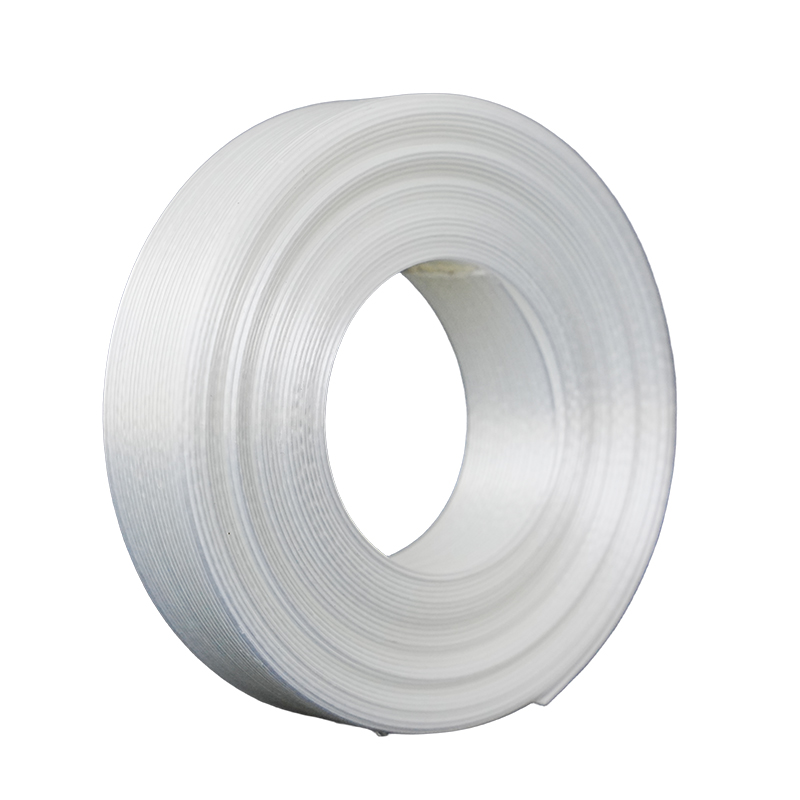
Engineered for extreme tensile strength and superior resistance to abrasion and UV degradation, Composite Straps are ideal for securing heavy pallets, steel coils, construction materials, and industrial machinery. They offer minimal stretch and high load-bearing capacity for demanding environments

Shanghai We Pack Co., Ltd.
Founded in 2019, Shanghai We Pack Co., Ltd. is a subsidiary of Shanghai Mengmao Packaging Technology Co., Ltd. is an integrated packaging company specializing in cargo securing, transport protection, and loading optimization solutions. Composite Strap Manufacturers and Composite Strap Factory in China.
With a 10,000 m² facility, 120 employees, dedicated R&D, testing, and quality control teams, and 9 production lines, wepack offers end-to-end capabilities from design and testing to mass production.
Driven by an engineering approach, wepack strictly controls every key stage—from raw materials to finished products—to ensure reliable performance in real transport conditions.
We Pack’s core products include paper edge protectors, container dunnage air bags, and lashing systems. Custom Composite Strap. Through joint ventures and industrial collaboration, our portfolio has expanded to paper pallets, plastic pallets, slip sheets, carton sealing tapes, bubble wrap, stretch film, strapping, and packaging equipment.We provide one-stop packaging and transport protection solutions tailored to different cargo types and logistics scenarios.
All We Pack products comply with AAR, SGS, TUV, and other international transport test standards. We support OEM / ODM customization, offering product design and free packaging solution planning based on cargo type, loading method, load requirements, budget, and printing needs—helping customers reduce total logistics costs by 15–30% while ensuring transport safety.
Certificate
Certificate of Honor


WHAT WE
HAPPENED
Checkout Our Current
News
Industry knowledge
Shanghai We Pack Co., Ltd. is a Composite Strap manufacturer in China, producing corded polyester strapping for loads that cannot afford to shift in transit. From a 10,000 m² facility in Fengxian District, Shanghai, with nine production lines and dedicated R&D, testing and quality control teams, we build composite strap for steel coils, heavy pallets, construction materials, timber bundles, pipe stacks and industrial machinery. The product sits inside our wider Packing Strap range alongside PP strap, PET strap, polyester woven strap and ratchet tie downs, so strap, buckles and tensioning tools arrive as one matched securing system.
Composite strap is a parallel-lay core of high-tenacity polyester filament bonded into a polymer coating. The construction delivers the tensile strength of steel banding with the handling safety of a textile: it does not spring back when cut, it will not rust or dent the load, and it absorbs shock that would snap a rigid strap.
Composite Strap Range and Positioning
We build composite strap around the load rather than around a single stock size. The range covers corded polyester composite strapping in the widths and thicknesses used for pallet unitizing, bundle strapping and heavy lashing, with UV-stabilized coatings for outdoor storage and multi-week ocean transit. Colour, surface finish and print are specified per project.
- Corded composite strap — parallel polyester filament core in a polymer coating, low elongation under sustained tension.
- UV-stabilized grade — for coils, timber and machinery stored or moved in direct sunlight.
- Printed strap — customer logo, load rating, handling instructions, batch or part number.
- Roll formats — continuous rolls and cut lengths, with core diameters matched to manual dispensers or machine feed.
- Matched accessories — fiber buckles, wire buckles and tensioning tools supplied with the strap as one system.
Application Fit by Cargo and Loading Method
The table below shows how composite strap is typically configured across the cargo types we supply. Final dimensions and break strength are fixed against the calculated securing force for each project.
| Cargo / load type | Securing duty | Typical strap configuration | Joint and tooling |
|---|---|---|---|
| Steel coils, wire coils | Coil eye and radial lashing | Heavy corded composite, low elongation, abrasion-resistant coating | Wire or fiber buckle, pneumatic tensioner |
| Heavy pallets, bagged goods | Pallet unitizing and top-over lashing | Medium-width composite strap, printed load rating | Fiber buckle, manual fiber strap tensioner |
| Bricks, blocks, tiles | Bundle strapping | Composite strap with edge-cut resistant coating | Fiber buckle, battery or pneumatic tool |
| Timber, logs, pipe stacks | Bundle and stack restraint | Wide, high-break composite strap | Wire buckle, pneumatic tensioner |
| Industrial machinery, skids | Frame and skid lashing | Heavy composite strap, UV-stabilized | Heavy-duty buckle, tensioner or ratchet |
| Export cartons, mixed loads | Light unitizing | Narrow composite strap, machine-fed rolls | Fiber buckle, manual or machine tensioning |
Construction, Elongation and Load Behaviour
Composite strap carries load through a dense parallel yarn core rather than a woven structure. Because the filaments run straight, the strap reaches high break strength at low elongation — a few percent at working load, against the double-digit stretch of PP strap. On a coil or a stack of blocks that difference decides whether the strap still holds tension after a week of road shock and container movement, or relaxes and lets the load settle.
- Break strength — specified in kN, kg or lb and matched to the calculated securing force with an agreed safety factor.
- Elongation at break — low-stretch behaviour keeps tension on the load and reduces re-tensioning at the destination.
- Joint efficiency — the buckle or seal sets the working strength of the system, not the strap alone.
- Coating and edge protection — the polymer coating resists abrasion against steel edges, concrete and rough timber.
- UV and moisture — stabilized coatings for outdoor storage, port dwell time and multi-week sea transit.
Critical Specifications We Confirm Before Production
Every order is released against a signed specification sheet. These are the parameters we lock down before the first roll runs:
- Width, thickness and linear density
- Break strength and elongation at break
- Coating type, colour and surface finish
- UV stabilization level for the intended exposure
- Print content, print position and ink durability
- Roll length, roll weight and core inner diameter
- Buckle type and quantity per roll or carton
- Pallet or carton packing, label format and batch coding
Buckles, Tensioners and Line Integration
A composite strap system is only as strong as its joint. We supply fiber buckles and wire buckles sized to the strap width, and we match them to the tensioning method the loading crew or packing line already uses — manual fiber strap tensioners for low volumes, pneumatic or battery tools for higher throughput, and machine-fed strapping where the line runs an Electric Strapping Machine.
Consumable and equipment have to agree on width, thickness and surface friction. When a customer already runs a strapper, we confirm strap dimensions and coating against the machine's feed and sealing specification before production, so the strap runs without jamming or slipping in the sealer. Where a project mixes composite strap with other securing materials, we align it with Polyester Woven Strap or PET strap so the same buckles and tools cover the whole line.
Customization and OEM / ODM Support
OEM and ODM work is routine here. We develop strap from a drawing, a physical sample or a load description, and we plan the packaging solution around cargo type, loading method, load requirement, budget and printing needs. Trial quantities start from 100 pieces, which lets a project validate performance on a real shipment before committing to volume.
- Custom width, thickness and break strength
- Custom colour and printed branding
- Private-label rolls and cartons
- Sample development from customer drawings or physical samples
- Packaging solution planning at no charge, based on the load and route
Quality Assurance and Acceptance Testing
Quality control runs from incoming polyester yarn and coating resin through to the finished roll. Raw material certificates, in-process width and tension checks and finished-goods sampling sit inside an ISO 9001 management system, supported by our own laboratory and testing equipment. Where a project needs independent verification, we arrange third-party testing through SGS or TUV and issue the report with the shipment.
Composite strap leaves the factory with batch coding that links each roll to its production record. For rail and heavy-lashing projects our lashing systems are aligned with AAR requirements, and we prepare documentation packages covering test reports, material declarations and packing lists for customs and carrier review.
Information We Use to Configure Your Solution
A composite strap proposal is only as good as the inputs behind it. These are the project details that change the specification, the buckle choice and the packing format:
| Project input | What it determines |
|---|---|
| Cargo type and unit weight | Calculated securing force and therefore required break strength |
| Load dimensions and stack height | Strap length, number of straps and buckle positions |
| Transport mode and route | Shock, vibration and UV exposure profile; road, rail, sea or multimodal |
| Loading method | Pallet unitizing, bundle strapping, top-over lashing or coil eye lashing |
| Existing tooling | Manual, pneumatic, battery or machine-fed; fixes width, thickness and coating |
| Buckle preference | Fiber or wire joint, joint efficiency and cost per secured unit |
| Environment | Outdoor storage, humidity, salt spray and temperature range |
| Print and branding | Logo, load rating, handling marks and language |
| Roll format | Length, weight, core diameter and dispenser compatibility |
| Volume and delivery | Trial, seasonal peak or annual contract; destination port and Incoterm |
Packaging, Documentation and Delivery Scope
Strap leaves the factory on pallets or in cartons, wrapped for moisture protection and labelled with product code, batch number and roll length. Each shipment carries a packing list and, where applicable, test reports and material documentation. Our facility sits close to Shanghai Port and Pudong International Airport, which keeps export handling short for both full-container and consolidated orders.
Frequently Asked Questions
What is composite strap made from, and how does it differ from PP or PET strap?
Composite strap is built from a parallel core of high-tenacity polyester filament bonded into a polymer coating. The straight yarn core delivers high break strength at low elongation, so it holds tension on heavy or shifting loads where PP strap relaxes and PET strap can crack under sharp-edge contact. It will not rust, and it releases no stored energy when cut, which makes it safer to handle than steel banding.
Which widths and break strengths can you supply?
We produce composite strap across the widths and thicknesses used for pallet unitizing, bundle strapping and heavy lashing, with break strength matched to the calculated securing force for the load. The exact combination is fixed during quotation, once cargo weight, loading method and buckle type are known.
Which buckles and tensioners work with composite strap?
Fiber buckles and wire buckles sized to the strap width, tensioned with manual fiber strap tensioners, pneumatic tools, battery tools or machine-fed strapping. We match buckle and tool to the strap so the joint reaches its rated efficiency instead of becoming the weak point of the system.
Can you print our logo and load rating on the strap?
Yes. Print content, position and colour are specified per project, including customer logos, load ratings, handling instructions and batch or part numbers. Printed strap is produced as an OEM item with private-label rolls and cartons.
Do you provide samples and test reports?
We supply samples for trial strapping and arrange third-party testing through SGS or TUV where a project requires independent verification, with reports issued alongside the shipment. In-house laboratory testing covers width, thickness, break strength and elongation.
What do you need to prepare a quotation?
Cargo type and unit weight, load dimensions, transport mode, loading method, required break strength, available tooling, buckle preference, print requirements, roll format and expected annual volume. With those inputs we return a strap specification, buckle and tooling match, packing format and price.

PRODUCT
CONTACT INFO
-
 +86-137 7421 9489
-
 +86-021-67558008
-
 [email protected]
-
 No.769 ,23# building, Fengliang Road,Fengcheng town,Fengxian District,Shanghai,China
MOBILE QR CODE

