
 Español


Home / News / Industry News / Electric Strapping Machine Guide: Choose the Right Tool and Use It Safely
Industry News


Electric Strapping Machine Guide: Choose the Right Tool and Use It Safely
 2026.10.26
 Industry News
An electric strapping machine earns its place in a packing area when speed, consistency, and operator fatigue matter. Instead of relying on a manual tensioner for every pallet or bundle, a battery-powered or semi-automatic tool applies tension, seals the strap, and cuts the tail in one repeatable sequence. The result is not just faster work; it is easier for different operators to achieve similar strap tension. From our experience supplying packaging teams, the best machine is rarely the most powerful one. It is the model that matches the strap, the load, the pace, and the people who will use it every shift.
Content
- 1 What an Electric Strapping Machine Does
- 2 Start With the Strap, Not the Tool
- 3 Power Source and Workflow Fit
- 4 Heavy-Duty Bundles and Pallet Loads
- 5 Portable Tools for Mixed or Tight Work Areas
- 6 All-in-One Tools for Fast Changeovers
- 7 Daily Safety and Maintenance Habits
- 8 Maintenance That Prevents Deadline Stress
- 9 A Practical Buying Checklist
What an Electric Strapping Machine Does
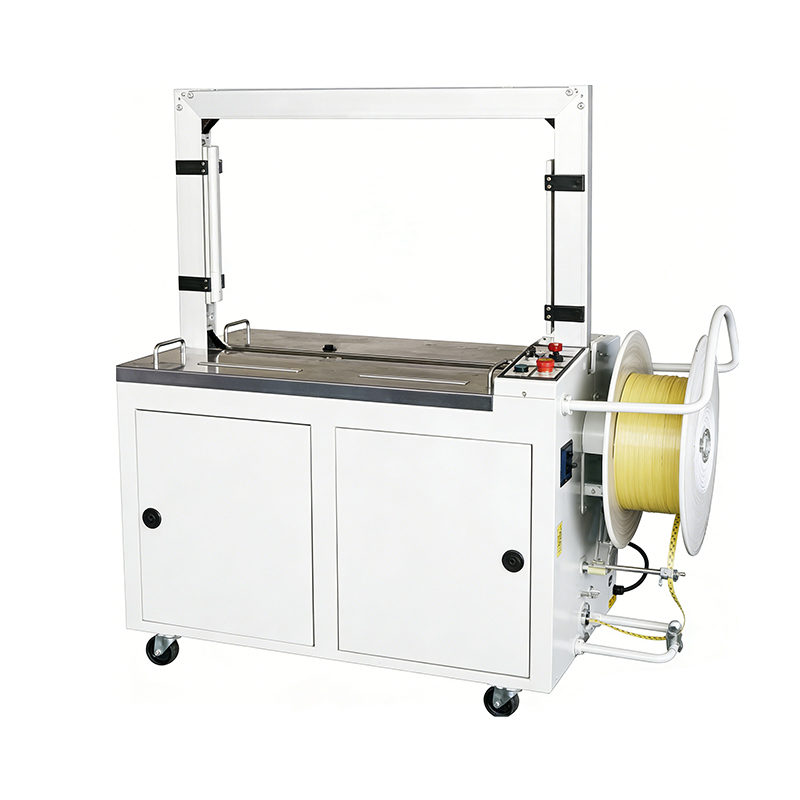
At its simplest, the tool does three jobs: it pulls the strap to a set tension, joins the ends with a seal or friction weld, and cuts the excess strap. On a battery-powered handheld model, the operator guides the strap around the load, inserts the ends into the tool, and presses a trigger or button. Semi-automatic and automatic systems add conveyors, side guides, or sealing heads, but the principle is the same. The difference is how much the machine does and how much the operator still controls.
Electric tools are popular in mixed packaging areas because they avoid the hose drag of pneumatic units while offering more repeatable tension than manual tools. If you are comparing semi-automatic and fully automatic options, our automatic strapping machine buyer's guide walks through the trade-offs.
Start With the Strap, Not the Tool
Before shopping for a machine, look at the strap you already use or plan to use. PP strap is economical and works well for light cartons and general bundling. PET strap is stronger and more resistant to stretching, so it suits heavier pallets, machinery, and loads that may shift in transit. Strap width and thickness affect the tool's tension range and seal system, and a machine rated for one strap may not perform well with another.
The seal method matters too: friction-weld tools, heat-seal tools, and combination tools are not interchangeable. Ask for a sample test with your actual strap and load rather than relying on a catalog tension figure alone.
Power Source and Workflow Fit
Power source and workflow fit are the next filters. The table below is a practical starting point, not a strict rule; a small operation may run a battery tool all day, while a high-throughput line may still prefer air.
| Tool type | Best suited to | Tension consistency | Practical notes |
|---|---|---|---|
| Manual tensioner | Low volume, light loads | Operator-dependent | Low cost, but higher fatigue |
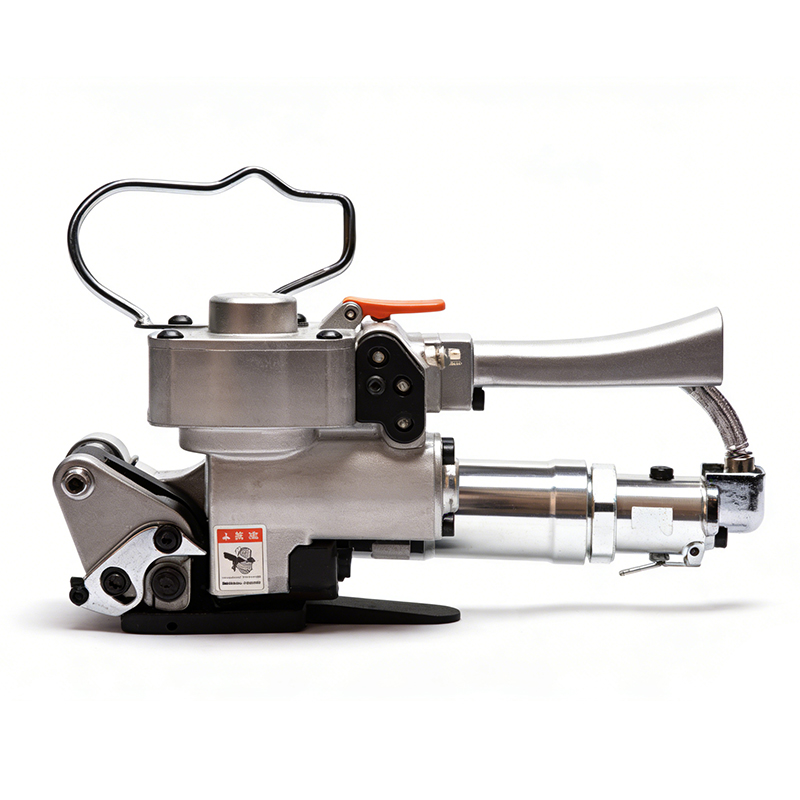
| Pneumatic tool | High-volume lines with air supply | Good | Reliable power, but hose drag |
| Battery electric tool | Mobile packing and mixed loads | Good to high | Cordless freedom; battery care matters |
| Semi-automatic or automatic system | Repeatable high throughput | High | Higher setup and integration needs |
Heavy-Duty Bundles and Pallet Loads
When loads are dense and the strap must stay tight through handling and transport, extra pulling capacity can make the job more reliable. A high-pull battery-powered tool is useful for pallets of building materials, bundled profiles, and heavy cartons where a light tool would stall or leave inconsistent tension. It still needs the right strap and seal, and the operator should be trained to avoid over-tensioning products that can crush. In our work with export packers, the most common mistake is buying a heavy-duty tool for light cartons, then fighting the machine's weight and power all day. Match capacity to the load, not to the brochure.
 DD19A/25A High-Pull Battery-Powered Strapping ToolHigh-pull battery tool for PET/PP straps up to 25 mm, suited to dense loads and pallets where consistent tension matters.View Product →
Portable Tools for Mixed or Tight Work Areas
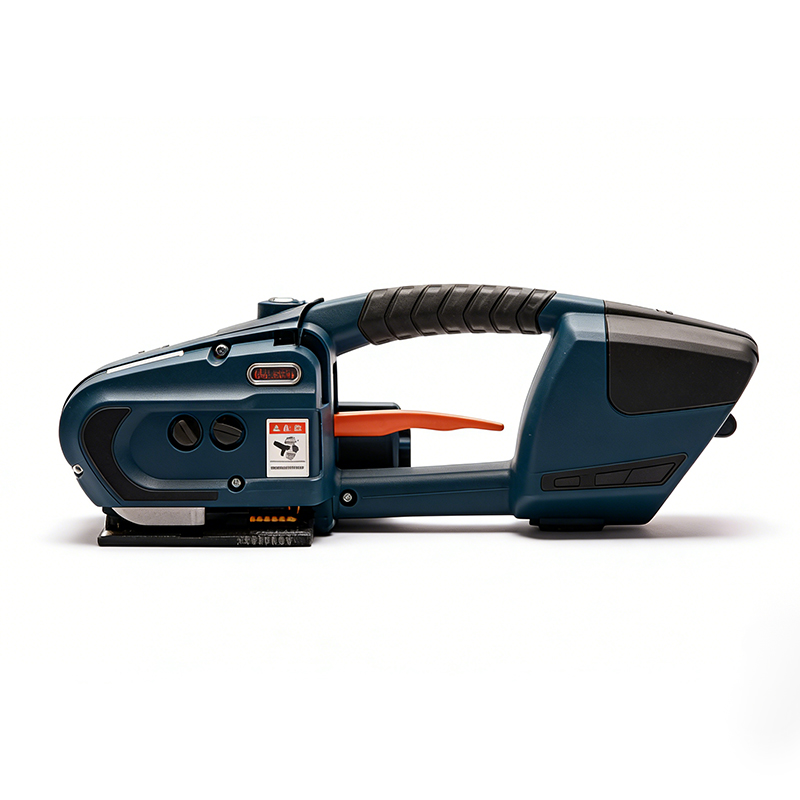
Mixed workflows often need a tool that can move between packing benches, pallets, and temporary stations. A compact battery-powered model can be easier to carry, store, and hand off between operators. Look at weight with the battery installed, balance, and how the tool feels when reaching around a pallet. A compact unit is not automatically the best choice for every strap size, so check the rated strap width and tension range. For smaller cartons and moderate loads, portability can matter more than maximum pull.
 JDC13/16 Portable Battery-Powered Strapping ToolCompact PET/PP strapping tool for mixed packing stations, with adjustable pull and a lightweight body for easier handoff between operators.View Product →
All-in-One Tools for Fast Changeovers
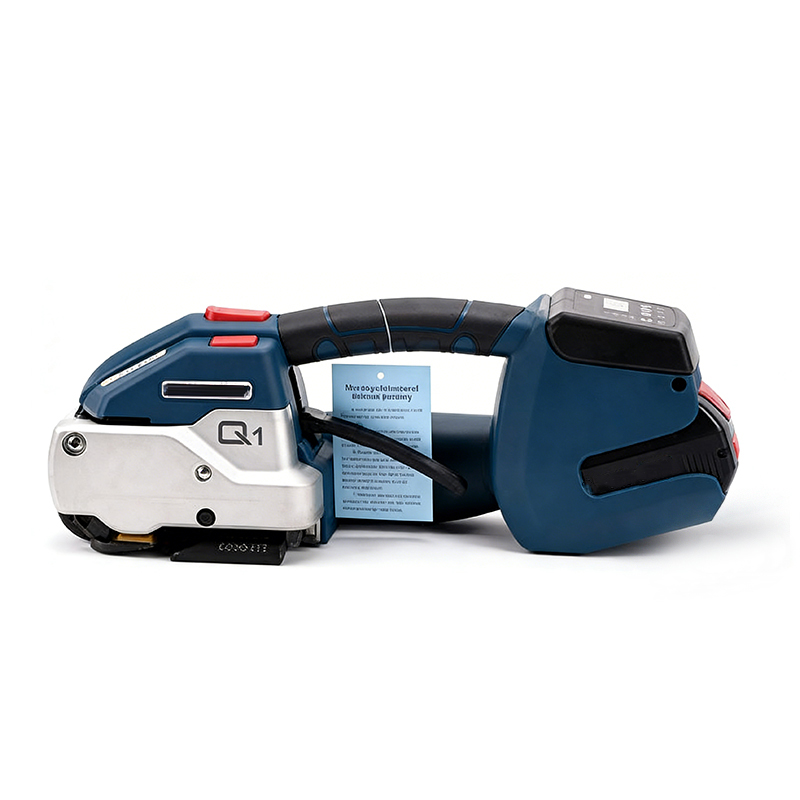
Some teams prefer an all-in-one design that combines tensioning, sealing, and cutting in one body with fewer setup decisions. This can shorten training and reduce the number of loose parts at the packing station, especially where operators rotate through tasks. The trade-off is that the tool must still match the strap and seal type, and battery runtime becomes part of the shift plan. If you run several pack stations with similar loads, standardizing on one simple design can be more valuable than buying several specialized tools.
 Q1 All-in-One Battery-Powered Strapping ToolCombined tensioning, sealing, and cutting tool for PET/PP straps, aimed at simpler training and consistent packing-station routines.View Product →
Daily Safety and Maintenance Habits
Daily operation is where a good machine proves itself. Keep the work area clear, support the load so it cannot roll or collapse, and never place hands near the sealing or cutting area while the tool is energized. Train operators to check strap alignment before tensioning, because a twisted strap can jam the tool or create a weak seal. Battery tools should be charged according to the manufacturer's instructions, and damaged batteries or chargers should be taken out of service. Safety glasses and gloves are basic, but the bigger habit is a consistent sequence: position, tension, seal, cut, inspect.
A simple daily check keeps performance predictable:
- Inspect the strap path and remove dust, strap shavings, or debris.
- Check the battery charge and confirm the charger is working correctly.
- Test the tool on a scrap load and verify seal strength and tension.
- Stop using the tool if it makes unusual noises, smokes, or fails to cut cleanly.
Maintenance That Prevents Deadline Stress
Cleaning and minor maintenance are usually straightforward: brush out the feed area, check worn parts, and follow the lubrication points in the manual. Avoid compressed air around seals and electronic components unless the manual specifically allows it. Battery contacts should stay clean and dry, and the tool should be stored where it will not be knocked around between shifts. Keep a small spares kit for the parts that wear first, such as seals, cutters, and feed wheels. A machine that is maintained on a schedule is less likely to fail during a shipment deadline.
A Practical Buying Checklist
Before you commit, run a short trial that mirrors your real work. Use the actual strap, the actual load, and the operators who will use the tool. Check the following:
- Strap material, width, and thickness are within the tool's rated range.
- Tension can be adjusted and repeated across several cycles.
- The seal type suits your load and inspection requirements.
- Battery runtime covers a full shift or can be swapped quickly.
- Weight and balance are comfortable for the people on the floor.
- Training, spare parts, and service support are available.
A final note: the right electric strapping machine should make the work feel calmer, not more complicated. If an operator has to fight the tool, the strap, or the battery, keep looking. The best choice is the one that fits your packaging routine and keeps tension consistent from the first pallet to the last.
Related Products


PRODUCT
CONTACT INFO
-
 +86-137 7421 9489
-
 +86-021-67558008
-
 [email protected]
-
 No.769 ,23# building, Fengliang Road,Fengcheng town,Fengxian District,Shanghai,China
MOBILE QR CODE
Copyright © Shanghai We Pack Co., Ltd. All Rights Reserved.
Cargo Securing Solutions Cargo Transport Protection Solutions

