
 Español




PP Dunnage Bag Manufacturers
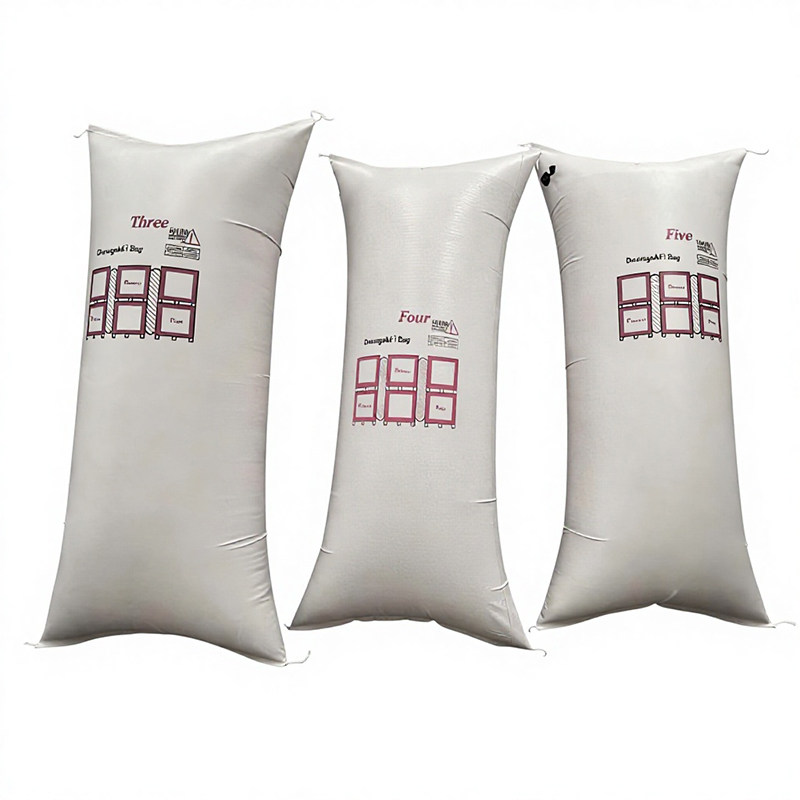
Our PP Dunnage Bags are constructed from woven polypropylene fabric with a PE liner, known for their exceptional toughness and reusability. They offer superior resistance to abrasion and harsh conditions, making them perfect for heavy-duty or multi-trip logistics applications.

Shanghai We Pack Co., Ltd.
Founded in 2019, Shanghai We Pack Co., Ltd. is a subsidiary of Shanghai Mengmao Packaging Technology Co., Ltd. is an integrated packaging company specializing in cargo securing, transport protection, and loading optimization solutions. PP Dunnage Bag Manufacturers and PP Dunnage Bag Factory in China.
With a 10,000 m² facility, 120 employees, dedicated R&D, testing, and quality control teams, and 9 production lines, wepack offers end-to-end capabilities from design and testing to mass production.
Driven by an engineering approach, wepack strictly controls every key stage—from raw materials to finished products—to ensure reliable performance in real transport conditions.
We Pack’s core products include paper edge protectors, container dunnage air bags, and lashing systems. Custom PP Dunnage Bag. Through joint ventures and industrial collaboration, our portfolio has expanded to paper pallets, plastic pallets, slip sheets, carton sealing tapes, bubble wrap, stretch film, strapping, and packaging equipment.We provide one-stop packaging and transport protection solutions tailored to different cargo types and logistics scenarios.
All We Pack products comply with AAR, SGS, TUV, and other international transport test standards. We support OEM / ODM customization, offering product design and free packaging solution planning based on cargo type, loading method, load requirements, budget, and printing needs—helping customers reduce total logistics costs by 15–30% while ensuring transport safety.
Certificate
Certificate of Honor


WHAT WE
HAPPENED
Checkout Our Current
News
Industry knowledge
Shanghai We Pack Co., Ltd. manufactures PP Dunnage Bag systems for shippers who need void fill that holds through rail hump yards, ocean swell and repeated handling. Each bag pairs a woven polypropylene outer shell with an internal PE air liner — a construction that resists abrasion, puncture and damp conditions far better than single-trip paper bags, and that can be deflated, folded and returned to service.
We are a subsidiary of Shanghai Dreammao Packaging Technology Co., Ltd., an integrated packaging group with 18 years in cargo securing, transport protection and loading optimization. PP dunnage bags are produced in our 10,000 m² facility in Fengxian District, Shanghai, alongside paper corner protectors, lashing systems and slip sheets, supported by 9 production lines and dedicated R&D, testing and quality control teams.
At a glance
- Woven PP shell with PE liner, AAR certified across the level range used in rail and intermodal service
- Dunnage air bag output above 30,000 pieces per day
- In-house laboratory plus third-party SGS and TUV test reports
- ISO 9001 management system, OEM / ODM customization, MOQ from 100 pieces
- Factory roughly 25–35 km from Shanghai Port and 30 km from Pudong International Airport
Construction: What the Woven Shell and PE Liner Each Do
A PP dunnage bag is a pressure vessel made of textile. The outer woven fabric carries the mechanical load — it takes the abrasion from pallet corners, banding and container floors, and it holds the bag's shape against the cargo face. The inner PE liner is the actual air barrier; its film gauge, seam integrity and valve bond decide how long the bag holds pressure under a loaded container.
- Woven PP outer shell — high tensile and tear strength, resistant to abrasion and to the moisture that softens paper bags in long ocean transits.
- PE inner liner — the pressure-retaining bladder, sized to the bag and bonded so the valve seat does not leak.
- Inflation valve — one-way valve matched to standard air guns, positioned so the bag can be filled after the container doors are closed.
- Seam construction — stitched and welded seams configured to the bag size and working pressure rather than applied uniformly across the range.
- Reuse handling — deflation, folding and return logistics are part of the specification where bags go back into a closed loop.
Where PP Dunnage Bags Fit in a Load Securing Plan
PP dunnage bags convert a void into a load-bearing surface. Typical positions are the gap between palletized cartons and the container side wall, the longitudinal gap between pallet rows, the space behind the last pallet at the doors, and the irregular cavities around machinery, steel coils, paper rolls, drums, big bags and timber. In rail cars and intermodal equipment the same bag absorbs the longitudinal forces that shift a load during coupling and braking.
Because the woven shell tolerates abrasion and damp air, the bags suit multi-trip loops — dedicated trailer fleets, shuttle containers and rail corridors where bags are recovered and reused. For a one-way shipment of light cartons, a Kraft Paper Dunnage Bag is usually the more economical choice. Where the void is large, inflation pressures are higher, or the bag is exposed to weather and repeated inflation cycles, a PVC Dunnage Bag is often specified instead.
Matching Bag Type to the Duty
| Bag type | Construction | Best-fit duty | Service life |
|---|---|---|---|
| PP dunnage bag | Woven polypropylene shell with PE air liner | Heavy-duty container, rail and trailer void fill; abrasive, damp or high-value loads | Reusable — deflate, fold, return |
| Kraft paper dunnage bag | Kraft paper shell with PE liner | Single-trip container void fill for palletized cartons and bagged goods | Single trip |
| PVC dunnage bag | PVC-coated fabric | Large voids, higher inflation pressures, weather-exposed or repeated inflation cycles | Reusable |
Critical Specifications We Confirm Before Production
Every PP dunnage bag order is released against a written specification. The parameters below are the ones that change performance in service, so they are fixed before the first roll of fabric is cut.
- Uninflated bag size — width and length, matched to the void rather than to a nominal container size.
- Inflated thickness at working pressure — the dimension that actually fills the gap.
- Fabric weight and weave — shell strength, abrasion resistance and the number of trips the bag is expected to survive.
- Liner film gauge and seam type — pressure retention over the transit duration.
- Valve type and position — compatibility with the air guns already on the loading dock.
- Working and burst pressure — set against the void and the load, not against a catalogue default.
- AAR level — the classification tied to bag dimensions and pressure retention for rail and intermodal service.
- Printing, packing and traceability — branding, bale or carton format, and batch marking for incoming inspection.
Sizing, Inflation and Installation Practice
Bag size is driven by the void, not by the container. A bag that is too small never reaches its working pressure and will not restrain the load; a bag that is too large is over-inflated, stresses the liner and shortens its own service life. We size from the measured gap, the cargo face area and the load mass the bag has to hold, then confirm the working pressure at which the bag fills that gap.
Installation discipline matters as much as the bag. Bags are placed against flat, solid surfaces, kept clear of sharp edges, banding and protruding hardware, and inflated only to the specified pressure with a gauge-equipped gun. Where a bag bears on a carton corner or a machined edge, a Paper Corner Protector or an equivalent edge board spreads the load and prevents the shell from being cut.
- Fill the void across its full height so the bag cannot roll or shift under vibration.
- Space bags along the void rather than clustering them at one end.
- Never inflate against an unsupported cargo face or a partially loaded row.
- Deflate before opening doors so the bag does not burst against the door frame.
Manufacturing, Testing and Compliance Evidence
Production runs on 9 lines in a 10,000 m² plant, with workshops separated by product and process — material handling, forming, cutting, welding, assembly and packing. That separation is what keeps a woven PP bag and a paper bag from sharing tooling, and it is what makes frequent size changes practical rather than disruptive.
Quality control runs from incoming fabric and film through to the finished bale. Our own laboratory carries out pressure and stress testing on production batches, and third-party reports from SGS and TUV are available for qualification and for customer acceptance testing. PP dunnage bags are AAR certified, and the level classification — Level 0 through Level 6 — maps to bag dimensions and pressure retention.
- ISO 9001 management system across the production process.
- In-house pressure, stress and burst testing on finished bags.
- Third-party SGS and TUV test reports for shipment qualification.
- Batch marking and retained samples for incoming inspection and traceability.
Customization, Printing and OEM / ODM Support
We build to the application rather than to a fixed catalogue. Size, load capacity, fabric weight, liner gauge, valve type and printed branding are all open variables, and OEM / ODM work is supported from drawings or from customer samples. Minimum order quantity starts at 100 pieces, which keeps trial orders and qualification runs practical while still allowing stable supply at volume.
Printing is handled in-house, so a distributor can carry its own brand on the bag, the bale label and the carton. Where a customer is building a complete load securing programme, we plan the dunnage bags together with corner protection, slip sheets, strapping and stretch film so the components are dimensionally and functionally matched.
Information We Use to Configure Your Solution
A workable proposal needs the working point, the material and the transport target. These are the inputs our engineering team works from when preparing a bag specification, a placement plan and a quotation.
| Project input | What it determines |
|---|---|
| Cargo type, unit weight and dimensions | Bag size, fabric weight and pressure class |
| Loading pattern — palletized, floor-loaded or mixed | Number and placement of bags per void |
| Void dimensions — width, height and depth | Uninflated bag size and inflated thickness |
| Transport mode — sea, rail, road or intermodal | AAR level and pressure-retention target |
| Route, climate and transit duration | Liner gauge and moisture considerations |
| Reuse expectation and return loop | Shell weight, valve type and handling instructions |
| Printing, branding and packing format | Plate preparation, bale or carton packing |
| Delivery schedule, destination and trade terms | Production slot, packing and shipping arrangement |
Packaging, Delivery and Documentation
Bags are compressed, baled or carton-packed to keep freight volume down, then palletized or floor-loaded for container shipment. The plant sits roughly 25–35 km from Shanghai Port and 30 km from Pudong International Airport, which keeps export handling short. EXW, FOB, CIF and DDP terms are all supported, and shipment documentation is prepared to match the destination market's requirements.
Alongside the goods, we supply the specification sheet, test reports and installation guidance the receiving team needs to inspect and deploy the bags correctly. Where a programme runs across several sites, we keep the specification and batch marking consistent so a bag ordered in one quarter behaves the same way in the next.
Frequently Asked Questions
What is a PP dunnage bag made of?
It is a woven polypropylene fabric shell with an internal polyethylene air liner and a one-way inflation valve. The woven shell carries the mechanical load and resists abrasion and moisture; the PE liner holds the air and determines how long the bag maintains pressure under a loaded container.
How do I choose between PP, kraft paper and PVC dunnage bags?
PP suits heavy-duty, abrasive, damp or multi-trip loads where the bag is recovered and reused. Kraft paper suits single-trip container void fill for palletized cartons and bagged goods at lower cost. PVC suits large voids, higher inflation pressures and weather-exposed or repeated inflation cycles. We match the type to the void, the load and the transport mode rather than to a default.
Can PP dunnage bags be reused, and for how many trips?
Yes — the bag is deflated, folded and returned to the loading point. Service life depends on the void, the inflation pressure, the cargo face and how the bags are handled between trips, so we assess it per application and can specify a heavier shell where a longer loop is expected.
What sizes and AAR levels do you produce?
We produce standard container void-fill sizes and custom sizes built to the measured gap. Our PP dunnage bags are AAR certified, with the level classification from Level 0 through Level 6 tied to bag dimensions and pressure retention. We confirm the level that matches your void and load before production.
Do you support OEM / ODM and printed branding?
We do. Size, load capacity, materials and printing are all customizable, and we develop from customer drawings or samples. Printing is handled in-house so distributors can carry their own brand on the bag, the bale label and the carton. Minimum order quantity starts at 100 pieces.
What test documentation accompanies a shipment?
Batches are pressure and stress tested in our own laboratory, and third-party SGS and TUV reports can be issued for qualification and acceptance testing. Shipments are accompanied by the agreed specification sheet and batch marking so the receiving team can verify what arrived against what was ordered.

PRODUCT
CONTACT INFO
-
 +86-137 7421 9489
-
 +86-021-67558008
-
 [email protected]
-
 No.769 ,23# building, Fengliang Road,Fengcheng town,Fengxian District,Shanghai,China
MOBILE QR CODE

