
 Español




Polyester Woven Strap Manufacturers
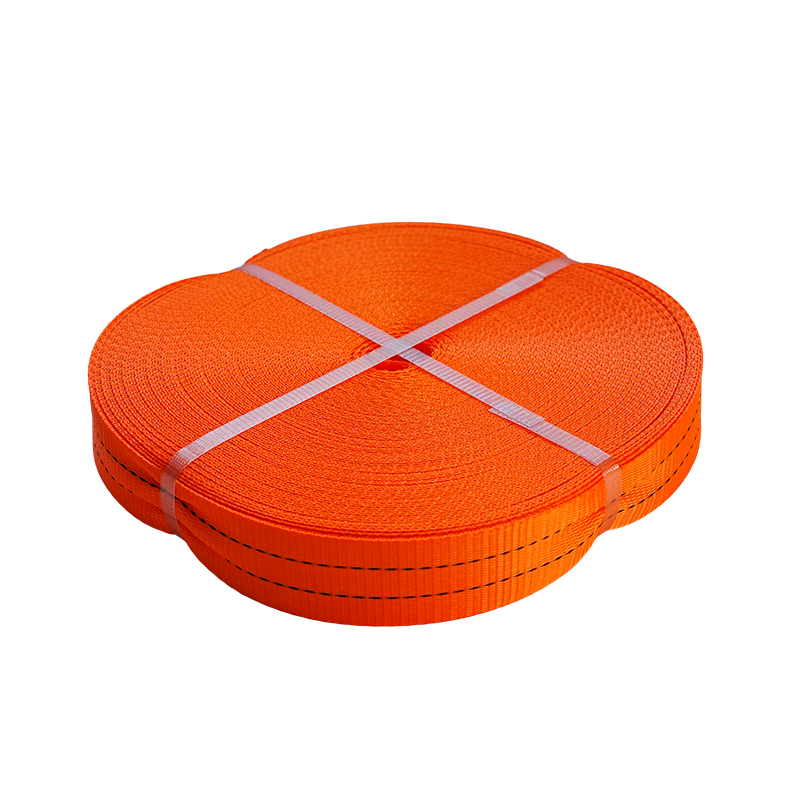
These high-strength, flexible woven polyester belts are designed for direct cargo securement on trucks, trailers, and in containers. They provide excellent energy absorption and resistance to dynamic loads, essential for preventing load shift during transport.

Shanghai We Pack Co., Ltd.
Founded in 2019, Shanghai We Pack Co., Ltd. is a subsidiary of Shanghai Mengmao Packaging Technology Co., Ltd. is an integrated packaging company specializing in cargo securing, transport protection, and loading optimization solutions. Polyester Woven Strap Manufacturers and Polyester Woven Strap Factory in China.
With a 10,000 m² facility, 120 employees, dedicated R&D, testing, and quality control teams, and 9 production lines, wepack offers end-to-end capabilities from design and testing to mass production.
Driven by an engineering approach, wepack strictly controls every key stage—from raw materials to finished products—to ensure reliable performance in real transport conditions.
We Pack’s core products include paper edge protectors, container dunnage air bags, and lashing systems. Custom Polyester Woven Strap. Through joint ventures and industrial collaboration, our portfolio has expanded to paper pallets, plastic pallets, slip sheets, carton sealing tapes, bubble wrap, stretch film, strapping, and packaging equipment.We provide one-stop packaging and transport protection solutions tailored to different cargo types and logistics scenarios.
All We Pack products comply with AAR, SGS, TUV, and other international transport test standards. We support OEM / ODM customization, offering product design and free packaging solution planning based on cargo type, loading method, load requirements, budget, and printing needs—helping customers reduce total logistics costs by 15–30% while ensuring transport safety.
Certificate
Certificate of Honor


WHAT WE
HAPPENED
Checkout Our Current
News
Industry knowledge
Polyester Woven Strap Manufacturing at Shanghai We Pack
Shanghai We Pack Co., Ltd. is the export-facing subsidiary of Shanghai Dreammao Packaging Technology Co., Ltd., an integrated packaging group working in cargo securing, transport protection and loading optimization. As a Polyester Woven Strap manufacturer in China, we produce high-tenacity woven polyester webbing and the tensioning hardware that turns it into a working lashing system for trucks, trailers, flat racks and containers.
The strap range is built for direct load restraint: flexible, energy-absorbing webbing that resists dynamic forces in transit and holds coils, pipes, timber, machinery and palletized freight against movement. It sits inside a wider securing portfolio — dunnage bags, paper corner protectors, slip sheets, stretch film and strapping tools — so a complete protection scheme can be sourced as one coordinated package instead of being assembled from separate vendors.
What the Polyester Woven Strap Range Covers
The range is organised around how the strap is tensioned and how it attaches, because those two decisions determine whether a lashing holds under braking, cornering and sea motion.
- Woven polyester lashing strap — the core product: high-tenacity PET webbing for direct cargo securement, supplied as cut lengths or as finished assemblies.
- Ratchet tie down assemblies — webbing with a ratchet buckle and hook or fitting ends for high-tension restraint on heavy loads.
- Cam buckle and over-centre straps — lighter tensioning for repeated-use duties, pallet unitizing and lighter break-bulk loads.
- End fittings — double-J hooks, flat hooks, wire hooks, claw hooks, D-rings, E-track fittings and sewn loops.
- Wear protection — sleeves, reinforced eyes and edge guards for abrasive or sharp-edged cargo.
- Custom lengths, widths, colours and printed branding under OEM/ODM programmes.
Where Polyester Woven Strap Fits in Cargo Securing
Polyester webbing is chosen where restraint has to stay tight over a long journey and absorb shock without going slack. Its low elongation under load keeps tension on the anchor point, while the woven structure spreads contact pressure across the cargo surface instead of concentrating it at a single point.
| Cargo type | Securing duty | Typical configuration |
|---|---|---|
| Steel coils, wire rod | Direct lashing across the coil with high tension | Wide webbing, ratchet buckle, protective sleeve |
| Pipes, tubes, bundles | Bundle restraint plus cross lashing to anchor points | Medium-width webbing, ratchet or cam buckle |
| Timber and sawn wood | Stack restraint where low elongation matters | Wide webbing, ratchet buckle, hook ends |
| Machinery and heavy equipment | Direct lashing to deck rings and container anchor points | Heavy-duty webbing, high-tension ratchet |
| Palletized cartons and bagged goods | Pallet unitizing and container bracing | Narrow webbing, cam buckle, low-profile fittings |
| Container break-bulk | Cross lashing between opposing anchor points | Medium webbing, ratchet with hook ends |
Specification Variables We Build Around
A lashing strap is only correct when the webbing, the hardware and the anchor point are rated as one system. These are the parameters we confirm before a quotation is issued.
| Parameter | What it governs | Options we confirm with you |
|---|---|---|
| Webbing width | Contact area and how tension spreads over the load | Narrow to wide webbing matched to the load surface |
| Breaking strength and lashing capacity | Restraint force available against the cargo mass | Matched to the rated capacity of the securing point |
| Elongation at lashing capacity | Energy absorption and tension retention in transit | Low-elongation polyester webbing construction |
| Length and adjustment | Reach across the load and to the anchor point | Fixed length or adjustable, cut to order |
| Tensioning hardware | How much tension the operator can apply and hold | Ratchet buckle, cam buckle, over-centre lever |
| End fittings | Compatibility with the anchor point on the vehicle or container | Hooks, D-rings, E-track fittings, sewn loops |
| Edge and wear protection | Service life against abrasion and cut edges | Sleeves, reinforced eyes, edge guards |
| Marking and colour | Identification, fleet coding and inspection control | Printed branding, custom colour, label format |
Material and Construction Considerations
Polyester webbing is the default choice for road and sea lashing because it combines high tensile strength with low stretch. Compared with polypropylene strap, polyester holds tension better under sustained load and resists creep; compared with nylon, it is less affected by moisture regain and better suited to long ocean legs. Weave density, yarn tenacity and the stitching pattern at the eye or buckle end all influence how the assembly behaves at working tension.
System note: the rated capacity of the weakest element — webbing, buckle, hook or anchor point — defines the usable lashing capacity. We size the strap so the webbing is not the limiting component in your securing scheme.
Hardware and Integration with the Rest of the Load
Strapping rarely works alone. On a typical container or flat-rack load, polyester webbing is combined with Ratchet Tie Down assemblies for the main restraint, Dunnage Bag void filling to stop longitudinal movement, and corner protectors to keep webbing off sharp edges. Because we manufacture across the Packing Strap family — PP, PET, composite and woven polyester — we can match the strap type to the load rather than force one material across every application.
Quality Assurance and Acceptance Testing
Web lashings for road transport are commonly specified against EN 12195-2, which defines lashing capacity, elongation and marking requirements. Our quality system runs a three-tier structure: an in-house laboratory, production-line testing equipment, and third-party verification through institutions such as SGS and TUV. Management is certified to ISO 9001, and the wider product portfolio is produced to AAR, SGS, TUV and EN 1492-1 requirements.
- Incoming yarn and webbing inspection before weaving and finishing.
- In-process checks on weave, width, stitching and hardware assembly.
- Tensile and lashing-capacity testing with batch records retained for traceability.
- Third-party test reports issued on request for project acceptance.
Customization and OEM/ODM Support
We develop strap to your drawing, sample or performance target. Custom work covers webbing width and length, lashing capacity, buckle and hook type, colour, printed logos and warning text, and retail or bulk packaging. Our engineering team also plans the securing solution around the cargo itself — load mass, loading method, anchor positions, budget and printing requirements — so the strap arrives as part of a workable scheme rather than an isolated component.
Information We Use to Configure Your Solution
A precise quotation needs the working conditions, not just a part number. These are the inputs our engineers work from.
- Cargo type, unit mass, dimensions and centre of gravity.
- Transport mode and route — road, rail, sea or multimodal, including expected regulatory framework.
- Securing method: direct lashing, top-over lashing, cross lashing or bundle restraint.
- Anchor point type, position and rated capacity on the vehicle or container.
- Required lashing capacity and any elongation limit.
- Webbing width, length and adjustment range.
- Hardware preference and operator handling constraints.
- Printing, colour coding, labelling and packaging format.
- Order volume, delivery schedule and destination port.
Capacity, Order Scope and Delivery
Production runs across a 10,000 m² facility with 120 employees and nine production lines, supported by dedicated R&D, testing and quality control teams. Annual output exceeds 20,000 tons, which covers both trial quantities and repeat volume orders. Minimum order quantity starts at 100 pieces, so a first shipment can be validated on real loads before scaling. The plant sits close to Shanghai Port and Pudong International Airport, and we ship under EXW, FOB, CIF or DDP terms to customers across North America, South America, Europe, Asia and the Middle East.
Frequently Asked Questions
What is polyester woven strap used for?
It is used for direct cargo restraint — lashing coils, pipes, timber, machinery and palletized goods to trucks, trailers, flat racks and container anchor points. The woven polyester webbing absorbs dynamic loads during braking and cornering while keeping tension on the securing point.
How does polyester compare with PP or PET strap for lashing?
PP strap is cost-effective for light unitizing but stretches more under sustained load. PET strap is stiff and well suited to pallet and bundle strapping. Woven polyester webbing is the flexible option for lashing: it conforms to irregular cargo, spreads contact pressure and retains tension over long journeys.
Can you produce strap to our own specification and branding?
Yes. We work under OEM/ODM arrangements covering width, length, lashing capacity, buckle and hook type, colour, printed logos and warning text, and packaging format. Development can start from your drawing, a physical sample or a described working condition.
What test evidence is available for project acceptance?
Testing runs through our in-house laboratory and production-line equipment, with third-party verification available from institutions such as SGS and TUV. Batch records are retained for traceability, and test reports can be issued with the shipment for acceptance documentation.
What is the minimum order quantity and typical lead time?
Minimum order quantity starts at 100 pieces, which allows a trial order before volume commitment. Lead time depends on whether the strap is a standard configuration or a new custom build, and is confirmed with the quotation once width, capacity, hardware and printing are fixed.
Can you supply the strap together with dunnage bags and corner protectors?
Yes. We supply the full securing package — woven polyester strap, ratchet tie downs, dunnage bags, paper corner protectors, slip sheets, stretch film and strapping tools — so the load restraint, void filling and edge protection are specified together and arrive as one coordinated shipment.

PRODUCT
CONTACT INFO
-
 +86-137 7421 9489
-
 +86-021-67558008
-
 [email protected]
-
 No.769 ,23# building, Fengliang Road,Fengcheng town,Fengxian District,Shanghai,China
MOBILE QR CODE

