
 Español


Perforated Paper Corner Protector Custom


Perforated Paper Corner Protector Manufacturers
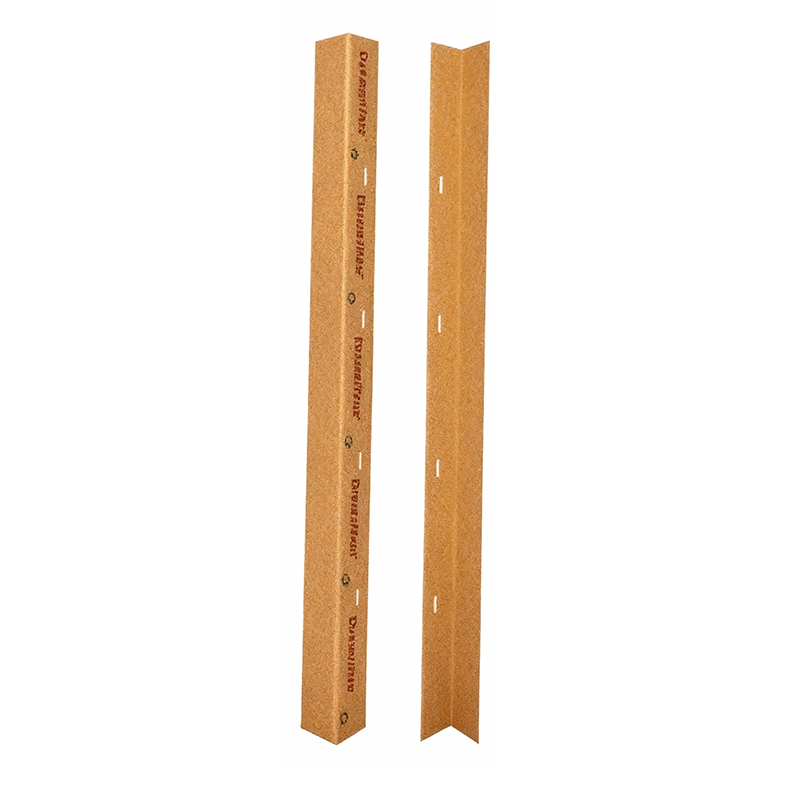
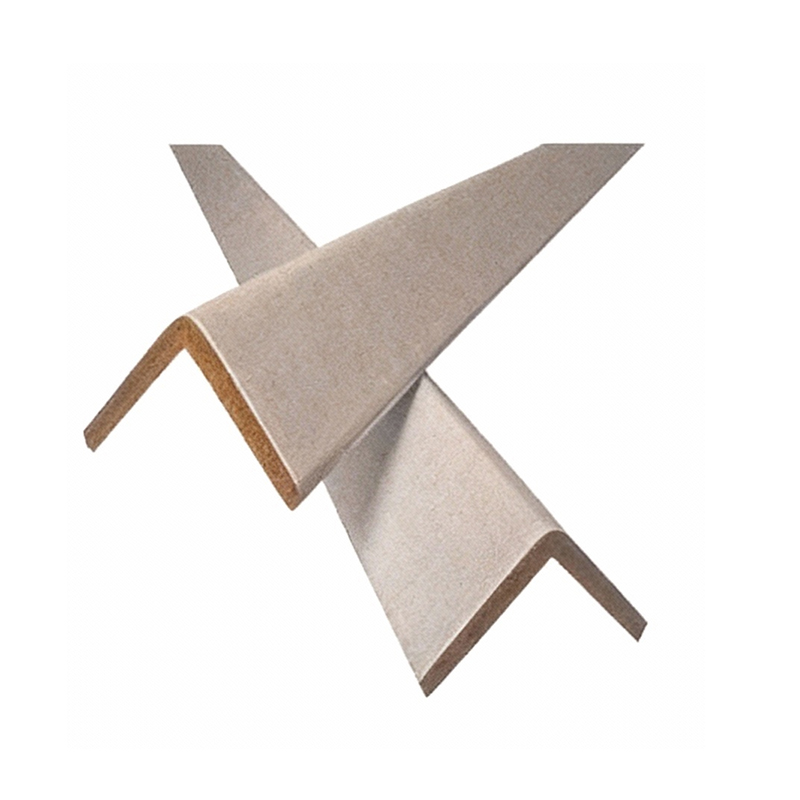
This protector is pre-punched with a series of uniformly spaced holes along its length. These holes allow strapping bands or cords to pass directly through, enabling the protector to be seamlessly integrated into the strapping system. This design prevents strap slippage and provides reinforced, anchored protection for cylindrical bundles or heavy goods.

Shanghai We Pack Co., Ltd.
Founded in 2019, Shanghai We Pack Co., Ltd. is a subsidiary of Shanghai Mengmao Packaging Technology Co., Ltd. is an integrated packaging company specializing in cargo securing, transport protection, and loading optimization solutions. Perforated Paper Corner Protector Manufacturers and Perforated Paper Corner Protector Factory in China.
With a 10,000 m² facility, 120 employees, dedicated R&D, testing, and quality control teams, and 9 production lines, wepack offers end-to-end capabilities from design and testing to mass production.
Driven by an engineering approach, wepack strictly controls every key stage—from raw materials to finished products—to ensure reliable performance in real transport conditions.
We Pack’s core products include paper edge protectors, container dunnage air bags, and lashing systems. Custom Perforated Paper Corner Protector. Through joint ventures and industrial collaboration, our portfolio has expanded to paper pallets, plastic pallets, slip sheets, carton sealing tapes, bubble wrap, stretch film, strapping, and packaging equipment.We provide one-stop packaging and transport protection solutions tailored to different cargo types and logistics scenarios.
All We Pack products comply with AAR, SGS, TUV, and other international transport test standards. We support OEM / ODM customization, offering product design and free packaging solution planning based on cargo type, loading method, load requirements, budget, and printing needs—helping customers reduce total logistics costs by 15–30% while ensuring transport safety.
Certificate
Certificate of Honor


WHAT WE
HAPPENED
Checkout Our Current
News
Industry knowledge
Shanghai We Pack Co., Ltd. manufactures paper edge protection and cargo securing consumables from a 10,000 m² facility in Fengxian District, Shanghai, where nine production lines and a dedicated R&D, testing and quality control team support standard production and OEM/ODM work. The Perforated Paper Corner Protector manufacturer line is the mount-ready member of our paper corner protector family: a laminated paperboard angle punched with a uniform series of apertures along its length, so strapping bands or cords pass directly through the protector instead of running across its outer face.
What the Perforated Format Does on a Load
A paper corner protector carries vertical edge load and spreads strap tension across a wider footprint than the strap alone. The perforated version adds a row of punched holes along the profile. Strap, cord or banding threads through those holes rather than over the outer face, so the protector stays anchored to the pack and the strap cannot walk off the corner during pallet handling, road transit or ocean movement.
We supply it as a component of a securing assembly, not as a standalone consumable. The protector, the strap and the tensioning method are specified together, because hole position only works if it lines up with where the tensioner and the seal actually sit.
Position in the Paper Corner Protector Range
Our Paper Corner Protector family covers the profile shapes different packs require. The perforated profile is the strapping-integrated option; the remaining profiles handle corner-only protection, ring wrapping and interlocking stacking.
- L-shaped and folded L-shaped profiles for carton, crate and pallet corners
- U-shaped and folded U-shaped profiles for open-edge panels, doors and boards
- Ring-shaped profiles for cylindrical or wrapped edges
- Interlocking profiles for stacked loads that must lock together
- Flat and white paper corner protectors for surface protection and high-visibility packaging
- Perforated profiles for strapped bundles, coils and heavy goods
Where the Perforated Profile Fits
The perforated format suits loads where the strap is the primary restraint and the corner is the point of highest stress. Typical applications we build for:
- Coils, wire and cable reels, pipe and tube bundles secured with PET or PP strap
- Machinery and fabricated parts strapped to timber or plastic pallets
- Long profiles, extrusions and timber bundles carrying several straps along the length
- Export crates and heavy cartons where strap slippage has caused edge crush or load shift
- Cylindrical bundles where cord or banding is threaded through the protector
Material and Construction Considerations
Corner protectors are built from laminated paperboard. Ply count, board thickness and paper grade decide how much edge load the profile carries before it deforms, and the angle is formed so the inner radius matches the corner it protects. A radius that is too tight bridges the corner and concentrates load on a narrow line instead of distributing it.
Moisture is the second variable that decides field performance. Board that has taken up water loses compression strength, so we control moisture content through production and packing, and we can specify moisture-resistant treatment where a container crosses humid or tropical routes.
Critical Specifications We Confirm
| Parameter | What it controls | Options we quote |
|---|---|---|
| Profile and leg length | Coverage of the edge and the path the strap follows | L, U, ring, folded, flat; legs sized to the pack |
| Board thickness and ply | Edge crush resistance and load carried per corner | Multiple thickness and ply builds |
| Inner radius | Contact area against the corner; avoids point loading | Matched to the corner radius of the cargo |
| Hole diameter and pitch | Strap passage, anchoring and alignment with the seal | Sized to strap or cord width and buckle position |
| Hole pattern | How many straps pass through and where | Single row, staggered, or grouped for multi-strap layouts |
| Surface finish | Appearance and print contrast on the pack | Natural kraft or white coated |
| Printing | Branding, handling marks and traceability | Logo, handling symbols, customer part numbers |
| Moisture treatment | Strength retention on humid or long sea routes | Standard or moisture-resistant build |
| Packing format | Freight volume and protection in transit | Flat bundles, cartons, or palletized |
Strapping Integration and Load Behaviour
Hole pitch is set against the strap layout rather than chosen independently. When the strap runs through a hole, the protector cannot slide out from under the strap and the strap is held in a fixed plane relative to the corner. That matters most on cylindrical bundles, where a strap over a smooth outer face tends to creep toward the smallest diameter.
We match the perforated profile to the securing system in use — PET Packing Strap for high-tensile loads, PP strap for lighter cartons, or cord and banding — and to the tensioning method, so hole spacing lines up with the tensioner and seal positions.
Where a load combines void filling with edge protection, the perforated protector is specified alongside a Dunnage Bag so that the strap restrains the unit and the bag removes movement inside the container.
Customization, Printing and OEM/ODM Support
We build to drawing or sample. Size, board thickness, hole pattern, kraft or white finish and printing are all made to order, and our engineering team reviews cargo type, loading method and load requirement before quoting. Minimum order quantity is 100 pieces, which allows trial quantities to run alongside volume supply.
Quality Assurance and Acceptance Evidence
Production runs through a three-tier check: our own laboratory, in-house testing equipment, and third-party institutions such as SGS and TUV. Our management system holds ISO 9001 certification, and products comply with AAR, SGS, TUV and other international transport test standards. Test reports can be issued against the delivered specification.
For paper corner protectors the acceptance conversation usually covers board thickness and ply, moisture content, hole diameter and pitch, leg dimensions and print. We record those values on the order and test against them.
Information We Use to Configure Your Solution
A workable proposal starts from the working point, not from a size alone. The inputs that let us size the profile, set the hole pattern and confirm packing:
- Cargo type, weight per unit and how the load is stacked
- Corner or edge geometry, including radius and the length of edge to be protected
- Strap type, width, tension and number of straps per unit
- Loading method — pallet, floor-loaded container, crate, or coil eye
- Transport mode and route conditions, including humidity and handling
- Print requirements and any customer part numbers
- Target annual volume and delivery schedule
- An existing protector sample or drawing to match
Packaging, Delivery and Documentation Scope
Perforated protectors are packed flat in bundles or cartons to keep freight volume low and to protect the board from moisture and edge damage in transit. We ship from Fengxian District, Shanghai, within easy reach of Shanghai Port and Pudong International Airport, and we work on EXW, FOB, CIF and DDP terms. Documentation follows the order: packing list, test reports where specified, and print proofs before mass production.
Frequently Asked Questions
What makes a perforated paper corner protector different from a standard one?
The profile is punched with a uniform series of holes along its length. Strap or cord passes through those holes instead of over the outer face, which anchors the protector to the load and stops the strap from slipping off the corner. Standard protectors rely on strap tension and friction alone.
Can the hole spacing be matched to our strap width and buckle position?
Yes. Hole diameter and pitch are set from the strap or cord width and from where the tensioner and seal sit on the finished pack. We also produce single-row, staggered and grouped patterns for loads that carry more than one strap per corner.
How do you decide board thickness and ply for a given load?
Thickness and ply follow the unit weight, the number of corners carrying the load and the strap tension. Send the cargo weight, stacking arrangement and strap specification, and we will propose a build and confirm it against the edge load the corner has to take.
Do you supply the protector together with strap and dunnage bags?
We do. Paper corner protectors, dunnage bags, slip sheets, stretch film, packing strap and strapping tools come from the same production and supply base, so a container loading plan can be covered as one order rather than assembled from several sources.
What is the minimum order quantity, and can we print our logo?
Minimum order quantity is 100 pieces, which supports trial runs as well as volume supply. Printing is available on kraft or white finishes, covering logos, handling symbols and customer part numbers.
What test documentation is available for a shipment?
Products comply with AAR, SGS, TUV and other international transport test standards, and our management system holds ISO 9001 certification. Where a project requires it, we arrange third-party testing through SGS or TUV and issue the report against the delivered specification.

PRODUCT
CONTACT INFO
-
 +86-137 7421 9489
-
 +86-021-67558008
-
 [email protected]
-
 No.769 ,23# building, Fengliang Road,Fengcheng town,Fengxian District,Shanghai,China
MOBILE QR CODE
Copyright © Shanghai We Pack Co., Ltd. All Rights Reserved.
Perforated Paper Corner Protector Factory

