
 Español




Silica Gel Desiccant Manufacturers
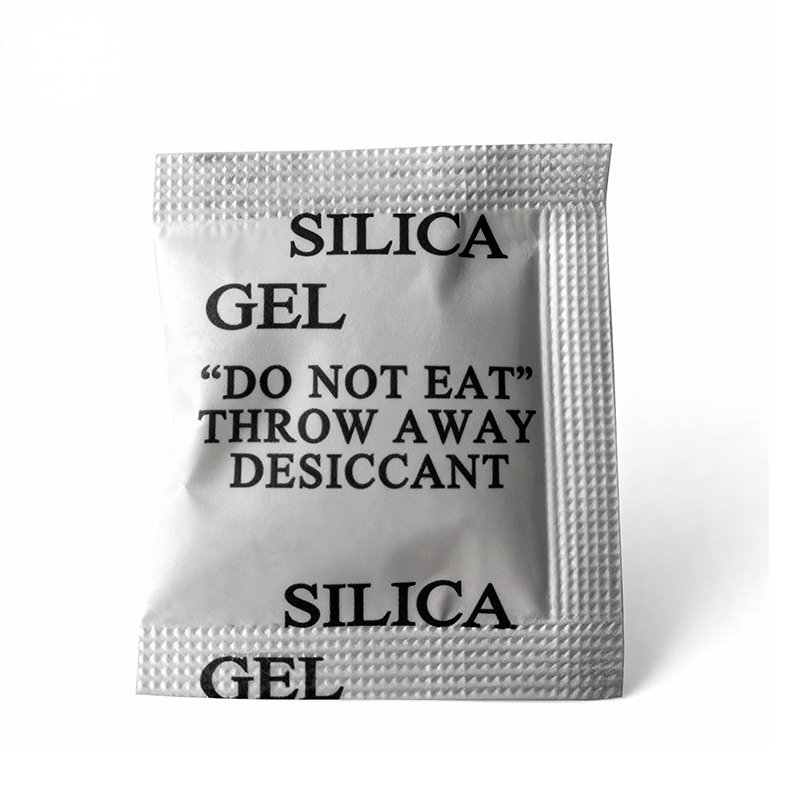
Versatile and reliable, silica gel desiccant offers stable moisture absorption across a wide humidity range. It is non-toxic, inert, and reusable, making it ideal for electronics, pharmaceuticals, leather goods, and general packaging applications.

Shanghai We Pack Co., Ltd.
Founded in 2019, Shanghai We Pack Co., Ltd. is a subsidiary of Shanghai Mengmao Packaging Technology Co., Ltd. is an integrated packaging company specializing in cargo securing, transport protection, and loading optimization solutions. Silica Gel Desiccant Manufacturers and Silica Gel Desiccant Factory in China.
With a 10,000 m² facility, 120 employees, dedicated R&D, testing, and quality control teams, and 9 production lines, wepack offers end-to-end capabilities from design and testing to mass production.
Driven by an engineering approach, wepack strictly controls every key stage—from raw materials to finished products—to ensure reliable performance in real transport conditions.
We Pack’s core products include paper edge protectors, container dunnage air bags, and lashing systems. Custom Silica Gel Desiccant. Through joint ventures and industrial collaboration, our portfolio has expanded to paper pallets, plastic pallets, slip sheets, carton sealing tapes, bubble wrap, stretch film, strapping, and packaging equipment.We provide one-stop packaging and transport protection solutions tailored to different cargo types and logistics scenarios.
All We Pack products comply with AAR, SGS, TUV, and other international transport test standards. We support OEM / ODM customization, offering product design and free packaging solution planning based on cargo type, loading method, load requirements, budget, and printing needs—helping customers reduce total logistics costs by 15–30% while ensuring transport safety.
Certificate
Certificate of Honor


WHAT WE
HAPPENED
Checkout Our Current
News
Industry knowledge
Shanghai We Pack Co., Ltd. is a China-based Silica Gel Desiccant manufacturer and a subsidiary of Shanghai Dreammao Packaging Technology Co., Ltd., an integrated packaging group with 18 years in cargo securing, transport protection and loading optimization. Founded in 2019, we operate a 10,000 m² facility with 120 employees, dedicated R&D, testing and quality control teams, and nine production lines. Silica gel desiccant is supplied both as a standalone moisture-control product and as part of a one-stop protection package that includes dunnage bags, paper corner protectors, slip sheets, stretch film and strapping systems.
Our engineering approach starts from the cargo and the route, not from a catalogue number. Fill weight, sachet format, packaging medium and printing are set against the enclosed volume, the barrier film in use, the transit duration and the humidity profile the shipment will actually meet.
The Silica Gel Desiccant Range
Silica gel is an amorphous silicon dioxide with a high internal pore surface, which gives it a large physical adsorption capacity for water vapour. It stays dry to the touch, keeps its shape as it loads with moisture, releases no corrosive or reactive residue, and is non-toxic and inert. Those properties make it a practical choice for electronics, pharmaceuticals, leather goods and general export packaging, and because adsorption is physical rather than chemical, the material can be regenerated and reused under controlled conditions.
The formats we produce cover the points where moisture actually enters a shipment:
- Unit sachets in flat, strip and canister formats for cartons, inner boxes, component trays and moisture-barrier bags.
- Indicating grades that change colour as they take up moisture, giving a visual check at packing and again at unpacking.
- Container-level desiccant units with hooks or eyelets for hanging from lashing rings, side rails or door hardware.
- Printed and private-label sachets carrying customer branding, batch codes and destination-language warnings.
- Complementary desiccant types from the same line — montmorillonite, calcium chloride and magnesium chloride — where a project calls for a different absorption profile.
How Silica Gel Performs in Real Transport Conditions
Desiccant sizing is a mass-balance problem. Water enters a shipment through the cargo itself, the pallet and packaging materials, the container floor, and air exchange during loading and transit. Silica gel removes part of that load, and how much it removes depends on the conditions around it.
- Humidity dependence. Adsorption capacity rises with relative humidity, so silica gel performs best in sealed cartons, bags and lined containers rather than in open, freely ventilated atmospheres.
- Temperature cycling. Day and night temperature swings inside a container move moisture between the air, the packaging and the cargo. Sizing has to account for the number of cycles on the route, not just an average humidity figure.
- Barrier dominance. A PE-lined carton, a foil barrier bag or a container liner can change the required desiccant mass by an order of magnitude. We size against the barrier that is actually used.
- No liquid phase. Saturated silica gel remains dry and free-flowing, so a damaged sachet will not release liquid onto electronics, documents or metal parts.
- Headspace matters. Container-level units are positioned where air circulates — along the side walls and near the doors — rather than buried in the load.
Application Fit by Cargo Type
Different cargoes fail in different ways when moisture is present, and the desiccant format follows the failure mode.
- Electronics, PCBs, precision instruments. Unit sachets inside the primary pack or the moisture-barrier bag, sized to the bag volume and the storage period before the unit is opened.
- Pharmaceuticals, nutraceuticals, diagnostics. Sachets produced with the documentation and material declarations the destination market requires; the grade and packaging medium are confirmed against the customer's regulatory framework before production.
- Leather goods, footwear, garments. Sachets placed in cartons and individual boxes to prevent mould bloom and hardware tarnishing during long sea legs.
- Metal parts, tools, bearings. Desiccant reduces condensation-driven corrosion inside crates and barrier bags, particularly where loads cross several climate zones.
- Furniture, wood products, paper and board. Container-level units hung from the side rails, combined with container dunnage bags to stop load movement that would otherwise open gaps and increase air exchange.
- Machinery and heavy equipment. Container desiccant units positioned around the machine footprint, with paper corner protectors and strapping handling the mechanical side of the same shipment.
Specifications Confirmed Before Production
Every silica gel desiccant order is built from a confirmed specification sheet. The table below shows the variables we work through with the customer and the information each one depends on.
| Configuration variable | Typical industry range | What we confirm with you |
|---|---|---|
| Sachet fill weight | 1 g to 1,000 g for unit packs; larger units for container level | Enclosed volume, barrier film, protection period and headspace |
| Bead type | White or translucent beads; indicating orange or blue | Whether a visual moisture indicator is needed at packing or receiving |
| Packaging medium | Non-woven fabric, composite paper, PE-coated paper, high-strength film | Dust control, tear strength and any contact restrictions for the cargo |
| Sealing method | Heat-sealed edges, stitched or ultrasonic closure | Seal integrity target and the risk of bead leakage in the application |
| Printing | Blank, single-colour logo, multi-colour private label | Branding, batch coding, language and warning text |
| Unit format | Flat sachet, strip, canister, hanging container unit with hook | Placement method inside carton, pallet or container |
| Carton packing | Bulk carton, poly-bagged inner, palletized | Warehouse handling, container loading pattern and shelf-life control |
| Documentation | MSDS, COA, batch record, third-party test report | Destination compliance and your customer's acceptance criteria |
Configuration Options and OEM / ODM Support
We build silica gel desiccant to the customer's specification rather than to a fixed stock list. OEM and ODM work covers fill weight, sachet dimensions, packaging medium, sealing pattern, print layout and carton count, and we develop from drawings or from physical samples supplied by the customer. Minimum order quantity starts at 100 pieces, which keeps trial orders practical while the same lines support repeat volumes.
For container-level protection, the configuration questions shift to placement and access: hook or eyelet type, cord length, unit weight, and whether the units are loaded before or after the cargo is secured. Where a shipment combines desiccant with mechanical protection, we plan the loading sequence so that dunnage inflation, strapping and desiccant hanging do not interfere with each other.
Quality Assurance and Acceptance Testing
Quality control runs on a three-tier system: our own laboratory, advanced testing equipment on site, and third-party institutions such as SGS and TUV for independent verification. Our management system is certified to ISO 9001, and products comply with AAR, SGS, TUV and other international transport test standards.
- Incoming raw material checks on bead grade, dust content and moisture content at delivery.
- In-process checks on fill weight, seal integrity and print legibility across each production run.
- Finished-goods verification before cartoning, with batch records retained for traceability from raw material to shipped carton.
- Third-party test reports and material safety data sheets issued for the specific batch where the project requires them.
Integration with Loading Plans and Cargo Securing
Moisture damage rarely happens in isolation. Condensation softens cartons, softened cartons compress, the load shifts, and gaps open that let more humid air circulate. Because we manufacture the surrounding protection as well, the desiccant plan can be matched to the securing plan: dunnage bags to fill voids, paper corner protectors to hold edge stacking strength, stretch film for pallet unitization, and slip sheets or strapping where the loading method calls for them. One supplier, one loading sequence, one set of documents.
Information We Use to Configure Your Solution
A workable desiccant proposal needs the following inputs. Where a figure is not yet fixed, we work with a range and refine it at sample stage.
- Cargo type, value and moisture sensitivity, including whether the goods are hygroscopic or metal-bearing.
- Packaging structure: primary pack, barrier film or liner, carton type, pallet type.
- Loading pattern and container type, with an estimate of headspace and void volume.
- Route, transit duration, climate zones crossed and expected number of temperature cycles.
- Target protection period, or the internal humidity level the cargo can tolerate.
- Existing desiccant format if a current specification is being replaced, with sample if available.
- Printing, labelling, batch coding and carton marking requirements.
- Annual volume, call-off schedule and delivery terms.
- Destination compliance requirements and any documentation the receiving market demands.
Packaging, Documentation and Delivery
Desiccant is packed in bulk cartons or poly-bagged inner packs, palletized for container loading, with carton marking matched to the customer's warehouse system. Documentation follows the shipment: material safety data sheets, certificates of analysis, batch records and third-party test reports where required. Trade terms include EXW, FOB, CIF and DDP, with T/T as the standard payment method and L/C available for long-term programmes. Our location near Shanghai Port supports consolidated shipments that combine desiccant with dunnage bags, corner protectors and strapping in a single container.
Frequently Asked Questions
How does silica gel compare with montmorillonite or calcium chloride desiccant?
Silica gel adsorbs physically and holds its shape, so it stays dry and inert and suits sealed cartons, barrier bags and sensitive goods. Montmorillonite clay is a lower-cost option for general cargo protection. Calcium chloride and magnesium chloride work by deliquescence and hold more water at high humidity, which makes them a natural fit for container-level protection on long sea routes. We supply all four types and match the choice to the cargo and the route.
Can you produce silica gel desiccant in our own sizes and branding?
Yes. OEM and ODM work covers fill weight, sachet dimensions, packaging medium, sealing pattern and print layout, including private-label branding and destination-language text. We can develop from your drawings or from a physical sample, and the minimum order quantity is 100 pieces.
How do we work out how much desiccant a carton or container needs?
Sizing is based on the enclosed volume, the barrier properties of the packaging, the transit duration and the temperature profile on the route. Send us the cargo description, pack dimensions, loading pattern and route, and we prepare a free packaging solution plan with the recommended fill weight and unit count.
What quality documents are issued with a desiccant order?
Depending on the project, we issue material safety data sheets, certificates of analysis, batch records and third-party test reports from institutions such as SGS and TUV. Our management system is certified to ISO 9001, and products comply with AAR, SGS, TUV and other international transport test standards.
Can desiccant be supplied together with dunnage bags and corner protectors?
Yes. Silica gel desiccant is part of a one-stop transport protection range that includes dunnage bags, paper corner protectors, slip sheets, stretch film, strapping and packaging tools. Combining them in one order keeps the loading plan, the documentation and the delivery schedule aligned.

PRODUCT
CONTACT INFO
-
 +86-137 7421 9489
-
 +86-021-67558008
-
 [email protected]
-
 No.769 ,23# building, Fengliang Road,Fengcheng town,Fengxian District,Shanghai,China
MOBILE QR CODE

