
 Español




Automatic Carton Sealer Manufacturers
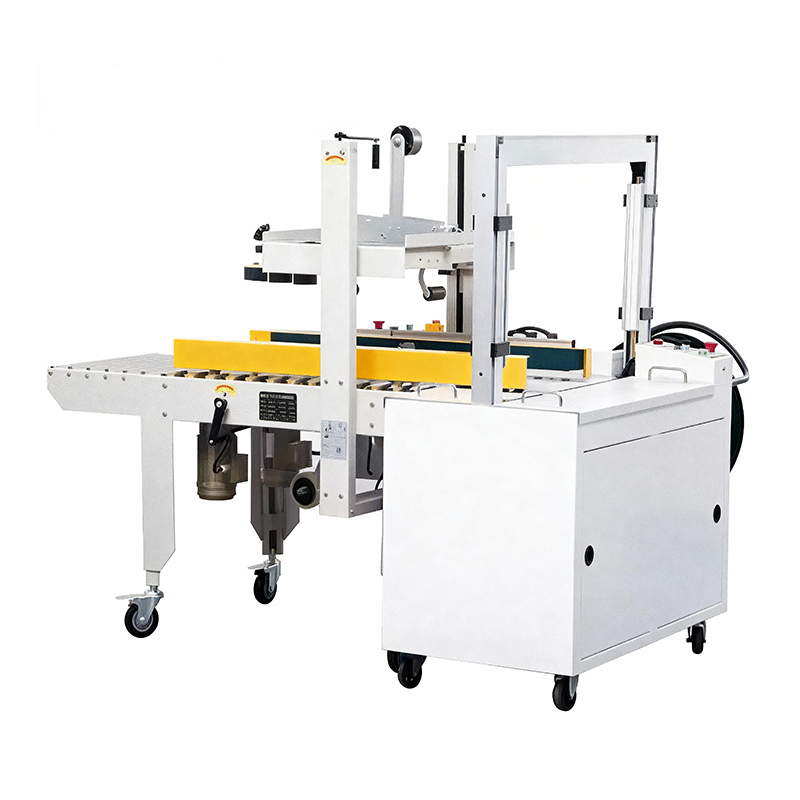
The Automatic Carton Sealer is a versatile packaging line solution that automatically applies pressure-sensitive tape to the top and/or bottom flaps of shipping cartons. It efficiently replaces manual taping, ensuring uniform, secure, and professional seals every time. Many models feature automatic size adjustment to handle a range of carton dimensions seamlessly. By speeding up the closing process, ensuring seal integrity, and reducing labor, it is an essential asset for e-commerce fulfillment, manufacturing shipping departments, and any high-volume operation seeking to optimize its outbound packaging workflow.

Shanghai We Pack Co., Ltd.
Founded in 2019, Shanghai We Pack Co., Ltd. is a subsidiary of Shanghai Mengmao Packaging Technology Co., Ltd. is an integrated packaging company specializing in cargo securing, transport protection, and loading optimization solutions. Automatic Carton Sealer Manufacturers and Automatic Carton Sealer Factory in China.
With a 10,000 m² facility, 120 employees, dedicated R&D, testing, and quality control teams, and 9 production lines, wepack offers end-to-end capabilities from design and testing to mass production.
Driven by an engineering approach, wepack strictly controls every key stage—from raw materials to finished products—to ensure reliable performance in real transport conditions.
We Pack’s core products include paper edge protectors, container dunnage air bags, and lashing systems. Custom Automatic Carton Sealer. Through joint ventures and industrial collaboration, our portfolio has expanded to paper pallets, plastic pallets, slip sheets, carton sealing tapes, bubble wrap, stretch film, strapping, and packaging equipment.We provide one-stop packaging and transport protection solutions tailored to different cargo types and logistics scenarios.
All We Pack products comply with AAR, SGS, TUV, and other international transport test standards. We support OEM / ODM customization, offering product design and free packaging solution planning based on cargo type, loading method, load requirements, budget, and printing needs—helping customers reduce total logistics costs by 15–30% while ensuring transport safety.
Certificate
Certificate of Honor


WHAT WE
HAPPENED
Checkout Our Current
News
Industry knowledge
Shanghai We Pack Co., Ltd. is an integrated packaging company focused on cargo securing, transport protection and loading optimisation. Founded in 2019 as a subsidiary of Shanghai Dreammao Packaging Technology Co., Ltd., we operate a 10,000 m² facility with 120 employees, dedicated R&D, testing and quality control teams, and nine production lines. The Automatic Carton Sealer sits at the end of that chain — the machine that turns a filled, strapped or wrapped load into a closed, sealed, shippable carton.
We supply the sealer together with the consumables it runs and the protection materials that travel with the load, so the closing station, the strapping station and the pallet build are specified as one system rather than three separate purchases.
Where the Automatic Carton Sealer Fits on the Outbound Line
The sealer applies pressure-sensitive tape to the top and/or bottom flaps of shipping cartons, replacing manual taping with a uniform, repeatable seal. It is used in e-commerce fulfilment, manufacturing shipping departments and any high-volume outbound operation where carton closing is the bottleneck. Because it works on the carton itself rather than the load, it normally sits after case packing and before strapping, stretch wrapping or palletising.
- Top-only, bottom-only or top-and-bottom taping configurations
- Automatic size adjustment on many models, for lines running mixed carton ranges
- Side-belt drive that carries the carton through the tape heads at a controlled speed
- Standalone operation or conveyor-linked operation inside an existing packing line
- Seal position and tape tension held constant from the first carton to the last
Our Automatic Carton Sealer Range
As an Automatic Carton Sealer manufacturer, we build the machine around the carton, the tape and the line. The MH-FJ-1AWE Automatic Carton Sealer with adjustable top and bottom taping is the reference model: it seals both flaps in a single pass and can be set to the carton dimensions in use. Where a project only needs one face sealed, or where the carton arrives with one flap already closed, we configure the tape heads accordingly.
The sealer belongs to our Packaging Tool range, which also covers electric and pneumatic strapping machines, automatic strapping machines and PP/PET strap dispensers. Carton sealing tape, Packing Strap and Stretch Film come from the same production and supply chain, so the machine and the material it runs are matched rather than sourced separately.
Configuration Choices We Work Through
| Configuration variable | Options we work with | What it changes on the line |
|---|---|---|
| Taping position | Top only, bottom only, top and bottom | Number of tape heads, machine length, and where the sealer sits relative to the case packer |
| Carton size handling | Fixed frame, manual adjustment with scales, automatic size adjustment | Changeover time between SKUs; automatic adjustment suits mixed-size e-commerce orders |
| Drive system | Side-belt drive, top and bottom belt, roller infeed | Grip and stability on tall, light or partially filled cases |
| Tape specification | Pressure-sensitive carton sealing tape, plain or printed, in the width matched to the flap | Seal strength, tamper evidence and brand presentation |
| Frame and finish | Powder-coated carbon steel; stainless where washdown or humidity demands it | Corrosion resistance and cleaning routine in cold-store or food-adjacent areas |
| Controls | PLC with photo sensors, foot switch, conveyor interface, alarm output | Standalone use versus inline operation with upstream and downstream equipment |
| Integration level | Standalone, linked to an automatic strapping machine, linked to a stretch wrapper or palletiser | Line layout, accumulation between stations and throughput balance |
Carton, Flap and Tape Considerations
Corrugated board grade, flute direction and moisture content all change how a carton behaves under a tape head. A single-wall B-flute carton with clean, square flaps closes differently from a double-wall or a recycled-content board that has taken on humidity in a cold warehouse. These are the variables we examine before fixing a machine configuration:
- Carton length, width and height, and the full spread of SKUs the line will run
- Board grade, flute type, and whether cartons are new or re-used
- Flap gap, flap memory, and whether inner flaps stay folded during transport to the sealer
- Fill level and load distribution — overfilled cartons bow and lift the tape head
- Tape width, adhesive type, and any printing or branding requirement
- Ambient dust, humidity and temperature at the sealing station
Where a carton range is unusually wide, we look at whether a single frame can cover it or whether the line is better served by two sealing stations set to different size bands.
Line Integration, Controls and Throughput Matching
A sealer is specified against the slowest point in the line, not the fastest. If the case packer runs faster than the palletiser, the sealer is sized to the palletiser and the difference is absorbed by accumulation. We configure the control system around the required line interface, so the sealer reports its state to the line rather than running as an isolated island.
- Conveyor height, width, direction of travel and transfer points
- Infeed and outfeed equipment — case erector, labeller, checkweigher, strapping machine, stretch wrapper
- Carton gap control and accumulation before the tape heads
- PLC and photo-sensor logic, alarm handling and line-stop signals
- Electrical supply, compressed air where used, and available floor space
- Guarding, emergency stop placement and operator access for tape roll changes
Engineering Value: Seal Consistency, Labour and Material Control
Seal consistency is the first gain. A machine-applied tape strip sits square on the flap centre line with controlled pressure along its length, so the seal does not lift in transit and the carton keeps its shape through handling and stacking. The second gain is labour: one operator can supervise a sealer that replaces a manual taping station, and that role shifts from taping to line tending. The third is material control — tape consumption per carton becomes predictable, which makes consumable cost plannable against volume instead of estimated.
Across the wider portfolio, our engineering and integration approach targets a 15–30% reduction in total logistics costs while keeping transport safety intact. That figure comes from combining the right protection materials with the right loading method, not from removing protection.
Quality Assurance and Acceptance Testing
Our management system holds ISO 9001 certification, and products across the portfolio are tested against AAR, SGS and TUV transport standards. Quality control runs from incoming raw material through forming, cutting, welding, assembly and final packing, with in-house laboratory testing supported by third-party verification.
For a sealer project, acceptance is built around your own cartons rather than a demonstration box:
- Factory run using the actual carton size, board grade and fill weight
- Tape adhesion and seal position checked on the top and bottom flaps
- Repeatability verified across a run of cartons, not a single sample
- Changeover check between the smallest and largest carton in the range
- Recorded settings, so the line can be returned to the validated set-up after a changeover
Information We Use to Configure Your Solution
A workable proposal starts from the working point, the material and the production target. The following inputs let us fix the frame, tape heads, controls and consumable specification without guesswork:
- Carton dimensions and the full size range, with the most frequently run size
- Board grade, flute type, fill weight and whether cartons are new or re-used
- Required throughput in cartons per minute, and the shift pattern
- Which flaps need sealing — top, bottom or both
- Tape width, adhesive type and any printed branding
- Conveyor height, line direction and the equipment immediately upstream and downstream
- Available floor space, electrical supply and compressed air availability
- Operating environment — temperature, humidity, dust and washdown practice
- Control language, alarm expectations and any line-level data requirement
- Documentation, spare parts and operator training scope
Customization, Documentation and Delivery Scope
OEM and ODM customization covers machine configuration, tape head arrangement, frame dimensions, voltage, control language and branding. We provide product design and packaging solution planning based on cargo type, loading method, load requirements, budget and printing needs, and we support the same customization route across the consumables that feed the machine.
Delivery scope is agreed per project and typically covers the sealer, its tape heads, the documentation set, and — where the line calls for it — matched consumables and a recommended spare parts list. Our operations centre sits in Fengxian District, Shanghai, roughly 25 km from Shanghai Port and 30 km from Pudong International Airport, which keeps export handling and sample dispatch straightforward.
Frequently Asked Questions
What carton sizes can the Automatic Carton Sealer handle?
The frame is built around your carton range. The MH-FJ-1AWE seals top and bottom flaps with adjustable taping, and many models in the range use automatic size adjustment so mixed-size orders can run without stopping the line. We confirm the working range from the smallest and largest carton you actually ship, not from a catalogue figure.
Does it seal both the top and the bottom of the carton?
Yes. The MH-FJ-1AWE applies pressure-sensitive tape to the top and bottom flaps in one pass. We also configure top-only or bottom-only versions where the carton arrives with one face already closed, or where the line layout only requires one seal.
Can the sealer run inline with a strapping machine or a stretch wrapper?
It can. We match conveyor height, direction and transfer points to the equipment either side, and configure the PLC and sensor logic so the sealer signals its state to the line. Because we also supply automatic strapping machines and stretch film, the closing, strapping and wrapping stations can be specified as one sequence.
Which tape does the machine use?
It runs pressure-sensitive carton sealing tape. Width, adhesive type and print are matched to the board grade and flap geometry, since a tape that performs well on a clean B-flute carton may lift on a humid, recycled-content board. Tape is supplied through the same production and supply chain as the machine.
What do you need from us to prepare a quotation?
Carton dimensions and range, board grade and fill weight, required cartons per minute, which flaps need sealing, tape preference, conveyor height and line direction, available space and utilities, and the operating environment. With those inputs we can fix the frame, tape heads, controls and consumable specification and return a configuration with the acceptance test plan.
How is quality verified before shipment?
Production is controlled from raw material to finished goods under an ISO 9001 management system, with in-house laboratory testing and third-party verification through SGS and TUV where a project requires it. Sealer acceptance runs on your cartons, covering seal position, tape adhesion, repeatability across a run and changeover between size extremes.

PRODUCT
CONTACT INFO
-
 +86-137 7421 9489
-
 +86-021-67558008
-
 [email protected]
-
 No.769 ,23# building, Fengliang Road,Fengcheng town,Fengxian District,Shanghai,China
MOBILE QR CODE

