
 Español




Black Plastic Slip Sheet Manufacturers
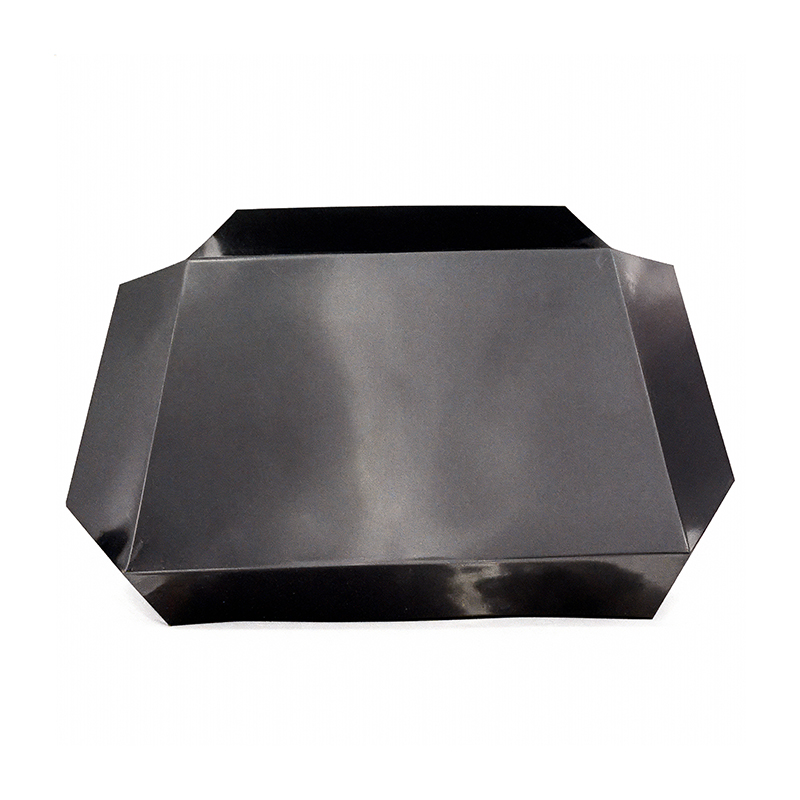
Made from durable HDPE or similar polymers, our Plastic Slip Sheets offer high strength, moisture resistance, and a smooth surface for easy sliding. They are hygienic, washable, and suitable for repeated use in various industrial and food-grade environments.

Shanghai We Pack Co., Ltd.
Founded in 2019, Shanghai We Pack Co., Ltd. is a subsidiary of Shanghai Mengmao Packaging Technology Co., Ltd. is an integrated packaging company specializing in cargo securing, transport protection, and loading optimization solutions. Black Plastic Slip Sheet Manufacturers and Black Plastic Slip Sheet Factory in China.
With a 10,000 m² facility, 120 employees, dedicated R&D, testing, and quality control teams, and 9 production lines, wepack offers end-to-end capabilities from design and testing to mass production.
Driven by an engineering approach, wepack strictly controls every key stage—from raw materials to finished products—to ensure reliable performance in real transport conditions.
We Pack’s core products include paper edge protectors, container dunnage air bags, and lashing systems. Custom Black Plastic Slip Sheet. Through joint ventures and industrial collaboration, our portfolio has expanded to paper pallets, plastic pallets, slip sheets, carton sealing tapes, bubble wrap, stretch film, strapping, and packaging equipment.We provide one-stop packaging and transport protection solutions tailored to different cargo types and logistics scenarios.
All We Pack products comply with AAR, SGS, TUV, and other international transport test standards. We support OEM / ODM customization, offering product design and free packaging solution planning based on cargo type, loading method, load requirements, budget, and printing needs—helping customers reduce total logistics costs by 15–30% while ensuring transport safety.
Certificate
Certificate of Honor


WHAT WE
HAPPENED
Checkout Our Current
News
Industry knowledge
Shanghai We Pack Co., Ltd. builds black plastic slip sheets into complete palletless loading systems. Founded in 2019 as a subsidiary of Shanghai Dreammao Packaging Technology Co., Ltd., we operate a 10,000 m² facility with nine production lines, dedicated R&D, testing and quality control teams, and supply HDPE slip sheets alongside dunnage bags, paper corner protectors, strapping and stretch film so a single loading plan can be equipped from one source. The black HDPE sheet is the economical, high-turnover answer to the wooden pallet: it removes pallet weight and height from every container, survives repeated handling, and slides cleanly under a push-pull attachment.
Black Plastic Slip Sheet Range and Positioning
As a Black Plastic Slip Sheet manufacturer in China, we treat the sheet as a load-handling interface rather than a plastic mat. Every order is defined by the unit load it has to move, the attachment that grips it, and the number of trips it must survive.
- Tab configuration — single-tab, two-tab and multi-tab sheets, with tab width and position matched to the push-pull attachment on the unloading dock.
- Sheet gauge — selected against the working load per sheet and the number of sheets stacked under one unit, not against a catalogue default.
- Surface behaviour — smooth sliding face for the container floor, with friction options on the load face where cartons or bags tend to creep.
- Identification — light-coloured printing on the black surface for pool numbers, customer logos and return-loop tracking.
Material Behaviour: HDPE and the Black Pigment
Black slip sheets are produced from high-density polyethylene, a polymer chosen for tensile strength, moisture resistance and a low-friction surface that lets a fully loaded unit slide across a container floor. Unlike paper slip sheets, an HDPE sheet does not soften when the container sweats, and it can be washed and returned to service — which is why the format suits industrial and food-grade environments where wooden pallets are restricted.
Black pigmentation is normally carbon-black based, and that is the practical reason the black sheet is the default for loads staged on open docks, in direct sun or on humid routes. Colour is also a handling signal: a black sheet reads as a returnable asset, while a white or printed sheet is easier to mark for one-way export identification.
Application Fit by Cargo Type and Loading Method
| Cargo and loading pattern | Slip sheet configuration focus | Matched protection |
|---|---|---|
| Bagged resin, fertiliser and minerals, floor-loaded | High-tensile HDPE sheet, wide tab for a firm attachment grip, friction face under the bags | Dunnage bags for void fill between rows |
| Cartons and consumer goods on slip-sheeted units | Medium gauge, single tab, printed identification, tight sheet-to-carton footprint | Stretch film unitising, corner protectors on stacked edges |
| Beverage, canned goods and other dense unit loads | Heavier gauge, reinforced tab, two-tab layout for either-end unloading | Strapping and anti-slip interlayers |
| Tiles, ceramics, stone and building materials | Abrasion-resistant sheet, protected tab edge, load spread across the full sheet area | Paper corner protectors and edge protection |
| Food, beverage ingredients and hygiene-controlled goods | Washable smooth-surface HDPE, no wood contact, easy to clean between trips | Stretch film and sealed unitising |
| Closed-loop distribution and returnable pools | Durable gauge for repeated trips, printed pool number, consistent sheet dimensions across batches | Strapping systems and reusable unitising film |
Critical Specifications We Confirm Before Production
A slip sheet that fits the container but not the attachment stops the whole unloading cycle. These are the values we lock down with the customer before a production run is scheduled.
- Sheet length and width — set by the unit footprint and the container internal width, allowing clearance for the tab to be gripped.
- Thickness and unit weight — the working load carried by one sheet, and whether sheets are used singly or in a stack.
- Tab geometry — number of tabs, tab depth and corner radius, matched to the push-pull jaw or clamp on site.
- Surface finish — sliding face versus load face, and whether an anti-slip treatment is needed under the bottom layer.
- Printing — logo, pool number, handling arrows or compliance text, in a colour that reads on black.
- Edge condition — trimmed or rounded edges where operators handle sheets by hand.
Push-Pull Handling and the Loading Interface
Slip sheets only pay back when the handling equipment is part of the plan. We size the tab so a standard push-pull attachment can engage it without tearing, and we check the container floor condition, the presence of floor nails or debris, and the angle at which the unit is pulled out. A sheet that is too thin for the load will stretch at the tab; one that is too thick wastes container height and cube.
Where a customer runs both palletised and palletless lanes, we supply the black HDPE sheet alongside the White Plastic Slip Sheet so the two formats can be colour-coded by lane and kept out of each other's return loops.
Complementary Cargo Securing and Protection
A slip sheet carries the load; it does not stop the load from moving. We plan the sheet together with the rest of the securing system, because the gap left by removing a pallet has to be filled and the unit has to be restrained in all three directions.
- Dunnage Bag systems fill the longitudinal and lateral voids created when pallets are removed from a container plan.
- Paper Corner Protector profiles keep strapping and film from crushing carton edges on slip-sheeted stacks.
- Stretch film, strapping and anti-slip interlayers complete the unit so it can be pulled as one mass rather than as loose layers.
Quality Assurance and Acceptance Testing
Black HDPE slip sheets are controlled from the incoming polymer through to the finished pallet. Our in-house laboratory and testing equipment run tensile and stress checks on the sheet and tab, and third-party bodies including SGS and TUV are used where a project requires independent verification. The management system is certified to ISO 9001, and our wider product portfolio is tested against AAR, SGS and TUV transport standards.
For an acceptance run we agree the test points in advance: sheet dimensions, tab pull behaviour, unit load carried without permanent deformation, and print legibility. Batch records are kept so a repeat order can be compared against the original working point.
Information We Use to Configure Your Solution
Our proposal is built from the working point, the material and the production target. The more of the following you can share, the faster we can return a sheet specification and a quotation.
- Unit load weight, footprint and stack height, plus the number of sheets used per unit.
- Container or trailer internal dimensions, and whether the load is floor-loaded or stacked.
- Push-pull attachment make and jaw type, or the manual handling method if no attachment is used.
- Cargo type, surface condition and any sharp edges or abrasive contact points.
- Route conditions — humidity, open-dock staging, direct sun, number of trips per sheet.
- Printing artwork, pool numbering and any compliance text required on the sheet.
- Order quantity, delivery schedule and destination port.
Customization, Packaging and Delivery Scope
We support OEM and ODM work on size, gauge, tab layout, surface treatment and printing, and we plan the packaging solution free of charge from the cargo type, loading method, load requirement and budget. Minimum order quantity starts from 100 pieces, which keeps trial orders practical while the nine production lines absorb larger and frequently changing volumes.
Sheets ship palletised and strapped, with edge protection and stretch wrapping for the sea leg. Trade terms include EXW, FOB, CIF and DDP, with T/T and, for established accounts, L/C. The plant sits roughly 25–35 km from Shanghai Port and about 30 km from Pudong International Airport, which keeps export consolidation straightforward.
Frequently Asked Questions
What thickness of black plastic slip sheet does my load need?
Thickness follows the load carried by one sheet, the number of sheets in the unit and the way the tab is pulled. We calculate from the unit weight and footprint, then confirm the gauge against the push-pull attachment so the tab does not stretch during unloading. Two customers with the same carton size can end up with different gauges because their unit weights and trip counts differ.
Can the sheets be printed with our logo and used in a returnable pool?
Yes. Black HDPE takes light-coloured print well, so pool numbers, logos and handling marks stay readable after washing. For closed-loop distribution we also keep sheet dimensions consistent between batches, which matters when sheets from different deliveries are mixed in the same pool.
How does a black HDPE slip sheet compare with a paper slip sheet?
Paper slip sheets are lighter on cost per trip and suit dry one-way loads where the sheet is discarded on arrival. HDPE resists moisture, tearing and repeated handling, can be washed, and holds its sliding surface on humid sea routes — the better choice when sheets come back or when the container sweats. Many customers run both and split them by lane.
Do you supply the dunnage bags and corner protectors with the slip sheets?
We do. Removing pallets changes the void pattern inside the container, so the dunnage bag size and the corner protector profile are usually re-planned at the same time as the sheet. Supplying the sheet, the void fill and the edge protection from one production base keeps the loading plan internally consistent and simplifies the shipping documentation.
What is the minimum order quantity and how is a first order handled?
The minimum order quantity is 100 pieces, so a trial run against a real container plan is realistic. A first order normally starts with a sheet drawing or sample, a confirmed specification, and a sample or pilot batch for the loading team to test with the actual push-pull attachment before volume production is scheduled.
Which documents accompany a slip sheet shipment?
Shipments are issued with the commercial and packing documentation for the order, and where the project calls for it we provide material and test documentation from our in-house laboratory or from a third-party testing body. The document set is agreed at the quotation stage so nothing is discovered at the port.

PRODUCT
CONTACT INFO
-
 +86-137 7421 9489
-
 +86-021-67558008
-
 [email protected]
-
 No.769 ,23# building, Fengliang Road,Fengcheng town,Fengxian District,Shanghai,China
MOBILE QR CODE

