
 Español




Montmorillonite Desiccant Manufacturers
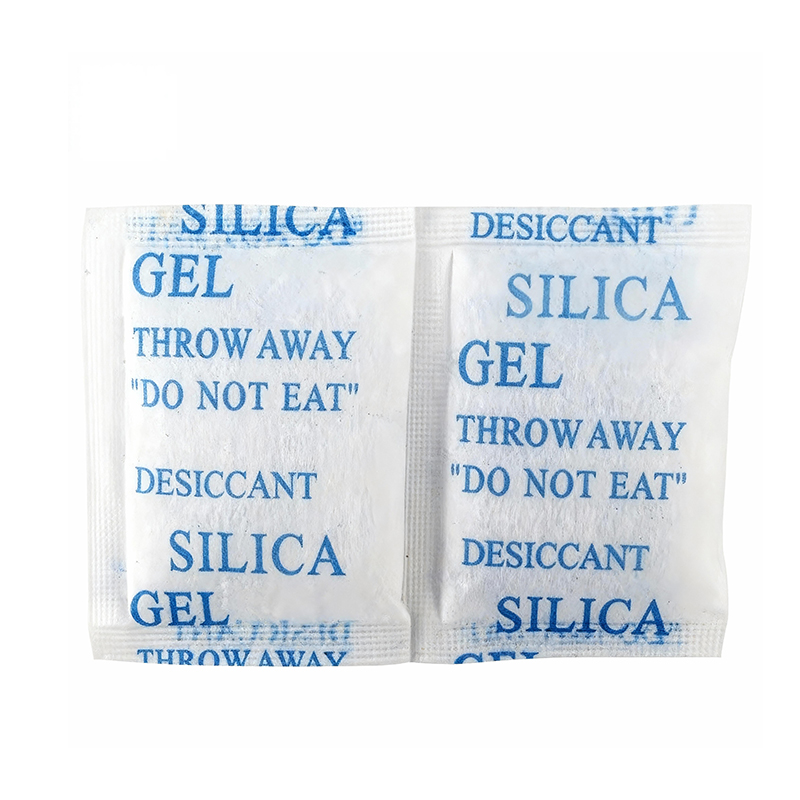
Sourced from high-purity mineral clay, this eco-friendly desiccant provides effective static dehumidification and odor elimination. It is fully degradable, free of toxic additives, and perfect for natural products, textiles, archival materials, and green packaging solutions.

Shanghai We Pack Co., Ltd.
Founded in 2019, Shanghai We Pack Co., Ltd. is a subsidiary of Shanghai Mengmao Packaging Technology Co., Ltd. is an integrated packaging company specializing in cargo securing, transport protection, and loading optimization solutions. Montmorillonite Desiccant Manufacturers and Montmorillonite Desiccant Factory in China.
With a 10,000 m² facility, 120 employees, dedicated R&D, testing, and quality control teams, and 9 production lines, wepack offers end-to-end capabilities from design and testing to mass production.
Driven by an engineering approach, wepack strictly controls every key stage—from raw materials to finished products—to ensure reliable performance in real transport conditions.
We Pack’s core products include paper edge protectors, container dunnage air bags, and lashing systems. Custom Montmorillonite Desiccant. Through joint ventures and industrial collaboration, our portfolio has expanded to paper pallets, plastic pallets, slip sheets, carton sealing tapes, bubble wrap, stretch film, strapping, and packaging equipment.We provide one-stop packaging and transport protection solutions tailored to different cargo types and logistics scenarios.
All We Pack products comply with AAR, SGS, TUV, and other international transport test standards. We support OEM / ODM customization, offering product design and free packaging solution planning based on cargo type, loading method, load requirements, budget, and printing needs—helping customers reduce total logistics costs by 15–30% while ensuring transport safety.
Certificate
Certificate of Honor


WHAT WE
HAPPENED
Checkout Our Current
News
Industry knowledge
Shanghai We Pack Co., Ltd. is a Montmorillonite Desiccant manufacturer and an integrated supplier of cargo securing and transport protection materials. Founded in 2019 as a subsidiary of Shanghai Dreammao Packaging Technology Co., Ltd., we operate a 10,000 m² facility with 120 employees, dedicated R&D, testing and quality control teams, and 9 production lines that carry a project from design and testing through to mass production.
Desiccant is one part of that program. Moisture control only holds when the load is also restrained and the unitized stack stays intact, so we quote clay desiccant alongside dunnage bags, edge protection, slip sheets, stretch film and strapping rather than as an isolated consumable.
Clay-Based Moisture Control: What Montmorillonite Desiccant Does
Montmorillonite desiccant is produced from natural clay with a layered silicate structure. Water vapour is taken up physically into the mineral's internal surfaces and held there, which is why the material keeps working through the long humid stretches of an ocean voyage without releasing liquid into the container.
- Physical adsorption. Moisture is bound inside the clay structure rather than consumed in a chemical reaction, so a punctured sachet does not leak a corrosive brine.
- Capacity rises with humidity. Uptake increases as container relative humidity climbs, matching the way condensation risk develops after loading.
- Naturally DMF-free. No dimethyl fumarate and no toxic additives, which suits textiles, leather, footwear and consumer packaging.
- Low disposal burden. The clay is degradable and can be handled as general waste at destination.
- Cost position. Where the target is not an ultra-dry environment, clay desiccant delivers protection at a lower cost per unit than silica gel or molecular sieve.
The practical boundary is worth stating plainly: clay is a mid-range adsorbent. For sealed electronics packaging with a very low target relative humidity, silica gel or molecular sieve remains the better fit, and we supply those formats as well.
Our Montmorillonite Desiccant Range
Formats are built around where the moisture load sits: inside a carton, inside a palletized stack, or in the free air of a container. The construction changes with the job, because a sachet that works between folded garments is not the same product as a bag that hangs for six weeks against a container wall.
| Format | Construction | Typical placement | Customization |
|---|---|---|---|
| Unit-dose sachets | Non-woven or paper/PE laminate, heat-sealed | Inside retail cartons, component bags, shoe boxes | Net weight, print, micro-perforation |
| Standard sachets | Dust-controlled non-woven fabric | Between layers of stacked goods, master cartons | Size, substrate, private label |
| Bulk desiccant bags | High-strength non-woven with reinforced seams | Container floor, pallet gaps, machinery voids | Net weight, eyelets, seam reinforcement |
| Container hanging bags | Non-woven bag with hook or eyelet | Suspended from lashing rings or door hardware | Hook type, print, multi-bag packs |
| Lay-flat strips | Flat non-woven strip, low profile | Across cargo tops or between pallet layers | Length, width, print |
| OEM / ODM programs | Customer-specified construction and artwork | Distributor and retail programs | Artwork, carton design, kit assembly |
Application Fit by Cargo and Route
Desiccant selection follows the cargo, not the catalogue. The table below shows how we map moisture risk to format and to the securing products that travel with it.
| Cargo or scenario | Moisture risk | Desiccant approach | Complementary protection |
|---|---|---|---|
| Textiles, apparel, home textiles | Mildew, musty odour, dye migration | Sachets in cartons plus container-level bags | Stretch film for pallet unitization |
| Leather goods and footwear | Mould on uppers, corrosion on hardware | Unit-dose sachets in boxes and master cartons | Edge protection on pallet corners |
| Furniture and wood products | Joint swelling, surface mould, veneer lifting | Hanging bags at the door end and along walls | Dunnage bags to stop load shift |
| Metal parts, tools, machinery | Flash rust on machined surfaces | Bulk bags near bases and internal voids | Strapping and lashing for restraint |
| Electronics and appliances | Condensation on boards and connectors | Low-dust sachets in inner packaging | Cushioning and carton sealing |
| Paper, archives, printed matter | Wavy sheets, blocked ink, mould | Sachets in cartons, container bags for full loads | Slip sheets for palletless loading |
| Glass, ceramics, stone | Condensation between panes, label damage | Container-level bags, sachets in crates | Corner protectors and dunnage bags |
Specifications That Decide Performance
Two sachets of the same outer size can behave very differently. These are the points we fix during sample approval, because each one changes how much water vapour is actually removed over a six-week crossing.
- Net desiccant weight per unit, measured on the clay rather than the finished sachet.
- Adsorption behaviour across the humidity and temperature band the shipment will see, not a single laboratory point.
- Sachet substrate — non-woven, high-MVTR film or paper laminate — which sets the moisture transmission rate, tear strength and dust level.
- Seal integrity and seam width, since a weak seal releases clay dust onto finished goods.
- Dust and lint control for electronics, glass and clean packaging lines.
- Print and ink, including low-migration inks where the sachet sits inside consumer packaging.
- Barrier outer packaging that protects shelf life until the carton is opened at the loading dock.
Sizing a Desiccant Program
Quantity is calculated from the moisture load the shipment has to absorb, not from a fixed number of bags per container. We work through the following inputs with the customer's loading plan in hand.
- Enclosed air volume of the container or master carton, and the volume occupied by cargo.
- Cargo moisture content and hygroscopicity — kiln-dried furniture and green timber behave differently.
- Packaging barrier: cartons, stretch film, shrink hoods and liners all slow vapour movement.
- Transit duration and route climate, including temperature cycling that drives condensation.
- Container condition, ventilation and whether the box has been pre-dried.
- Target protection period and the humidity level the cargo can tolerate.
- Placement points available: lashing rings, door end, pallet gaps, between layers.
Our proposal states the assumed working point, the recommended format and count, and the placement plan, so the sizing can be checked against the actual loading diagram before the order is released.
Integration With Cargo Securing and Transport Protection
Desiccant performs best inside a load that is already stable. When cargo shifts, bags are crushed, air channels open up and moisture migrates to new surfaces. That is why we plan moisture control together with the rest of the loading scheme.
- Dunnage Bag void filling keeps the stack from moving and protects hanging desiccant bags from abrasion.
- Paper Corner Protector profiles stop edge crushing where straps and desiccant bags meet the load.
- Stretch Film unitizes pallets and reduces the free air that desiccant has to dry.
- Slip sheets, strapping and inflatable tools complete the same loading plan for palletless or high-cube shipments.
Quality Control and Acceptance Evidence
Clay is a natural mineral, so incoming material varies. We control that variation at the raw material stage and again at the finished product stage, using in-house testing supported by third-party laboratories.
- Incoming clay checked for purity, moisture content and foreign matter before it enters production.
- In-process checks on fill weight, seal strength and sachet integrity on the line.
- Finished-goods verification of net weight, adsorption behaviour and dust level.
- Products tested against AAR, SGS and TUV transport test standards, with reports issued by accredited third-party institutions.
- Management system aligned with ISO 9001, with batch traceability from raw material lot to shipped carton.
- Sample approval before mass production, so the accepted sample becomes the acceptance reference.
OEM / ODM Customization and Printing
Custom work is normal production for us rather than an exception. We build to drawings or samples and support distributors who need their own brand on the shelf.
- Sachet and bag dimensions, net weight and substrate selection.
- Printed artwork, warning text, language variants and batch coding.
- Private-label cartons, retail packs and multi-language instructions.
- Kit assembly that combines desiccant with dunnage bags, edge protection or strapping in one shipment.
- Packaging solution planning at no charge, based on cargo type, loading method, load requirement, budget and printing needs.
Information We Use to Configure Your Solution
A quotation is only as good as the inputs behind it. These are the details our engineering team works from when preparing a desiccant configuration and price.
| Project input | What it determines | Detail we ask for |
|---|---|---|
| Cargo type and packaging | Sachet format and count | Cartons, shrink-wrapped pallets, bare metal, textiles |
| Enclosed volume | Total desiccant mass required | Container internal volume or master carton volume |
| Transit duration and route | Protection period and safety margin | Port pairs, season, expected days in transit |
| Climate and temperature profile | Adsorption capacity selected | Tropical, temperate, winter crossing, cycling range |
| Target relative humidity | Whether clay desiccant is sufficient | General cargo protection or a drier specification |
| Placement points | Bag construction and hanging hardware | Lashing rings, door end, pallet gaps, between layers |
| Printing and branding | Artwork and plate setup | Logo, warnings, language, batch coding |
| Compliance and documentation | Test reports and certificates issued | MSDS, RoHS, buyer specification, destination rules |
| Order volume and schedule | Production planning and packing | Trial quantity, repeat pattern, delivery window |
Packaging, Delivery and In-Plant Handling
Desiccant begins working the moment it meets humid air, so the outer packaging is part of the product. Units ship in sealed barrier bags inside export cartons, palletized for container loading and consolidated with other cargo protection items from our Shanghai facility.
- Keep barrier bags closed in a dry, ventilated store away from direct sunlight.
- Open only the quantity needed for the loading shift and reseal the remainder.
- Rotate stock by batch so older material is used first.
- Record batch numbers on the loading sheet for traceability at destination.
Frequently Asked Questions
How does montmorillonite desiccant differ from silica gel desiccant?
Both are physical adsorbents. Silica gel holds a higher share of its weight at low humidity and is often chosen for electronics and precision goods in sealed packaging. Montmorillonite is a natural clay with a lower cost per unit, performs well across the mid-to-high humidity range found inside containers, and is DMF-free and degradable. We supply both and match the choice to the cargo, the packaging barrier and the protection period.
How much desiccant does a 40 ft container need?
<p style="font
PRODUCT
CONTACT INFO
-
 +86-137 7421 9489
-
 +86-021-67558008
-
 [email protected]
-
 No.769 ,23# building, Fengliang Road,Fengcheng town,Fengxian District,Shanghai,China
MOBILE QR CODE

