
 Español




Slip Sheets Suppliers
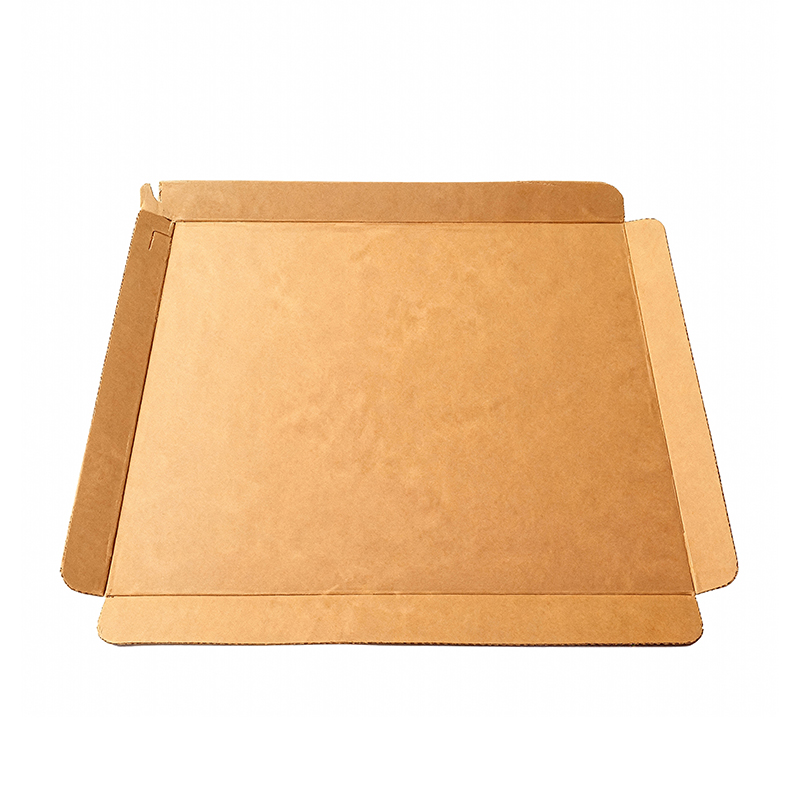
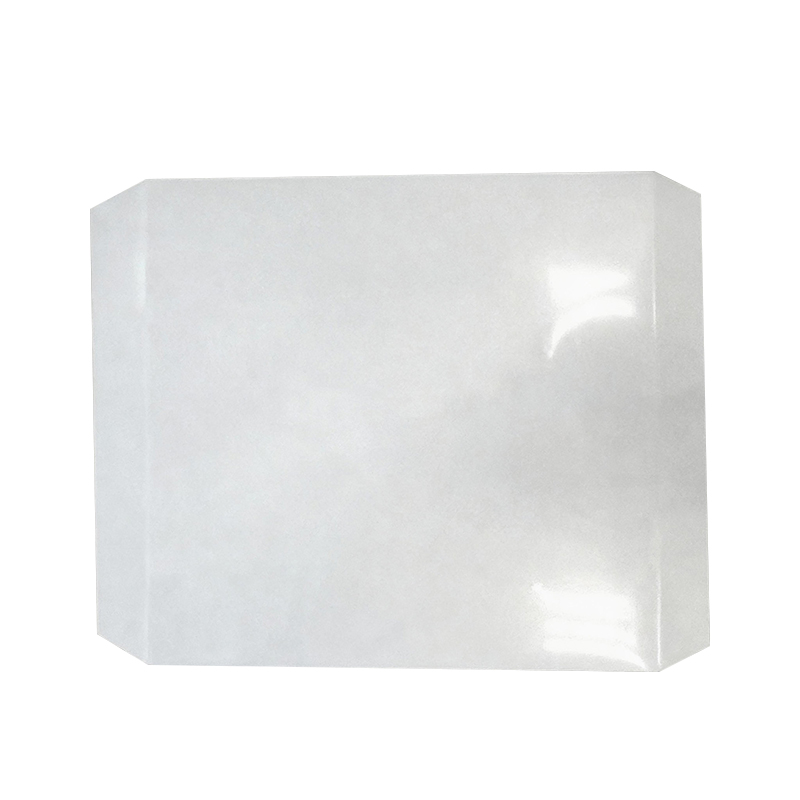
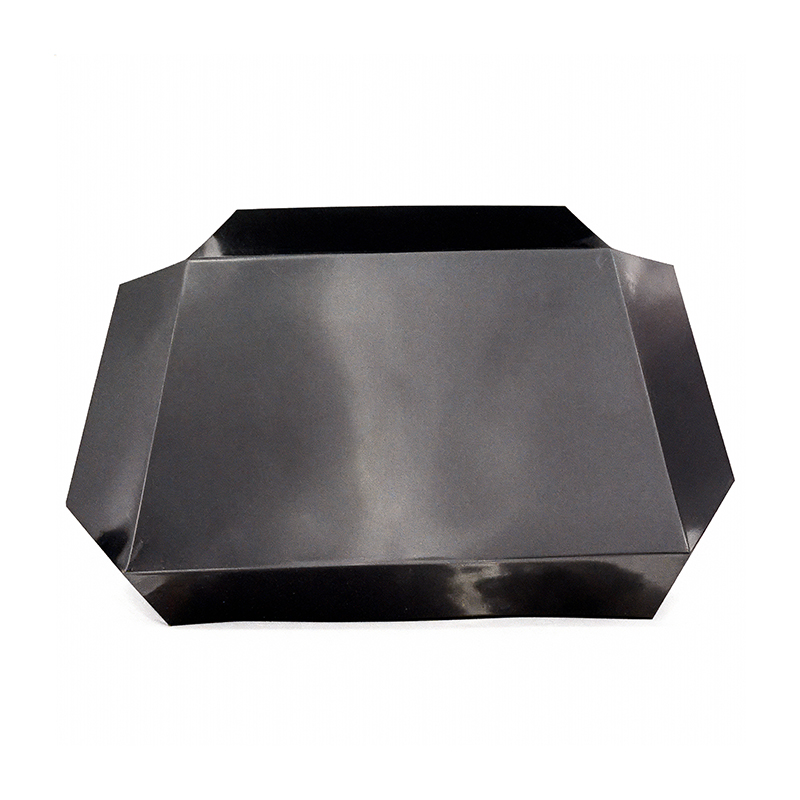
Slip Sheets are our innovative, lightweight answer to traditional wooden pallets. Made from durable paper or plastic, they significantly reduce shipping weight and cost, maximize container cube utilization, and are exempt from ISPM 15 fumigation requirements. Used with a pallet puller attachment, they enable fast, efficient push/pull handling, ideal for export logistics and operations seeking to improve sustainability and efficiency.

Shanghai We Pack Co., Ltd.
Founded in 2019, Shanghai We Pack Co., Ltd. is a subsidiary of Shanghai Mengmao Packaging Technology Co., Ltd. is an integrated packaging company specializing in cargo securing, transport protection, and loading optimization solutions. Slip Sheets Suppliers and OEM/ODM Slip Sheet Company in China.
With a 10,000 m² facility, 120 employees, dedicated R&D, testing, and quality control teams, and 9 production lines, wepack offers end-to-end capabilities from design and testing to mass production.
Driven by an engineering approach, wepack strictly controls every key stage—from raw materials to finished products—to ensure reliable performance in real transport conditions.
We Pack’s core products include paper edge protectors, container dunnage air bags, and lashing systems. Wholesale Slip Sheet. Through joint ventures and industrial collaboration, our portfolio has expanded to paper pallets, plastic pallets, slip sheets, carton sealing tapes, bubble wrap, stretch film, strapping, and packaging equipment.We provide one-stop packaging and transport protection solutions tailored to different cargo types and logistics scenarios.
All We Pack products comply with AAR, SGS, TUV, and other international transport test standards. We support OEM / ODM customization, offering product design and free packaging solution planning based on cargo type, loading method, load requirements, budget, and printing needs—helping customers reduce total logistics costs by 15–30% while ensuring transport safety.
Certificate
Certificate of Honor


WHAT WE
HAPPENED
Checkout Our Current
News
Industry knowledge
Shanghai We Pack Co., Ltd. manufactures and supplies slip sheets as part of an integrated cargo securing and transport protection programme. Founded in 2019 as a subsidiary of Shanghai Dreammao Packaging Technology Co., Ltd., we operate a 10,000 m² facility with 120 employees, dedicated R&D, testing and quality control teams, and 9 production lines, covering design, testing and mass production in one organisation. Our Slip Sheet manufacturer role sits inside a wider portfolio of dunnage bags, paper corner protectors, strapping, stretch film and packaging tools, so a palletless loading concept can be delivered as one coordinated package instead of a set of unrelated consumables.
Slip Sheets in a Palletless Loading Concept
A slip sheet is a thin sheet of paper or polymer placed under a unit load so the load can be pulled onto and pushed off a forklift attachment without a wooden pallet underneath. The sheet carries a protruding tab that the push-pull attachment grips, and the load travels on the sheet rather than on a pallet deck.
The commercial effect is weight and cube. Removing a wooden pallet removes roughly 15–25 kg per unit load and the deck height it occupies, which adds usable container height on every stack. Slip sheets are also exempt from ISPM 15 heat treatment and phytosanitary marking, which simplifies documentation for wood-restricted destinations.
Our Slip Sheet Range
Four product families cover the palletless handling and layer-stability requirements we see across export, closed-loop and internal logistics.
| Product family | Material and construction | Application fit | Handling and reuse profile |
|---|---|---|---|
| Paper Slip Sheet | Multi-layer kraft board with a die-cut tab; moisture-resistant grades available | One-way export loads, cartons, bagged goods, light to medium unit loads | Push-pull handling; recyclable with corrugated waste; single-trip economics |
| White Plastic Slip Sheet | HDPE sheet with a smooth sliding face and washable surface | Reusable internal loops, hygiene-sensitive and food-adjacent environments, general cargo | Push-pull handling; repeated trips; cleanable and returnable |
| Black Plastic Slip Sheet | HDPE with carbon black, economical grade | High-turnover transport, closed-loop distribution, industrial and construction goods | Push-pull handling; repeated trips; cost-focused programmes |
| Anti-slip Paper | Paper with a high-friction coating on one or both faces | Layer separation between stacked cartons, bags, board or drums to stop load shift | Placed between layers; used with or without a slip sheet beneath the unit load |
Matching Sheet Grade to the Load and the Handling Method
Tab geometry and the push-pull interface
The tab is the working part of the sheet. Its length, position and reinforcement decide whether the attachment can grip the load cleanly on the first attempt and release it without tearing the sheet edge. We size the tab against the gripper jaw opening and push plate height of the attachment actually installed at the loading dock, not against a generic drawing.
Thickness, stiffness and the load case
Thickness is selected against unit load weight, footprint, stack height and slide distance. Paper grades commonly run from about 0.6 mm to 1.2 mm and HDPE sheets from roughly 1.0 mm to 2.0 mm, but the working point matters more than the nominal figure: an over-stiff sheet is harder to pull under a low load, and an under-stiff sheet deflects at the tab when the load is heavy.
Friction control on both faces
Bare HDPE slides easily, which is exactly what push-pull handling needs and exactly what a truck bed does not. Where a load must stay put on a trailer floor or on a stacked layer, we apply a friction coating to one or both faces, or supply anti-slip paper as the interface between layers. The friction target is set from the transport mode and the restraint method used above the load.
Critical Specifications We Confirm Before Production
- Footprint and corner treatment — 1200 × 1000 mm, 1200 × 800 mm, 1100 × 1100 mm, 48 × 40 in, 48 × 48 in and 42 × 42 in are the common formats; corners are chamfered or rounded to reduce snagging on the container floor and the push plate.
- Sheet thickness and stiffness — fixed by the unit load, the number of layers and the slide distance the attachment has to cover.
- Tab type, length and position — single or double tab, die-cut or folded, centred or offset, with enough material left behind the jaw for repeated pulls.
- Surface condition — bare, embossed or friction-coated on one or both faces.
- Moisture condition for paper grades — supplied to a controlled moisture content so sheets stay flat through humid transit and do not curl at the tab.
- Print and identification — logo, handling instructions, size marking and batch coding.
- Packing format — bundled, carton-packed or palletised, matched to the receiving and dispensing method at the destination.
Application Fit Across Cargo Types
- Containerised export cartons and mixed palletised freight where cube utilisation is the binding constraint.
- Bagged resin, minerals, fertiliser and cement, where the bag surface needs a stable, low-friction interface.
- White goods, appliances and metal components, where the sheet must not mark or scratch the base of the product.
- Beverage, canning and food processing, where a washable HDPE sheet supports hygiene routines.
- Paper, board and print products, where anti-slip paper between layers stops stack shift without strapping every tier.
- Building materials, tiles and stone, where heavy unit loads need a stiff sheet and a reinforced tab.
- Air freight and LCL consolidation, where every kilogram and every centimetre of height is charged.
Integration with Loading, Securing and Unitizing
A slip sheet only performs as well as the system around it. We look at the push-pull attachment, the clamp truck or hand pallet truck that moves the load, the stretch wrapping or strapping that unitizes it, and the void filling or edge protection that restrains it inside the container. Where a programme combines several of these, we configure them together so the sheet thickness, tab and friction level are consistent with the rest of the load plan.
For loads that also need void filling or edge protection, our dunnage bags and paper corner protectors are produced in the same facility, which keeps tolerances and delivery schedules aligned across the shipment.
Quality Assurance and Acceptance Testing
Slip sheet production runs through a three-tier quality system: our own laboratory, production-line testing equipment, and third-party institutions such as SGS and TUV. Our management system is certified to ISO 9001, and products are tested against AAR, SGS and TUV international transport standards. Every key stage from raw material to finished goods is controlled, so performance in real transport conditions is repeatable rather than incidental.
Acceptance checks on a slip sheet order typically cover:
- Dimensional check on footprint, tab length and tab position.
- Thickness and basis weight verification against the approved sample.
- Tab die-cut integrity and edge condition after repeated grip cycles.
- Friction coefficient on coated faces where a slip-resistance target applies.
- Moisture content on paper grades before packing.
- Load and slide trial with the customer's attachment where a sample is supplied.
- Print legibility, packing count and batch traceability records.
OEM/ODM Customization and Printing
We build slip sheets to customer drawings or samples across size, thickness, colour, tab geometry, surface coating and printing. Private-label programmes are supported, and minimum order quantity starts at 100 pieces, which allows a trial run before volume commitments. Solution planning is provided at no charge, based on cargo type, loading method, load requirements, budget and printing needs, with the aim of reducing total logistics cost by 15–30% without compromising transport safety.
Information We Use to Configure Your Solution
Send the following and we can return a sized sheet, a tab drawing and a quotation rather than a generic price list.
- Cargo type, unit load weight and the footprint of the load.
- Stack height and number of layers per unit load.
- Handling method: push-pull attachment, clamp truck, hand pallet truck or manual placement.
- Attachment make and model, gripper jaw opening and push plate height.
- Container or trailer internal dimensions and target payload.
- Reuse expectation: single trip, closed loop, or a washable returnable pool.
- Environment: humidity, cold chain, food-contact requirements, outdoor storage.
- Destination market and any wood-packaging restrictions in force.
- Printing, colour and identification requirements.
- Annual volume, call-off pattern and preferred packing format.
Frequently Asked Questions
What is the difference between a paper slip sheet and a plastic slip sheet?
Paper slip sheets are board-based, recyclable with corrugated waste and normally chosen for one-way export loads where the sheet does not need to survive a return trip. Plastic slip sheets are HDPE, resist moisture, can be washed and are reused across many trips. The choice usually follows the reuse expectation and the hygiene or humidity conditions at both ends of the route.
Can slip sheets be handled with a standard forklift?
They need a push-pull attachment with a gripper jaw and push plate, not a bare fork. The tab is gripped, the load is drawn onto the plate and then pushed into position. We size the tab and sheet stiffness around the attachment you actually run, which is why the attachment model is part of our configuration input.
Do slip sheets need ISPM 15 treatment?
No. ISPM 15 applies to solid wood packaging, so replacing a wooden pallet with a paper or plastic slip sheet removes the heat treatment, marking and phytosanitary paperwork associated with that pallet. This is one of the main reasons slip sheets are used on routes with strict wood-packaging controls.
How do I choose between white and black plastic slip sheets?
White HDPE sheets suit environments where cleanliness, inspection and washability matter, including food-adjacent and hygiene-controlled operations. Black sheets use a carbon-black grade that is cost-focused and well suited to high-turnover industrial and construction distribution. Both are produced in the same facility, so a mixed programme can be supplied on one schedule.
What information do you need to quote a slip sheet programme?
Unit load weight and footprint, stack height, handling method and attachment model, reuse expectation, transport environment, destination market, printing requirements and annual volume. With those inputs we can confirm sheet grade, thickness, tab geometry, friction treatment and packing format, and issue a quotation against a defined specification.
Do you support custom sizes and printed slip sheets?
Yes. We work to customer drawings or samples across size, thickness, colour, tab design, coating and printing, with OEM/ODM support and private-label production. Minimum order quantity starts at 100 pieces, so a trial batch can be run against the loading method before a volume programme is fixed.

PRODUCT
CONTACT INFO
-
 +86-137 7421 9489
-
 +86-021-67558008
-
 [email protected]
-
 No.769 ,23# building, Fengliang Road,Fengcheng town,Fengxian District,Shanghai,China
MOBILE QR CODE

