
 Español




Kraft Paper Dunnage Bag Manufacturers
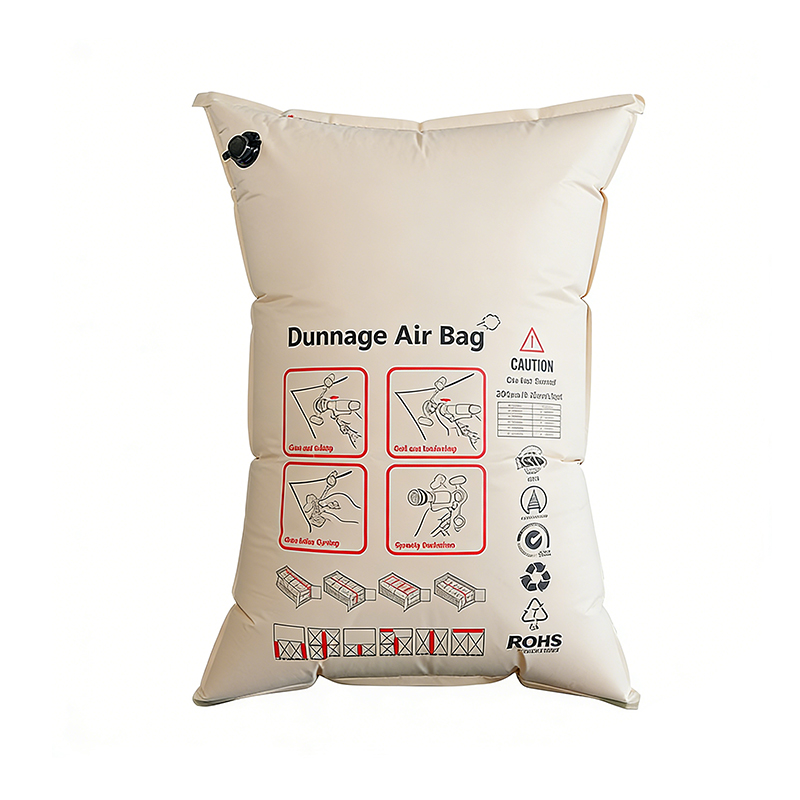
Our Kraft Paper Dunnage Bags offer an eco-friendly and high-strength solution for bracing and blocking cargo. Made from multiple layers of durable kraft paper with a polyethylene barrier, they are fully recyclable, provide excellent resistance to punctures and moisture, and are ideal for general-purpose use in various shipping environments.

Shanghai We Pack Co., Ltd.
Founded in 2019, Shanghai We Pack Co., Ltd. is a subsidiary of Shanghai Mengmao Packaging Technology Co., Ltd. is an integrated packaging company specializing in cargo securing, transport protection, and loading optimization solutions. Kraft Paper Dunnage Bag Manufacturers and Kraft Paper Dunnage Bag Factory in China.
With a 10,000 m² facility, 120 employees, dedicated R&D, testing, and quality control teams, and 9 production lines, wepack offers end-to-end capabilities from design and testing to mass production.
Driven by an engineering approach, wepack strictly controls every key stage—from raw materials to finished products—to ensure reliable performance in real transport conditions.
We Pack’s core products include paper edge protectors, container dunnage air bags, and lashing systems. Custom Kraft Paper Dunnage Bag. Through joint ventures and industrial collaboration, our portfolio has expanded to paper pallets, plastic pallets, slip sheets, carton sealing tapes, bubble wrap, stretch film, strapping, and packaging equipment.We provide one-stop packaging and transport protection solutions tailored to different cargo types and logistics scenarios.
All We Pack products comply with AAR, SGS, TUV, and other international transport test standards. We support OEM / ODM customization, offering product design and free packaging solution planning based on cargo type, loading method, load requirements, budget, and printing needs—helping customers reduce total logistics costs by 15–30% while ensuring transport safety.
Certificate
Certificate of Honor


WHAT WE
HAPPENED
Checkout Our Current
News
Industry knowledge
Shanghai We Pack Co., Ltd. manufactures kraft paper dunnage bags for container, railcar and trailer loads where void space has to be closed before the doors shut. Founded in 2019 as a subsidiary of Shanghai Dreammao Packaging Technology Co., Ltd., we build dunnage air bags alongside paper corner protectors, lashing systems and a wider cargo securing portfolio, and we quote them from a loading plan rather than from a stock size list. As a Kraft Paper Dunnage Bag manufacturer in China, our work starts with the gap, the cargo and the route, and ends with a bag that holds pressure for the length of the voyage.
Kraft paper dunnage bags are the general-purpose member of that family: multiple plies of kraft paper wrapped around a heat-sealed polyethylene bladder, recyclable, and resistant to punctures and moisture. They suit mixed dry freight where a woven or coated bag would be heavier, harder to recycle or simply unnecessary for the load. Standard container formats and custom widths and lengths come off the same lines, with valve, ply and print options set by the loading method.
What We Manufacture in This Category
Our dunnage bag range covers three constructions, each aimed at a different balance of strength, moisture behaviour and reusability.
- Kraft paper dunnage bag — multi-ply kraft around a PE bladder; recyclable; general dry freight, cartons, bagged goods and palletized loads.
- PP Dunnage Bag — woven polypropylene construction for higher strength and repeated handling.
- PVC Dunnage Bag — coated construction for humid conditions and where a washable, reusable bag is preferred.
- Dunnage Bag — the full range, with the sizes, valves and levels shared across all three constructions.
Dunnage bags rarely travel alone. Paper corner protectors, slip sheets, anti-slip paper and strapping usually belong to the same loading plan, and we supply them from the same facility so the bag, the edge protection and the restraint system are dimensioned against one another.
Application Fit: Where Kraft Paper Bags Do the Work
A kraft paper bag earns its place wherever a gap has to be converted into a brace that spreads load across a surface instead of concentrating it.
- Palletized cartons and mixed-SKU loads in 20 ft and 40 ft containers — lateral and longitudinal gaps between pallet rows.
- Bagged commodities and stacked sacks — soft, irregular surfaces where paper distributes pressure without marking.
- Drums, IBCs and cylindrical goods — void fill between the last row and the container wall, combined with lashing.
- Machinery and fabricated parts on flat racks or in open-top units — bracing where the load must not shift under rail impact.
- Rail and intermodal shipments — where AAR level classification and documented burst performance are part of the loading rule.
- Printed export cartons — where a paper outer layer is preferred over a woven one to avoid scuffing.
Kraft paper is the wrong answer for standing water, unprotected sharp edges, or loads that will be re-handled dozens of times. Those cases move to PP or PVC, or to a bag with a heavier outer layer.
Construction, Materials and the Working Environment
A kraft paper dunnage bag is a pressure vessel made of paper and film. The outer plies carry the load and take the abrasion, the inner bladder holds the air, and the valve governs both inflation speed and how long the bag keeps its pressure.
- Outer plies: virgin kraft, with grade and ply count set by the required strength and the puncture risk from the cargo.
- Inner bladder: heat-sealed polyethylene film, sized to fill the outer shell without stressing the seams.
- Valve: double storm valve for air retention, or a rapid-fill valve where loading cycle time matters.
- Moisture: standard kraft or a moisture-resistant outer layer for humid routes and condensing containers.
- Recyclability: paper and film construction, RoHS-compliant materials, and a bag that can be deflated, flattened and recycled after discharge.
Humidity is the quiet failure mode. Paper softens, pressure drops, and a bag that was firm at loading is slack three weeks later. Where a route runs through seasonal condensation, we specify the outer layer and the ply count together rather than treating them as separate choices.
Configuration Options and What Each One Governs
| Parameter | Options we produce | What it governs | Project input we need |
|---|---|---|---|
| Bag size (width × length) | Common container formats such as 90 × 180 cm and 100 × 180 cm, plus custom sizes | Void coverage and how many bags a gap needs | Void length, height and depth; gap width between cargo and wall |
| AAR level / burst rating | Levels 1 through 5, matched to the restraining force required | Safe working pressure and the load the bag can restrain | Cargo weight, transport mode, expected impact and vibration |
| Outer construction | Multiple kraft plies; grade and ply count set by strength and puncture targets | Puncture and tear resistance, recyclability | Cargo surface, sharp edges, whether corner protectors are used |
| Inner bladder | Heat-sealed polyethylene film | Air retention and re-inflation behaviour | Transit duration, inspection points, re-inflation policy |
| Valve | Double storm valve or rapid-fill valve | Inflation speed, air retention, inflator compatibility | Inflator type, nozzle size, operator workflow |
| Moisture protection | Standard kraft or moisture-resistant outer layer | Paper softening in humid or condensing containers | Route, season, cargo moisture, container ventilation |
| Printing | Logo, handling instructions and language variants | Identification, handling compliance, brand presentation | Artwork, print position, number of colours |
| Packing | Bales or cartons, palletized or loose | Handling at destination and storage before use | Warehouse space, unloading equipment, order frequency |
Sizing, Level Selection and Inflation Practice
Bag size follows the void, not the container. We work from the gap width, the void height and the length of the gap, then choose the bag that fills it at working pressure without being over-inflated against the cargo.
AAR level classification, from Level 1 through Level 5, is keyed to burst pressure and sets how much restraining force a bag can safely deliver. The level follows from cargo weight, transport mode and the impact the load will see; the working pressure is then a fraction of the burst rating and is stated on the bag and in the loading plan.
- Measure the gap at its widest point, not at the average.
- Allow for cargo settling in the first hours of the voyage.
- Use corner protection where the bag presses against a sharp edge or a strapped corner.
- Keep bags clear of door hardware and container fittings.
- Record the target pressure so the same result is repeatable at the next loading.
Inflators, Loading Equipment and Line Integration
Kraft paper bags are inflated at the loading face, so the valve and the inflator have to match. We supply bags with valves that work with manual air guns, cordless inflators and fixed inflation stations, and we confirm the nozzle interface before production rather than after the first container.
Where dunnage bags are one consumable in a larger packaging operation, we coordinate with the strapping, wrapping and sealing equipment in the same workflow so the bag program does not slow the dock down. Consumables are matched to the equipment already in service, not the other way round.
Quality Assurance and Acceptance Testing
Every bag passes through the same sequence: incoming paper and film inspection, ply and bladder assembly, valve fitting, inflation and leak check, then packing. Our quality system is certified to ISO 9001, and the dunnage bag range is produced to AAR, SGS and TUV transport test standards.
- In-house laboratory and testing equipment for burst, stress and leak checks.
- Third-party verification through SGS and TUV where a project calls for external reports.
- RoHS-compliant materials in the kraft paper construction.
- ISO 9001 and EN 1492-1 referenced in our management and product documentation.
- Batch records that tie a shipment back to its test data.
Acceptance testing is agreed before the first production run: which property is measured, on what sample size, and which report format the receiving site expects. Test reports travel with the shipment.
Customization, Printing, Packing and Delivery
OEM and ODM work covers size, ply construction, valve type, outer layer and printing. Artwork can carry a logo, handling instructions and language variants, and we plan the print position so it stays readable once the bag is inflated.
Bags are packed in bales or cartons, palletized or loose, depending on how they will be stored and moved at destination. Trial quantities start from 100 pieces, while the same lines carry high-volume programs: dunnage air bag output exceeds 30,000 pieces per day across the 10,000 m² facility and 9 production lines. The plant sits within easy reach of Shanghai Port, which keeps export logistics short for container programs, and we support EXW, FOB, CIF and DDP terms.
Information We Use to Configure Your Solution
A dunnage bag proposal is only as good as the loading data behind it. These are the inputs that let us size, level and price a program without guesswork.
- Cargo type, unit weight, dimensions and stacking pattern
- Container or trailer type, internal dimensions and loading method
- Void dimensions: gap width, void height and gap length
- Transport mode and route, including rail segments and expected impact
- Cargo surface and edge condition, and whether corner protection is used
- Moisture and condensation exposure along the route
- Inflation method available at the loading site
- Target working pressure, if already fixed by your loading procedure
- Print artwork, languages and print position
- Annual volume, delivery schedule and destination ports
- Any certification or test report format required by the receiving site
With those inputs we return a bag size, an AAR level, a ply and valve configuration, a loading pattern and a quotation. Where the loading plan is still open, we plan the packaging solution at no charge and adjust it against the first container.
Frequently Asked Questions
What sizes of kraft paper dunnage bags do you produce?
Standard container formats such as 90 × 180 cm and 100 × 180 cm, plus custom widths and lengths built from the void dimensions. Size, ply count and valve are set together, because a larger bag at the same pressure pushes harder against the cargo.
How do I choose between kraft paper, PP and PVC dunnage bags?
Kraft paper for dry general freight and recyclability, PP woven where higher strength and repeated handling matter, PVC where humidity or wash-down is part of the route. All three are produced on the same lines, so a mixed program can ship together.
What information do you need to quote a dunnage bag program?
Cargo weight and dimensions, container type, void dimensions, transport mode, route, inflation method, print requirements and annual volume. From those we confirm bag size, AAR level, construction and packing.
Are the bags recyclable, and what compliance evidence comes with them?
The kraft paper construction is recyclable and RoHS-compliant. Products are produced to AAR, SGS and TUV transport test standards under an ISO 9001 quality system, and test reports are issued per batch or per project as agreed.
Can you print our logo and handling instructions?
Yes. OEM and ODM printing covers logos, handling instructions and language variants, with the print position planned so it remains legible on the inflated bag.
How are the bags packed and shipped?
Bales or cartons, palletized or loose, with export packing suited to the destination warehouse. We ship from a plant within easy reach of Shanghai Port and support EXW, FOB, CIF and DDP terms.

PRODUCT
CONTACT INFO
-
 +86-137 7421 9489
-
 +86-021-67558008
-
 [email protected]
-
 No.769 ,23# building, Fengliang Road,Fengcheng town,Fengxian District,Shanghai,China
MOBILE QR CODE

