
 Español




Paper Slip Sheet Manufacturers
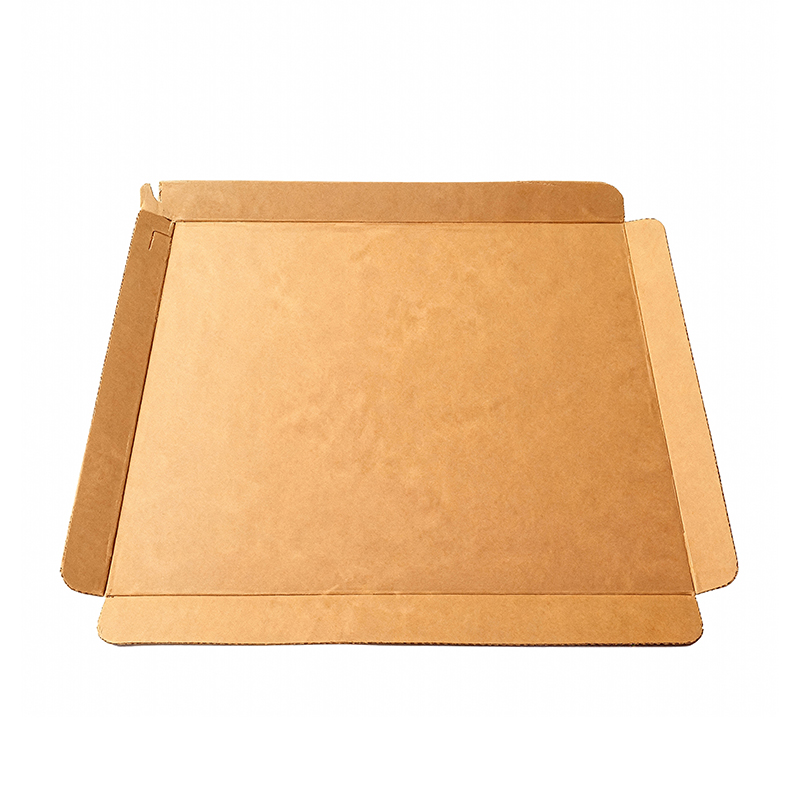
Our Paper Slip Sheets are a lightweight, cost-effective, and eco-friendly alternative to wooden pallets. They facilitate easy push/pull handling with a forklift attachment, maximize container space, and are exempt from ISPM 15 regulations.

Shanghai We Pack Co., Ltd.
Founded in 2019, Shanghai We Pack Co., Ltd. is a subsidiary of Shanghai Mengmao Packaging Technology Co., Ltd. is an integrated packaging company specializing in cargo securing, transport protection, and loading optimization solutions. Paper Slip Sheet Manufacturers and Paper Slip Sheet Factory in China.
With a 10,000 m² facility, 120 employees, dedicated R&D, testing, and quality control teams, and 9 production lines, wepack offers end-to-end capabilities from design and testing to mass production.
Driven by an engineering approach, wepack strictly controls every key stage—from raw materials to finished products—to ensure reliable performance in real transport conditions.
We Pack’s core products include paper edge protectors, container dunnage air bags, and lashing systems. Custom Paper Slip Sheet. Through joint ventures and industrial collaboration, our portfolio has expanded to paper pallets, plastic pallets, slip sheets, carton sealing tapes, bubble wrap, stretch film, strapping, and packaging equipment.We provide one-stop packaging and transport protection solutions tailored to different cargo types and logistics scenarios.
All We Pack products comply with AAR, SGS, TUV, and other international transport test standards. We support OEM / ODM customization, offering product design and free packaging solution planning based on cargo type, loading method, load requirements, budget, and printing needs—helping customers reduce total logistics costs by 15–30% while ensuring transport safety.
Certificate
Certificate of Honor


WHAT WE
HAPPENED
Checkout Our Current
News
Industry knowledge
Shanghai We Pack Co., Ltd. manufactures paper slip sheets for export and domestic logistics operations that have moved away from wooden pallets. We produce in Shanghai as part of the Dream Mao packaging group, whose 10,000 m² facility, nine production lines and dedicated R&D, testing and quality teams cover cargo securing, transport protection and loading optimization. A paper slip sheet is supplied as a system: the sheet body, the tab geometry, the surface treatment, and the corner protection, dunnage and strapping that hold the unitized load together.
A Palletless Platform for Push-Pull Handling
A paper slip sheet is a flat, laminated sheet with an integral tab that a push-pull attachment grips to slide the load onto the trailer floor or into a container. It replaces the pallet as the handling platform, not the protection around the cargo. The consequences for a loading plan are practical rather than cosmetic.
- Height: a slip sheet consumes a fraction of the vertical space of a wooden pallet, so additional layers fit inside the same container or trailer.
- Weight: the sheet adds almost nothing to gross shipment weight, which matters on air and LCL freight.
- Compliance: paper slip sheets are not solid wood packaging, so ISPM 15 heat treatment and marking do not apply.
- Condition: no nails, splinters, protruding staples or broken deck boards reaching the customer's dock.
- Handling: a push-pull attachment or slip sheet dispenser is required; a standard fork carriage will damage the sheet.
Range and Configuration Options
The range is built around the load, the handling equipment and the container plan. These variables are quoted together, because changing one usually moves the others.
| Configuration variable | Options we quote | Effect on the load |
|---|---|---|
| Sheet thickness and grade | 0.7 mm and heavier laminated grades | Stiffness, puncture resistance, number of push-pull cycles |
| Tab (lip) count | One, two, three or four tabs | Which side the attachment grips; handling direction on the dock |
| Tab width and fold | Matched to the push-pull jaw opening | Grip security, tab tear resistance, seating in the jaw |
| Footprint | 1200 × 1000, 1200 × 800, 1100 × 1100 mm and custom sizes | Pallet-equivalent footprint, container and trailer plan |
| Surface treatment | Plain, moisture-resistant, anti-slip coated on one or both faces | Layer-to-layer friction, humidity exposure, stack stability |
| Printing | Logo, handling arrows, batch or part number | Identification at the dock and traceability in the warehouse |
| Packing format | Palletized bundles, shrink-wrapped, cartons | Unloading, magazine loading, storage space |
The tab is the working part of the sheet. It is what the attachment grabs, so its width, fold quality and edge sealing carry as much weight in the design as the sheet body itself. A tab that is too narrow tears under load; one that is too wide will not seat cleanly in the jaw.
Application Fit by Cargo and Loading Method
- Bagged goods: 25 kg and 50 kg sacks stacked on a level sheet, where the sheet keeps the stack square through the push cycle.
- Corrugated cartons and mixed pallet loads: stable units that can be pushed as a single block.
- Drums and pails: combined with edge protection and strapping so the bottom layer cannot spread.
- Appliances and white goods: the sheet protects the base while stretch film and corner protectors unitize the load.
- Building materials: board, tile and profile bundles needing a flat, moisture-resistant base.
- Paper and print products: where clean surfaces and moisture control matter more than raw stiffness.
Slip sheets are not the answer for every load. Units that cannot be pushed as a single block, floors with steps, ramps or heavy debris, and sites without push-pull equipment are better served by pallets. We say so during the proposal rather than after the first container has been loaded.
Handling Equipment and Line Integration
The push-pull attachment, the slip sheet dispenser and the palletizer all interact with the sheet, so equipment data is collected before sheet geometry is fixed.
- Push-pull attachment: jaw opening, tab length and approach angle determine the tab width and fold direction.
- Slip sheet dispenser: magazine capacity and sheet stiffness decide how reliably a single sheet is pulled each cycle.
- Palletizer: vacuum or clamp heads need a flat, dust-free top face, so coating and printing choices affect grip.
- Floor and dock: smooth, level concrete with clean expansion joints extends sheet life considerably.
- Unitizing: stretch film, strapping, Anti-slip Paper between layers and Paper Corner Protector at the edges keep a pushed load together.
Specifications We Confirm Before Production
- Footprint and tab side, matched to the pallet-equivalent size and the container plan.
- Sheet thickness and grade for the unit weight and the number of push-pull cycles expected.
- Tab count, tab width and fold direction against the attachment on site.
- Surface treatment: plain, moisture-resistant, or anti-slip coated on one or both faces.
- Print content and placement, including handling arrows and customer part numbers.
- Packing format and sheets per bundle for the receiving warehouse.
- First-order quantity and the expected call-off pattern for the following months.
Quality Control and Acceptance Testing
A slip sheet is tested as a system, not as a sheet of paper. Our in-house laboratory and third-party institutions such as SGS and TUV cover the properties that decide whether a load survives a push-pull cycle: tensile strength, tear and puncture resistance, tab bond strength, moisture content and coating friction. Records for the 0.7 mm paper slip sheet tensile strength grade, COA and MSDS documentation and RoHS declarations are held for the grades we supply.
- Incoming paper: grammage, moisture content and ply bond checked before lamination.
- In process: tab fold, glue line, cut squareness and coating weight monitored on the line.
- Finished goods: tensile and tab pull tests on the production batch before packing.
- Third party: SGS and TUV test reports issued against the agreed specification where a project requires them.
- Management system: ISO 9001, with AAR, SGS and TUV transport test standards applied across the group's cargo securing range.
Information We Use to Configure Your Solution
A workable slip sheet specification comes out of a short set of project inputs. This is what our engineering team works from; anything missing is confirmed with you before a drawing is issued.
| Project input | What we need | Why it drives the design |
|---|---|---|
| Cargo | Product type, unit weight, bag or carton size, stack height | Sets the required stiffness and puncture resistance |
| Handling equipment | Push-pull model, jaw opening, dispenser, palletizer head | Fixes tab width, fold and sheet thickness |
| Footprint and loading plan | Sheet size, container type, number of layers, weight per layer | Determines size, tab side and unitizing method |
| Transport mode and route | Sea, road, rail, multimodal; transit duration | Drives moisture resistance and coating choice |
| Climate exposure | Humidity at origin, in transit and at destination | Selects moisture-resistant treatment and packing |
| Identification | Logo, part number, handling arrows, artwork files | Sets print layout and ink coverage |
| Volume | Trial quantity, annual demand, call-off frequency | Determines packing format and production scheduling |
| Documentation | Test reports, declarations, loading plan, packing list | Defines which certificates are issued with the shipment |
Customization, Documentation and Delivery Scope
OEM and ODM work covers size, thickness, tab geometry, coating, printing and packing. Free packaging solution planning is part of the quotation: we look at the cargo type, the loading method, the load requirement and the budget, then propose the sheet together with the protection around it. Trial quantities start from 100 pieces, so a new configuration can be run on your own dock before it is committed to a container programme.
- Dimensioned drawing and specification sheet for approval before tooling.
- Print artwork proof for logo, arrows and part numbers.
- Test reports and declarations issued with the batch where required.
- Packing list and loading plan for the outbound container.
- Companion items from the same supply: Slip Sheet variants in plastic, dunnage bags, corner protectors, strapping and stretch film.
As a Paper Slip Sheet manufacturer in China, we combine in-house production with a consolidated supply chain, which is how a single shipment can arrive with the sheet, the edge protection and the securing material already matched to one loading plan.
Frequently Asked Questions
What is a paper slip sheet and when does it replace a wooden pallet?
It is a laminated paper sheet with a tab that a push-pull attachment grips to slide a unitized load. It replaces the pallet wherever the load can be pushed as one block, the floor is level, and push-pull equipment is available. It removes pallet height, pallet weight, ISPM 15 marking and pallet repair from the shipping programme.
Can paper slip sheets be handled with a standard forklift?
No. A standard fork carriage will tear the sheet. Handling requires a push-pull attachment that grips the tab, or a slip sheet dispenser that feeds a single sheet under the load. We match tab width and fold to the jaw opening of the attachment you already run.
How do you decide thickness and tab configuration?
From the unit weight, the stack height, the number of push-pull cycles expected and the attachment on site. Heavier or taller loads move to a thicker laminated grade; multi-directional handling moves to additional tabs. The 0.7 mm grade is a common starting point for carton and bagged loads, and tensile test records are held for it.
Are paper slip sheets exempt from ISPM 15?
Yes. ISPM 15 applies to solid wood packaging material. Paper slip sheets are not solid wood, so heat treatment, fumigation and the associated marking are not required, which simplifies export documentation for destinations with strict phytosanitary rules.
What testing and documentation do you provide?
In-house testing covers tensile strength, tear and puncture resistance, tab bond strength, moisture content and coating friction. Third-party SGS and TUV reports are issued against the agreed specification where a project requires them, alongside COA, MSDS and RoHS documentation for the grades supplied. Our management system holds ISO 9001 certification.
Do you support custom sizes and printing, and what is the minimum order?
OEM and ODM customization covers footprint, thickness, tab geometry, coating, printing and packing. Trial quantities start from 100 pieces, which allows a new configuration to be tested on your own dock before volume production. Send the cargo details, loading method and load requirement, and we will return a drawing and a quotation.

PRODUCT
CONTACT INFO
-
 +86-137 7421 9489
-
 +86-021-67558008
-
 [email protected]
-
 No.769 ,23# building, Fengliang Road,Fengcheng town,Fengxian District,Shanghai,China
MOBILE QR CODE

