
 Español


U-shaped Paper Corner Protector Custom


U-shaped Paper Corner Protector Manufacturers
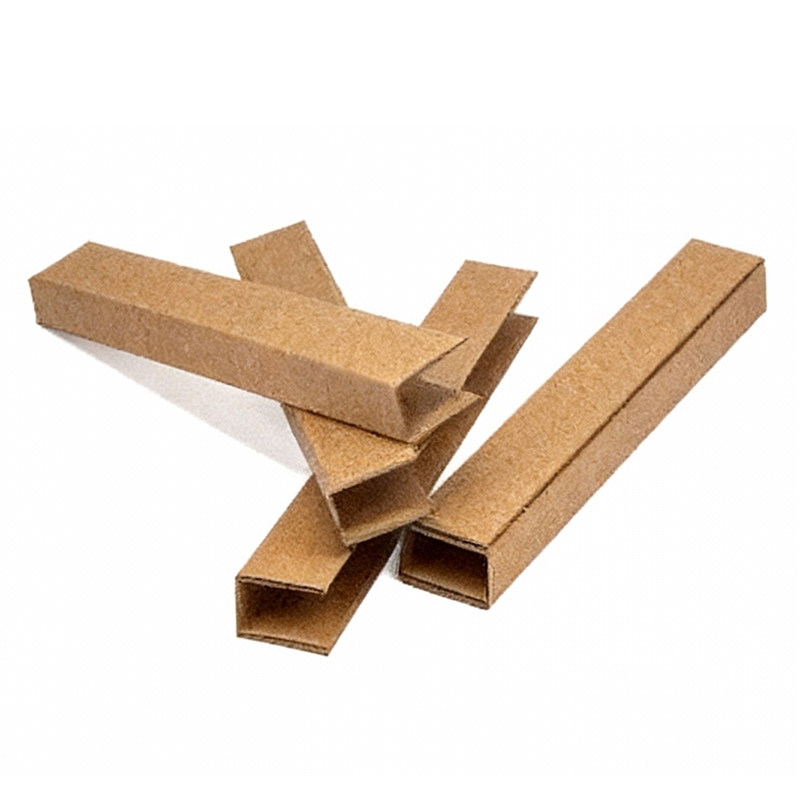
U-shaped protectors wrap around three sides of a corner, offering enhanced protection for protruding corners or for bundling multiple items together securely.

Shanghai We Pack Co., Ltd.
Founded in 2019, Shanghai We Pack Co., Ltd. is a subsidiary of Shanghai Mengmao Packaging Technology Co., Ltd. is an integrated packaging company specializing in cargo securing, transport protection, and loading optimization solutions. U-shaped Paper Corner Protector Manufacturers and U-shaped Paper Corner Protector Factory in China.
With a 10,000 m² facility, 120 employees, dedicated R&D, testing, and quality control teams, and 9 production lines, wepack offers end-to-end capabilities from design and testing to mass production.
Driven by an engineering approach, wepack strictly controls every key stage—from raw materials to finished products—to ensure reliable performance in real transport conditions.
We Pack’s core products include paper edge protectors, container dunnage air bags, and lashing systems. Custom U-shaped Paper Corner Protector. Through joint ventures and industrial collaboration, our portfolio has expanded to paper pallets, plastic pallets, slip sheets, carton sealing tapes, bubble wrap, stretch film, strapping, and packaging equipment.We provide one-stop packaging and transport protection solutions tailored to different cargo types and logistics scenarios.
All We Pack products comply with AAR, SGS, TUV, and other international transport test standards. We support OEM / ODM customization, offering product design and free packaging solution planning based on cargo type, loading method, load requirements, budget, and printing needs—helping customers reduce total logistics costs by 15–30% while ensuring transport safety.
Certificate
Certificate of Honor


WHAT WE
HAPPENED
Checkout Our Current
News
Industry knowledge
Shanghai We Pack Co., Ltd. builds the U-shaped Paper Corner Protector as one element of an integrated cargo securing and transport protection programme that also covers dunnage bags, lashing systems, slip sheets, stretch film and strapping. The U profile wraps three sides of a corner, holding a bundle or a protruding edge inside a continuous paper channel instead of resting on a single face. That geometry is why the profile is used at pipe ends, coil edges, timber bundles and any load where a strap crosses a vulnerable corner.
We are a U-shaped Paper Corner Protector manufacturer working from a 10,000 m² facility in Fengxian District, Shanghai, with 120 employees, dedicated R&D, testing and quality control teams, and 9 production lines. Paper intake, laminating, forming, cutting and packing sit inside our own process, so profile geometry and the moisture content of the finished protector stay under our control rather than a third party's.
Where the U-shaped Profile Earns Its Place
Three-sided coverage changes how a corner behaves under load. A flat pad spreads pressure but can shift; a U profile grips the corner from two faces and the edge between them, so the protector stays in position while strap or film is tensioned.
- Pipe, tube and extruded bundles — the U channel holds the bundle at the corner while the outer wall of the outermost pipe is shielded from strap cut-in.
- Steel coil and heavy metal edges — the wrap resists point loading where high-tension strap crosses a sharp edge.
- Palletised cartons and appliances — vertical corners keep their shape through handling, stacking and container stuffing.
- Timber, board and panel stacks — long rigid loads are protected where slings and forks make contact.
- Machinery and oversized crates — protruding corners inside a crate or container are cushioned against the frame.
Range and Configuration Options
We produce the U profile in kraft and white paper constructions, in cut lengths from short corner caps to full-length edge rails, and with printing for brand or SKU identification. The profile is matched to the load rather than sold as a single stock item, and it sits alongside the rest of the Paper Corner Protector family where an L, ring or interlocking shape suits the corner better.
| Cargo and load case | Why the U profile fits | Variables we set |
|---|---|---|
| Pipe, tube and extruded bundles | Three-sided grip holds the bundle at the corner while the outer wall is shielded from strap cut-in | Inner width against bundle diameter, leg length, overall length, wall build |
| Steel coil and heavy metal edges | Wrap distributes high strap tension away from a sharp edge | Wall build, edge crush target, moisture control, strap slot position |
| Palletised cartons and appliances | Vertical corners keep shape through stacking, handling and container stuffing | Leg length, print area, colour, cut tolerance |
| Timber, board and panel stacks | Long rigid loads need protection where slings and forks contact the corner | Overall length, wall build, perforation for tear-down |
| Machinery and oversized crates | Protruding corners are cushioned against crate frames and container walls | Custom profile, thickness, printable identification |
Critical Specifications We Set With You
Five dimensions decide whether a U profile performs in service. We confirm each one against the actual load before a quotation is issued.
- Inner width — must clear the corner thickness or bundle diameter with enough clearance to seat by hand or by machine.
- Leg length — the depth of the two side walls; longer legs spread strap load over more surface.
- Overall length — cut to the corner height, the bundle circumference or the full edge run.
- Wall build — the number and weight of laminated paper layers, which sets edge crush resistance and stiffness.
- Moisture content — controlled at production and preserved through packaging, because damp paper loses compression strength inside a sea container.
Paper Grade, Wall Build and Moisture
Kraft liner gives the highest wet and dry strength per gramme and is the default for export loads. White or coated outer liners are used where the protector is visible on retail packaging or where print contrast matters. Recycled board is a cost-driven option for dry, short-haul applications.
Layers are laminated and formed into the U section, then cut to length. Cut ends are squared so the profile sits flat against the corner without rocking, and print is applied before forming so registration stays consistent along the full length.
Working With the Rest of the Load Securement System
A corner protector is one part of a system. Where a void remains between the load and the container wall, we pair the U profile with a Dunnage Bag to fill the gap and stop longitudinal movement. Where the load is bundled or unitised, the protector is specified together with Packing Strap so strap width, tension and edge radius stay compatible.
For palletless shipments, slip sheets and anti-slip paper complete the picture: the load is protected at the corners, restrained by strap, and stabilised against horizontal movement. Because we supply all of these from the same production base, the interfaces — strap width against protector leg length, bag size against container gap — are checked together rather than in isolation.
Quality Control and Acceptance Evidence
Raw paper is inspected on receipt for grammage, moisture and visual defects. In-process checks cover lamination bond, profile squareness and cut length. Finished protectors are checked for wall thickness, inner width and print registration before packing.
Our management system holds ISO 9001 certification, and products are tested against AAR, SGS and TUV transport standards, with EN 1492-1 referenced for lashing-related items. Third-party test reports can be issued for a specific production batch where a project requires documented evidence. Paper corner protectors shipped to the United States have been supplied with controlled moisture content, which is the practical control that keeps compression strength predictable after weeks at sea.
Information We Use to Configure Your Solution
A workable proposal starts from the load, not from a catalogue number. The matrix below is what our engineering team reviews before recommending a profile, a paper grade and a packing format.
| What we need from you | Why it matters | What it determines |
|---|---|---|
| Cargo type, dimensions and weight | Corner radius and load mass drive the profile | Inner width, leg length, wall build |
| Loading method — pallet, slip sheet, floor loaded, bundled | Sets where the corner contacts the restraint | Overall length and print position |
| Restraint method and strap width | Strap tension concentrates at the corner | Edge crush requirement and leg length |
| Transport mode and route | Sea freight humidity and handling cycles differ from road | Paper grade and moisture specification |
| Container or trailer gap and stacking height | Void filling interacts with corner protection | Whether a dunnage bag is added to the package |
| Printing and branding requirements | Print is applied before forming | Artwork, colour, registration tolerance |
| Annual volume and call-off pattern | Sets production scheduling and stock policy | Run length, packing format, delivery schedule |
Customization, Documentation and Delivery Scope
OEM and ODM work covers inner width, leg length, overall length, wall build, paper grade, colour and print. Minimum order quantity is 100 pieces, which allows a trial run before a volume programme. Tooling for a new profile is developed from a drawing or a physical sample, and a free packaging solution plan is prepared from the cargo type, loading method, load requirement and budget.
Documentation supplied with a shipment includes packing list, specification sheet and, where applicable, test reports and material declarations. Trade terms include EXW, FOB, CIF and DDP. The plant sits roughly 25–35 km from Shanghai Port and about 30 km from Pudong International Airport, which keeps export handling short.
Frequently Asked Questions
What is a U-shaped paper corner protector used for?
It wraps three sides of a corner to protect the edge of a product or bundle while a strap, film or dunnage bag applies restraint. Typical uses are pipe and tube bundles, steel coil edges, timber stacks, palletised cartons and protruding corners inside crates. The three-sided grip keeps the protector seated while tension is applied.
Can you produce a U profile to our own dimensions?
Yes. We manufacture to drawing or sample, setting inner width, leg length, overall length, wall build, paper grade and print. OEM and ODM programmes are supported from a minimum of 100 pieces, so a trial batch can be produced before a full volume order.
How do you keep paper corner protectors from softening in ocean freight?
Moisture content is controlled during production and preserved through packaging, because paper that absorbs water loses compression strength. We have supplied paper corner protectors to the United States with controlled moisture content, and the same control is applied to export orders where a container will spend weeks at sea.
Do you supply corner protectors together with dunnage bags and strapping?
We do. The U profile is specified alongside dunnage bags for void filling, packing strap for bundling and unitising, and slip sheets or anti-slip paper for palletless loads. Supplying them from one production base lets us check the interfaces — strap width against leg length, bag size against container gap — before the order is confirmed.
What information do you need to quote a U-shaped corner protector?
Cargo type, dimensions and weight, loading method, restraint method and strap width, transport mode and route, container gap, printing requirements, and annual volume with call-off pattern. With those details we can propose a profile, paper grade and packing format, and issue a quotation with the relevant test documentation.

PRODUCT
CONTACT INFO
-
 +86-137 7421 9489
-
 +86-021-67558008
-
 [email protected]
-
 No.769 ,23# building, Fengliang Road,Fengcheng town,Fengxian District,Shanghai,China
MOBILE QR CODE

