
 Español


Flat Paper Corner Protector Custom


Flat Paper Corner Protector Manufacturers
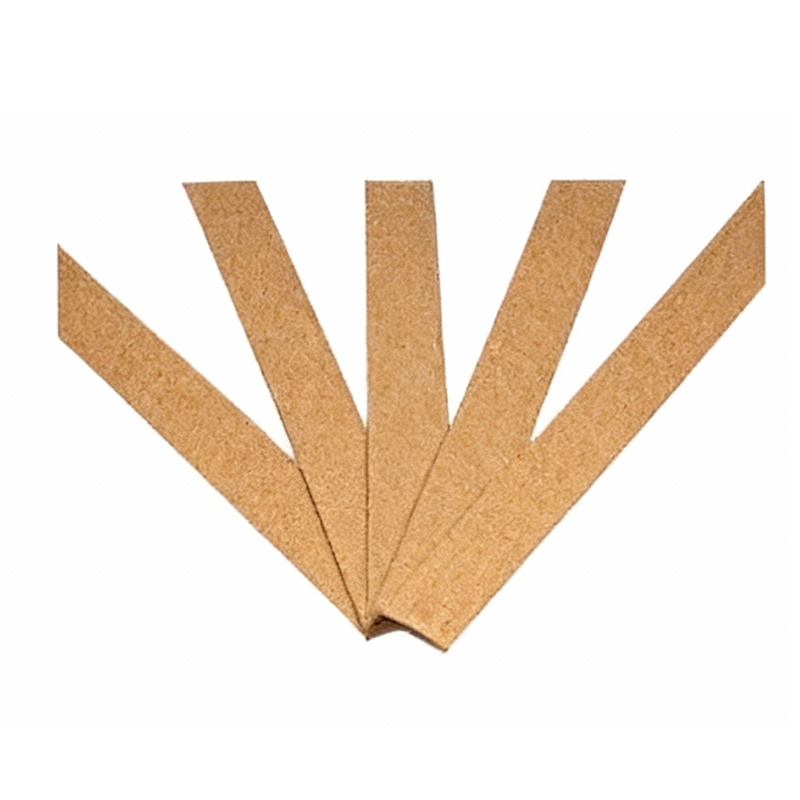
Designed as a wide, flat panel, this protector is used for shielding large, flat surfaces and long edges from scratches, dents, and bending. Commonly applied to the sides of furniture (e.g., cabinet doors, tabletops), large composite panels, or placed between stacked items to distribute weight evenly and prevent surface imprints.

Shanghai We Pack Co., Ltd.
Founded in 2019, Shanghai We Pack Co., Ltd. is a subsidiary of Shanghai Mengmao Packaging Technology Co., Ltd. is an integrated packaging company specializing in cargo securing, transport protection, and loading optimization solutions. Flat Paper Corner Protector Manufacturers and Flat Paper Corner Protector Factory in China.
With a 10,000 m² facility, 120 employees, dedicated R&D, testing, and quality control teams, and 9 production lines, wepack offers end-to-end capabilities from design and testing to mass production.
Driven by an engineering approach, wepack strictly controls every key stage—from raw materials to finished products—to ensure reliable performance in real transport conditions.
We Pack’s core products include paper edge protectors, container dunnage air bags, and lashing systems. Custom Flat Paper Corner Protector. Through joint ventures and industrial collaboration, our portfolio has expanded to paper pallets, plastic pallets, slip sheets, carton sealing tapes, bubble wrap, stretch film, strapping, and packaging equipment.We provide one-stop packaging and transport protection solutions tailored to different cargo types and logistics scenarios.
All We Pack products comply with AAR, SGS, TUV, and other international transport test standards. We support OEM / ODM customization, offering product design and free packaging solution planning based on cargo type, loading method, load requirements, budget, and printing needs—helping customers reduce total logistics costs by 15–30% while ensuring transport safety.
Certificate
Certificate of Honor


WHAT WE
HAPPENED
Checkout Our Current
News
Industry knowledge
Shanghai We Pack Co., Ltd. is a Flat Paper Corner Protector manufacturer based in Fengxian District, Shanghai, producing wide-panel paper edge protection alongside container dunnage air bags, lashing systems and a wider transport protection portfolio. Founded in 2019 as a subsidiary of Shanghai Dreammao Packaging Technology Co., Ltd., we operate a 10,000 m² facility with 120 employees, dedicated R&D, testing and quality control teams, and nine production lines covering design, testing and mass production.
Flat protectors are the widest format in our paper corner protector family. Rather than wrapping a single corner, the flat panel covers a long edge or a broad face, so it is specified where the risk is abrasion, scuffing, denting or bowing instead of point impact. Typical positions are the sides of cabinet doors and tabletops, the faces of large composite and sandwich panels, and the layers between stacked items where load has to be spread to prevent surface imprints.
Application Fit: Where Flat Panels Earn Their Place
Flat paper corner protectors work as a sacrificial layer between two surfaces that would otherwise rub, print or crush each other. Because the panel is continuous, pressure is distributed across the full contact area rather than concentrated at a corner radius, which is what makes the format suitable for prefinished and visually exposed goods.
- Flat-pack furniture and joinery — cabinet doors, tabletops, drawer fronts and veneered panels protected against edge chipping and face scuffing during stacking, wrapping and container loading.
- Composite and sandwich panels — long edges held straight and faces separated so that stacked panels do not imprint or bow under their own weight.
- Interleaving between stacked items — a flat sheet placed between layers spreads bearing pressure and keeps hard surfaces from marking the layer beneath.
- Metal, stone and building products — a paper barrier that keeps strapping, banding and adjacent cargo away from finished surfaces.
- Export packing lines — a low-cost consumable that can be cut to length, printed with handling marks and applied by hand without tooling.
The Paper Corner Protector Range We Produce
Flat protectors sit inside a broader Paper Corner Protector family. Our third paper corner protection plant came into operation in 2023, and the range now covers the formats below, each matched to a different contact geometry.
| Format | Coverage | Application fit | Main selection inputs |
|---|---|---|---|
| Flat | Wide panel over a long edge or face | Furniture sides, composite panels, interleaving between stacked items | Panel width and length, board grade, ply count, thickness |
| L-shaped | Two faces meeting at 90° | Cartons, crates and palletised goods with exposed corners | Leg length, angle, board thickness |
| U-shaped | Three-sided edge wrap | Sheet stacks, doors and panels needing edge plus face protection | Channel width, depth, board grade |
| Ring-shaped | Closed circular edge | Coils, rolls and cylindrical goods | Inner and outer diameter, wall thickness |
| Interlocking | Profiled edges that lock together | Continuous edge runs on long loads | Profile geometry, run length, board grade |
| Folded U / folded L | Multi-ply folded section | Heavier edges where extra cushioning is needed | Folded ply count, leg dimensions |
| Perforated | Tear-off segments | Packing lines that cut to length on demand | Segment pitch, perforation pattern |
| White paper | Clean, light-coloured surface | Retail-facing goods and damp or chilled routes | Surface finish, moisture resistance, print |
Critical Specifications We Confirm Before Production
Paper edge protection is a mechanical part, not a commodity sheet. Its performance comes from the board, the ply structure and the moisture state of the material, so we fix these variables with the customer before a run is scheduled.
- Board grade and ply count — recycled kraft, virgin kraft or white-faced stock, single or multi-ply, chosen against the load the protector must carry and the surface it touches.
- Panel geometry — width, length, thickness and any score line or bend radius that lets the panel follow a curved or angled edge.
- Moisture content — controlled during production and packing so the protector does not soften in transit or transfer moisture to the goods it protects.
- Edge finish — clean cut, folded or rolled edges where the protector itself must not mark a finished surface.
- Printing and identification — brand marks, handling symbols, part numbers or barcodes applied during converting.
- Bundle format — count per bundle, bundle weight and orientation for the way the packing line actually consumes the product.
Configuration Options and Customization
We support OEM and ODM work across size, load capacity, material and printing, and our engineering team can develop a flat protector from a drawing, a sample or a description of the load. Minimum order quantity starts at 100 pieces, which keeps trial runs practical while the same lines carry high-volume programmes.
Where a flat protector alone is not enough, we plan it as part of a complete securing scheme. A typical container build pairs flat panels on exposed edges with a Kraft Paper Dunnage Bag to fill voids, an L-shaped Paper Corner Protector on box corners, and anti-slip or slip-sheet layers under the stack. Solution planning is provided at no charge, based on cargo type, loading method, load requirements, budget and printing needs.
Quality Assurance and Acceptance Testing
Quality control runs from raw material intake to finished goods. Our own laboratory and testing equipment are backed by third-party institutions such as SGS and TUV, and our management system holds ISO 9001 certification. Products are produced to comply with AAR, SGS, TUV and other international transport test standards, with test reports available for the relevant items.
For paper corner protection specifically, moisture content is monitored through production and packing, and finished protectors can be checked for dimensional consistency, ply integrity and surface condition before shipment. Where a customer's own acceptance criteria apply, we agree the inspection points and the record format at the quotation stage so that the first delivery and every delivery after it are measured the same way.
Information We Use to Configure Your Solution
An accurate quotation for flat paper corner protectors depends on a short list of project inputs. These are the details our engineers work from when they size the panel, select the board and set the packing format.
- Cargo type, surface finish and unit weight, plus the dimensions of the edge or face to be covered.
- Loading method — palletised, floor loaded, stacked layers, container or truck — and how the goods are restrained.
- Required panel width, length, thickness and any bend or score requirement.
- Board preference: recycled kraft, virgin kraft or white-faced, and whether moisture resistance is critical.
- Printing artwork, handling marks or part numbering, with the file or a reference sample.
- Bundle count, carton or pallet packing preference, and the destination port or warehouse.
- Target order quantity, delivery schedule and any trial or sample approval step.
Packaging, Delivery and Documentation
Finished protectors are bundled, wrapped and palletised for export handling, with bundle counts and labels matched to the customer's receiving process. Our plant sits close to Shanghai Port and Pudong International Airport, which supports fast response on both sample shipments and full container loads, and we work under EXW, FOB, CIF and DDP terms according to the buyer's preferred arrangement.
Shipment documentation follows the commercial terms agreed for the order, and product data, packing lists and test documentation are issued alongside the goods so that receiving teams can verify what arrived against what was ordered.
Frequently Asked Questions
What is a flat paper corner protector used for?
It is a wide paper panel that shields long edges and broad faces from scratches, dents and bending. It is commonly applied to the sides of furniture such as cabinet doors and tabletops, to large composite panels, and between stacked items where weight has to be distributed to prevent surface imprints. It protects surfaces rather than absorbing point impact, which is the job of an L-shaped or U-shaped protector.
Can you produce flat protectors to our own dimensions and print?
Yes. We manufacture to customer drawings or samples and support OEM and ODM customization covering size, load capacity, material and printing. Send the panel width, length, thickness and any artwork, and we will confirm the board grade, ply structure and bundle format that fit the application. Minimum order quantity is 100 pieces.
How do you keep paper protectors from softening in humid transit?
Moisture content is controlled through production and packing, and we test moisture-related performance for routes where condensation or chilled cargo is a factor. White-faced and moisture-resistant options are available where the protector will sit against damp goods or travel through humid corridors. The right grade depends on the route and the cargo, so we confirm it during solution planning.
What evidence comes with a shipment?
Our products are produced to comply with AAR, SGS, TUV and other international transport test standards, and our management system holds ISO 9001 certification. Test reports from institutions such as SGS and TUV can be issued for the relevant items, and inspection records are kept against the agreed acceptance points for each order.
Can flat protectors be combined with dunnage bags and strapping in one supply?
They usually are. We supply paper edge protection, container dunnage air bags, lashing systems, slip sheets, stretch film, strapping and packaging equipment as one integrated package, planned around the cargo type and loading method. Combining the items in a single supply keeps specifications consistent across the load and simplifies receiving and stock control.
How quickly can a quotation be prepared?
Once we have the cargo details, panel dimensions, board preference, printing requirements and target quantity, our engineering team prepares a configuration and quotation promptly. Where a sample is needed for approval, we produce it against the same specification that will run in mass production.

PRODUCT
CONTACT INFO
-
 +86-137 7421 9489
-
 +86-021-67558008
-
 [email protected]
-
 No.769 ,23# building, Fengliang Road,Fengcheng town,Fengxian District,Shanghai,China
MOBILE QR CODE

