
 Español


Home / News / Industry News / A Practical Guide to Dunnage Bag: Uses, Selection, and Key Considerations
Industry News


A Practical Guide to Dunnage Bag: Uses, Selection, and Key Considerations
 2026.10.19
 Industry News
Anyone who has opened a container after a long ocean leg knows the feeling. The load looked tight at origin, but somewhere between the warehouse and the destination, a pallet shifted. A carton was crushed. A coil moved just enough to worry the receiver. Dunnage bags are one of the simplest tools for preventing that kind of surprise, and they are often one of the most overlooked.
They are not complicated products. They are inflatable cushions placed into gaps between cargo, or between cargo and the container wall. Once inflated, they fill empty space and help hold the load in place. The idea is easy to understand, but getting the type, size, and inflation right makes a real difference. This guide walks through the practical basics: what dunnage bags do, how the main materials compare, how to size them, and how to use them without creating a new problem.
Content
- 1 What Is a Dunnage Bag and What Does It Do?
- 2 Why Void Fill Matters in Container and Trailer Shipping
- 3 The Main Types of Dunnage Bags
- 4 Choosing the Right Size and Performance Level
- 5 Inflation Tools and Technique
- 6 Installation and Load Planning
- 7 Common Mistakes to Avoid
- 8 Sustainability and Reuse
- 9 Practical Help for Your Next Shipment
What Is a Dunnage Bag and What Does It Do?
A dunnage bag, sometimes called a cargo airbag or inflatable dunnage, is a flexible bag that is inflated with air after it has been placed in a void. The bag expands until it presses against the cargo and the container structure. That pressure helps stop sideways movement, reduces vibration, and keeps freight from sliding during braking, turning, rail shunting, or rough seas.
The bag does not carry the load by itself. It works as part of a securing system. Straps, ratchet tie-downs, corner protectors, slip sheets, and proper load planning all matter. A dunnage bag is there to fill the space that would otherwise let the load build momentum. For a more detailed introduction, our team has put together a practical guide to dunnage bag basics that pairs well with this article.
In daily transport work, dunnage bags do three jobs well:
- They fill gaps between pallets, cartons, machinery, and container walls.
- They brace loads that cannot be strapped tightly enough on their own.
- They reduce movement and vibration that cause scuffs, dents, and structural damage.
Why Void Fill Matters in Container and Trailer Shipping
A load that feels solid at loading can loosen once the vehicle starts moving. Pallets settle. Straps stretch slightly. Cardboard compresses. A small gap that was not important at the dock becomes a space where cargo can pick up speed. In a container, that movement can affect the whole stack, not just one carton.
Dunnage bags are useful because they address the gap directly. They are quick to install, they can be removed without cutting into the load, and they work in spaces where rigid bracing would be awkward. They are common in ocean containers, dry van trailers, railcars, and intermodal moves. They are also helpful when a shipment has mixed cargo shapes, because the bag can conform to irregular spaces better than a fixed wooden brace.
The best results come when dunnage bags are planned, not added as an afterthought. A load plan that accounts for weight distribution, bag placement, and inflation access will usually be faster and safer to execute than one that relies on last-minute gap filling.
The Main Types of Dunnage Bags
Most dunnage bags fall into three material families: kraft paper, woven polypropylene, and PVC. Each has a place. The right choice depends on load weight, gap size, moisture exposure, surface condition, and whether the bag needs to be reused. You can view our full dunnage bag range for a side-by-side look at the options.
| Material | Typical use | Strengths | Watch-outs |
|---|---|---|---|
| Kraft paper | Light to medium dry freight | Recyclable, low cost, easy to handle | Not for wet cargo; limited reuse |
| Woven PP | Medium to heavy cargo | Strong, tear resistant, reusable | Can abrade soft surfaces; check coating |
| PVC | Heavy, damp, or smooth-surface loads | Water resistant, tough, good for repeated use | Heavier; repair and disposal need care |
Kraft Paper Dunnage Bags
Kraft paper bags are the familiar workhorse for dry freight. They are lightweight, easy to position, and often chosen for one-way shipments where recycling matters. They work well for cartons, packaged goods, and light machinery when the void is clean and dry. They are not the right choice for wet conditions or for loads with sharp edges that could puncture the paper before inflation.
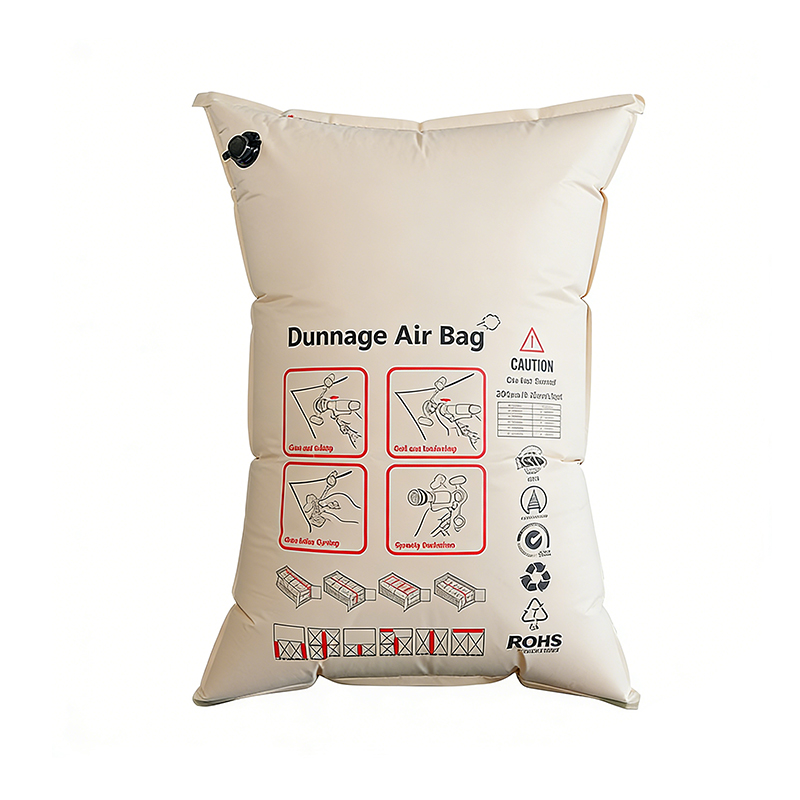 Kraft Paper Dunnage Air Bags for Dry FreightRecyclable kraft paper dunnage air bag for dry freight void fill, with heat-sealed PE bladder and custom sizes for container and trailer bracing.View Product →
Woven Polypropylene Dunnage Bags
Woven PP bags are stronger and more tear resistant than paper. They are a common choice for medium and heavy loads, including palletized freight, building materials, and machinery. Many woven bags are designed for repeated use, which can make them cost-effective on closed-loop routes. They are available in different performance levels, so it is worth matching the bag to the load rather than choosing by size alone.
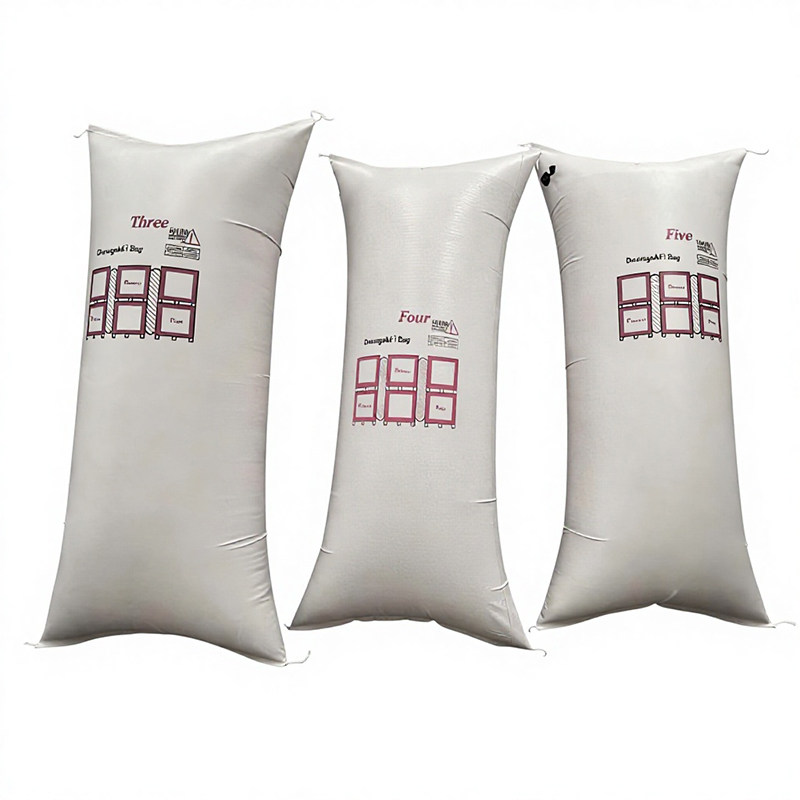 Custom Woven PP Dunnage Air BagsReusable woven polypropylene dunnage air bag with PE liner for heavy-duty, multi-trip cargo bracing and custom AAR-level configurations.View Product →
PVC Dunnage Bags
PVC bags are tough, water resistant, and well suited to damp or outdoor-exposed transport. They are often used for heavy cargo and smooth surfaces where a paper bag might tear or lose strength. PVC bags can be heavier to handle, and they need proper inspection and repair if they are reused. They are a practical option when moisture resistance is part of the job, not just an extra feature.
 Custom PVC Dunnage Air Bags for Moisture ResistanceSealed PVC dunnage air bag with welded seams for airtight, moisture-resistant bracing in cold-chain, ocean and vibration-heavy loads.View Product →
Choosing the Right Size and Performance Level
Bag size is not just about the gap. It is about the gap after the load has settled, the weight of the cargo, and the surface the bag will press against. A bag that is too small will not fill the void. A bag that is too large may be difficult to position, or it may be inflated beyond a comfortable working range. Measure the height, width, and depth of the void before loading, then check the bag manufacturer's inflated dimensions.
Performance level matters too. In markets that follow AAR guidance, dunnage bags are often grouped by level, with higher levels used for heavier loads and more demanding routes. A light carton load does not need the same bag as a steel coil. Ask three questions before choosing:
- How heavy is the cargo, and how is the weight distributed?
- How large is the void, and can it be reduced with better loading?
- Will the shipment face moisture, sharp edges, or repeated handling?
If the answer is unclear, choose a bag with a safety margin rather than one that only just meets the gap size. It is easier to manage a slightly stronger bag than to explain a shifted load at destination.
Inflation Tools and Technique
Dunnage bags can be inflated with a manual pump, a shop air line, or a portable inflator. For container work, a portable air gun with a pressure gauge is often the most practical choice because it lets the operator inflate consistently without dragging a hose through the load. Our inflator range includes hose-type, cordless, and high-flow models for different container and trailer setups.
The technique is simple but easy to rush. Insert the nozzle firmly, inflate in stages, and check that the bag is expanding into the void rather than pushing cargo sideways. The bag should feel firm and stable, not rock hard. Overinflation puts unnecessary stress on the bag, the cargo, and the container wall. Underinflation leaves the load loose. A good operator watches the bag, listens to the air flow, and checks the load after the first few bags are in place.
Safety comes first. Do not stand directly in front of a bag while inflating it. Keep sharp tools away from the bag surface. If a bag fails during inflation, stop, remove it, and inspect the area before continuing.
Installation and Load Planning
A dunnage bag works best when it is part of a clear loading plan. Before loading, inspect the container or trailer for nails, broken boards, protruding bolts, and rough edges. These are common causes of punctures. Use cardboard, plywood, or a paper corner protector as a barrier when the cargo surface is sharp or uneven.
Place bags in the voids that matter most. In many container loads, that means between cargo rows and along the side walls where shifting is likely. Avoid placing a bag over a sharp corner or across a gap that is too wide for it to bridge safely. Inflate gradually, and work from one end of the load to the other so you can see how the cargo responds. Once the load is secured, check that straps and tie-downs are still tensioned correctly. Dunnage bags support the securing system; they do not replace it.
Common Mistakes to Avoid
Most dunnage bag failures come from small decisions, not from the bag itself. The following issues show up again and again:
- Using a paper bag in a wet or damp container.
- Choosing a bag that is too small for the void after the load settles.
- Overinflating until the bag is hard and the cargo is stressed.
- Placing a bag against a sharp edge without a protective barrier.
- Reusing a bag with a damaged valve, seam, or surface.
- Relying on bags alone without a proper load plan or straps.
A quick inspection before loading and a few extra seconds during inflation can prevent most of these problems.
Sustainability and Reuse
Material choice has an environmental side. Kraft paper bags are recyclable in many markets and suit one-way dry freight. Woven PP and PVC bags can be reused when they are inspected and stored properly. Reuse is not automatic, though. A bag with a slow leak, a weakened seam, or a contaminated surface should be taken out of service. The most sustainable option is usually the one that matches the application and lasts for the intended number of trips, not simply the lightest bag on the shelf.
Practical Help for Your Next Shipment
Dunnage bags are a small part of a larger packaging plan, but they earn their place when cargo has to arrive undamaged. Start with the void, the load weight, and the route. Then choose a material and performance level that give you a comfortable margin. Inflate carefully, inspect the load, and keep the bags in good condition if they are reusable.
At Shanghai We Pack, we work with shippers, logistics teams, and packaging engineers who need practical cargo protection rather than a one-size-fits-all answer. If you are comparing kraft, PP, or PVC dunnage bags for an upcoming route, our team can help you review the options and match them to the way your cargo actually moves.
Related Products

PRODUCT
CONTACT INFO
-
 +86-137 7421 9489
-
 +86-021-67558008
-
 [email protected]
-
 No.769 ,23# building, Fengliang Road,Fengcheng town,Fengxian District,Shanghai,China
MOBILE QR CODE
Copyright © Shanghai We Pack Co., Ltd. All Rights Reserved.
Cargo Securing Solutions Cargo Transport Protection Solutions

