
 Español




Calcium Chloride Desiccant Manufacturers
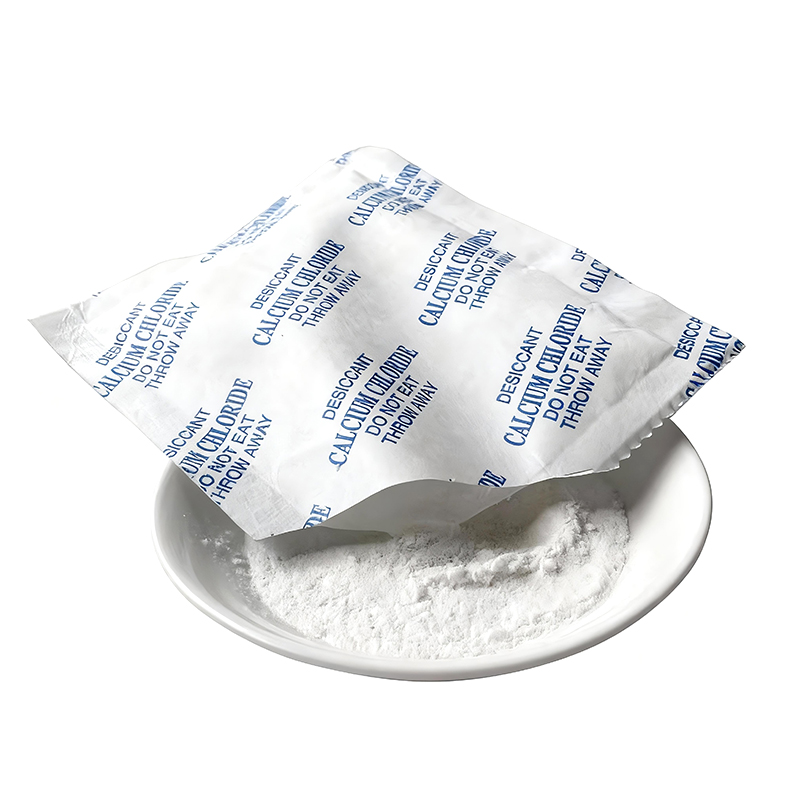
Engineered for high-capacity, long-duration moisture control, calcium chloride desiccant excels in demanding environments and extended logistics cycles. Its solid-gel locking technology prevents leakage, offering superior protection for high-value shipments and container storage.

Shanghai We Pack Co., Ltd.
Founded in 2019, Shanghai We Pack Co., Ltd. is a subsidiary of Shanghai Mengmao Packaging Technology Co., Ltd. is an integrated packaging company specializing in cargo securing, transport protection, and loading optimization solutions. Calcium Chloride Desiccant Manufacturers and Calcium Chloride Desiccant Factory in China.
With a 10,000 m² facility, 120 employees, dedicated R&D, testing, and quality control teams, and 9 production lines, wepack offers end-to-end capabilities from design and testing to mass production.
Driven by an engineering approach, wepack strictly controls every key stage—from raw materials to finished products—to ensure reliable performance in real transport conditions.
We Pack’s core products include paper edge protectors, container dunnage air bags, and lashing systems. Custom Calcium Chloride Desiccant. Through joint ventures and industrial collaboration, our portfolio has expanded to paper pallets, plastic pallets, slip sheets, carton sealing tapes, bubble wrap, stretch film, strapping, and packaging equipment.We provide one-stop packaging and transport protection solutions tailored to different cargo types and logistics scenarios.
All We Pack products comply with AAR, SGS, TUV, and other international transport test standards. We support OEM / ODM customization, offering product design and free packaging solution planning based on cargo type, loading method, load requirements, budget, and printing needs—helping customers reduce total logistics costs by 15–30% while ensuring transport safety.
Certificate
Certificate of Honor


WHAT WE
HAPPENED
Checkout Our Current
News
Industry knowledge
Integration with the Rest of the Load
Desiccant is one layer of a transport protection system, and we supply the surrounding layers as well, so the moisture plan and the securing plan are built together. Dunnage Bag void filling stops load shift in partially filled containers, Slip Sheet supports palletless loading, and Stretch Film unitises pallets before they are loaded. Corner protectors, strapping and anti-slip paper complete the same programme where the cargo calls for them.
A desiccant unit only performs as well as the seal around it. Gel filling, sealing, weight verification and final packing are controlled as one sequence, with batch records that trace a delivered shipment back to its production run.
Quality Assurance and Acceptance Testing
In-house laboratory and testing equipment support routine checks on incoming raw material, gel consistency, seal integrity and unit weight, while third-party institutions such as SGS and TUV provide independent test reports where a project or destination market requires them. Our management system holds ISO 9001 certification, and the wider product portfolio is tested against AAR, SGS and TUV transport standards.
For desiccant projects we issue the MSDS, ROHS and REACH documentation, a certificate of analysis for the delivered batch, and — where the cargo is sensitive — a pre-production sample for approval before the production run is released.
Information We Use to Configure Your Solution
| Project input | How it shapes the proposal |
|---|---|
| Cargo type and value | Sets the acceptable risk level and whether a secondary leak barrier is needed |
| Container type and internal volume | Defines the air volume the desiccant has to dry |
| Cargo and packaging moisture | The largest single input to the moisture balance |
| Route, transit days and season | Determines the humidity and temperature profile the unit works in |
| Barrier film or packaging used | Vapour transmission rate changes how quickly moisture reaches the desiccant |
| Placement points and hanging method | Format, hardware and unit weight follow the fixing point |
| Required documentation | MSDS, ROHS, REACH, certificate of analysis or third-party reports |
| Printing and branding | Language, logo, weight marking and handling instructions on the unit |
| Order quantity and delivery schedule | Production planning, packing format and shipping terms |
Customization, Packaging and Delivery
OEM and ODM work covers unit weight, film, gelling agent, hanging hardware and printing, including private-label runs. Trial quantities start from 100 pieces, and the same production lines scale to container-load volumes. Units are packed in cartons and can be palletised or arranged for automated feeding where a packing line requires it.
We ship from Shanghai, close to Shanghai Port and Pudong International Airport, on EXW, FOB, CIF or DDP terms. Packaging solution planning is part of the quotation: we size the desiccant load against the loading plan and, where relevant, combine it with dunnage, slip sheets and stretch film into a single supply programme.
Frequently Asked Questions
What makes calcium chloride desiccant different from silica gel?
Calcium chloride is deliquescent, so it absorbs and chemically binds water rather than holding it on a porous surface. That gives it a much higher capacity per gram in warm, humid container air, which is the condition that produces container rain on long sea voyages. Silica gel remains the better fit for small sealed enclosures and short transit windows.
How many units do I need for a 40 ft container?
There is no single number that holds across cargo types. We calculate the load from the container's internal air volume, the moisture carried by the cargo and its packaging, the vapour transmission of any barrier film, the number of transit days and the climate on the route. Send the loading plan and we will return a sized quantity with the placement layout.
Does the desiccant leak once it is saturated?
The gelling agent locks the brine into a solid gel, so a correctly sealed unit can be removed without free liquid escaping. Leak control comes down to film selection and seal integrity, which is why we verify seam strength and weight on every batch and can add a secondary barrier for cargo that cannot tolerate any liquid contact.
Can the units carry our own brand and printing?
Yes. Printing is configured as part of the OEM/ODM scope, covering logo, brand, batch code, unit weight, language and handling instructions. Private-label runs follow the same production and quality route as our standard units.
What documentation accompanies a desiccant shipment?
We issue the MSDS, ROHS and REACH statements and a certificate of analysis for the delivered batch. Where a project or destination market calls for independent verification, SGS or TUV test reports are arranged alongside the shipment.
Can desiccant be supplied together with dunnage bags and other protection products?
Yes. Desiccant sits inside a wider portfolio that includes dunnage bags, paper corner protectors, slip sheets, stretch film, packing straps, strapping buckles and packaging tools. Combining them in one programme keeps the moisture plan, the securing plan and the delivery schedule aligned.

PRODUCT
CONTACT INFO
-
 +86-137 7421 9489
-
 +86-021-67558008
-
 [email protected]
-
 No.769 ,23# building, Fengliang Road,Fengcheng town,Fengxian District,Shanghai,China
MOBILE QR CODE

