
 Español




Automatic Strapping Machine Manufacturers
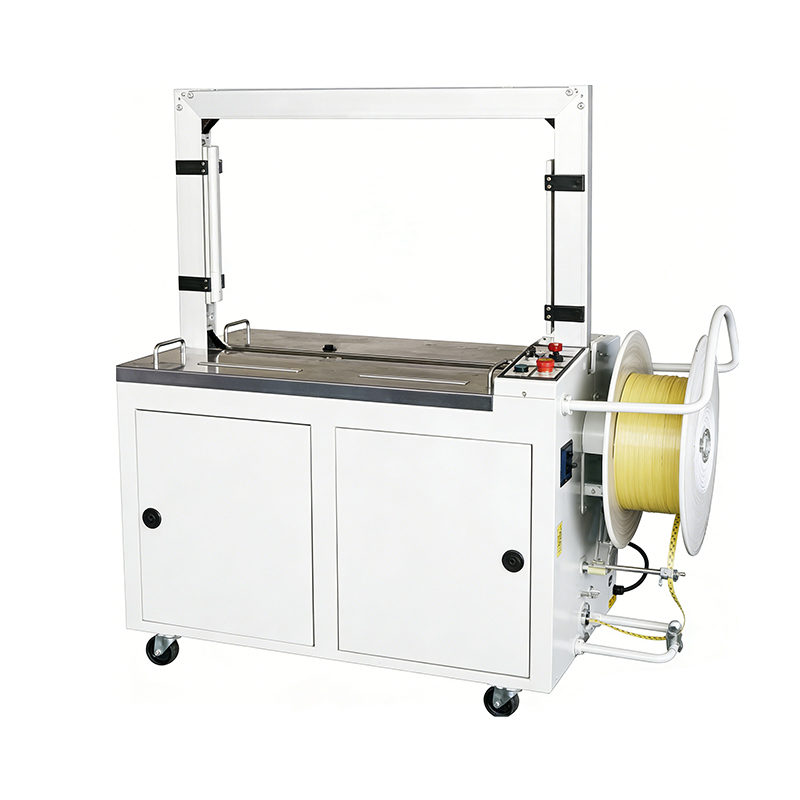
The Automatic Strapping Machine is a high-speed, programmable system designed for fully autonomous strap application in production or packaging lines. It automates the entire process—feeding, tensioning, sealing (via heat weld or clip), and cutting—around a package or pallet with consistent precision and speed. Ideal for uniform box sizes or palletized goods in industries like publishing, food & beverage, or logistics, it dramatically increases throughput, ensures consistent bundle tightness, reduces labor costs, and minimizes material waste compared to manual methods.

Shanghai We Pack Co., Ltd.
Founded in 2019, Shanghai We Pack Co., Ltd. is a subsidiary of Shanghai Mengmao Packaging Technology Co., Ltd. is an integrated packaging company specializing in cargo securing, transport protection, and loading optimization solutions. Automatic Strapping Machine Manufacturers and Automatic Strapping Machine Factory in China.
With a 10,000 m² facility, 120 employees, dedicated R&D, testing, and quality control teams, and 9 production lines, wepack offers end-to-end capabilities from design and testing to mass production.
Driven by an engineering approach, wepack strictly controls every key stage—from raw materials to finished products—to ensure reliable performance in real transport conditions.
We Pack’s core products include paper edge protectors, container dunnage air bags, and lashing systems. Custom Automatic Strapping Machine. Through joint ventures and industrial collaboration, our portfolio has expanded to paper pallets, plastic pallets, slip sheets, carton sealing tapes, bubble wrap, stretch film, strapping, and packaging equipment.We provide one-stop packaging and transport protection solutions tailored to different cargo types and logistics scenarios.
All We Pack products comply with AAR, SGS, TUV, and other international transport test standards. We support OEM / ODM customization, offering product design and free packaging solution planning based on cargo type, loading method, load requirements, budget, and printing needs—helping customers reduce total logistics costs by 15–30% while ensuring transport safety.
Certificate
Certificate of Honor


WHAT WE
HAPPENED
Checkout Our Current
News
Industry knowledge
Shanghai We Pack Co., Ltd. supplies the Automatic Strapping Machine range as one part of a complete cargo securing and transport protection portfolio. Founded in 2019 as a subsidiary of Shanghai Dreammao Packaging Technology Co., Ltd., we manufacture from a 10,000 m² facility in Fengxian District, Shanghai, with 120 employees, 9 production lines and dedicated R&D, testing and quality control teams. As an Automatic Strapping Machine manufacturer in China, we configure the machine together with the strap, buckles and protective materials that run through it, so a packaging line is specified as one system rather than a machine plus unrelated consumables.
The equipment sits inside a wider programme: dunnage bags, paper corner protectors, slip sheets, stretch film, packing strap and the tools that apply them. That matters at the specification stage, because strap tension, seal quality and package protection are decided by the combination, not by the strapper alone.
What the Automatic Strapping Machine Range Covers
The MH-101A Automatic Strapping Machine is a high-speed, programmable system for fully autonomous strap application in production and packaging lines. It runs the complete cycle — strap feeding, tensioning, sealing by heat weld or clip, and cutting — around a package or bundle, with a photo eye that detects the package and starts the cycle without an operator at the pedal. It suits uniform box sizes and palletized or bundled goods in publishing, food and beverage, distribution and logistics operations.
- Fully automatic cycle: feed, tension, seal and cut
- Photo-eye package detection for hands-free triggering
- Heat-weld or clip sealing, matched to the strap in use
- Programmable operation for repeatable bundle tightness
- Consistent cycle timing where manual strapping has become the bottleneck
The Packaging Tool Range Around the Strapper
Strapping rarely stands alone. Our Packaging Tool range covers the machines and hand tools that sit upstream and downstream of the strapping position, so a line can be equipped from one supply base.
| Equipment | Function in the packaging line | Typical application fit |
|---|---|---|
| Automatic Strapping Machine | Fully automatic strap feed, tension, seal and cut with photo-eye triggering | Uniform cartons, bundles and palletized goods on production or packaging lines |
| Automatic Carton Sealer | Closes carton flaps ahead of strapping so the strap lands on a stable face | Case packing, e-commerce and distribution lines |
| Electric Strapping Machine | Powered tensioning and sealing at higher-volume manual or semi-automatic stations | Heavy cartons, brick, metal and wood products |
| Pneumatic Strapping Machine | Air-driven tensioning and sealing where a compressed air supply is available | Steel, aluminium and heavy industrial bundles |
| Manual Fiber Strap Tensioner | Hand tool for fibre and composite strap | Low-volume bundling, site work and maintenance |
| PP/PET Strap Dispenser | Holds and feeds strap reels to the machine or workstation | Continuous operation without reel handling at the strapping position |
| Long-handled Unpacking Scissor | Cuts strap at a safe distance during unpacking | Receiving, deconsolidation and returns handling |
Where the Machine Fits in the Packaging Line
Placement decides performance. A strapper is normally positioned after carton sealing and before palletizing, so cartons arrive square and the strap lands on a closed, stable face. Where goods are bundled rather than cased — printed matter, folded cartons, stacked sheet — the machine works as a standalone bundling station fed by a roller table.
We look at the line as a sequence: infeed conveyor, package orientation, strapping position, outfeed and accumulation. If the line already includes a carton sealer or a strap dispenser, we match the strapper to the same conveyor height and control handshake so the modules behave as one line rather than three separate machines.
Strap and Consumable Matching
Strap choice sets the tension window, the seal method and the cost per bundle. PP, PET and composite straps behave differently under the same machine settings, so we select the strap first and then set the machine around it.
| Strap | Application fit | What it means for machine setup |
|---|---|---|
| PP Packing Strap | Light to medium cartons, bundling of printed matter and consumer goods | Lower tension window, heat-weld sealing, economical per-metre cost |
| PET Packing Strap | Heavier cartons, brick and tile, metal and wood products, loads needing retained tension | Higher tension setting; seal quality and blade condition carry more weight |
| Composite Strap | Heavy or irregular loads, timber, pipe and coil bundling | Wider strap path; tension and seal verified against the load |
Critical Specifications That Define the Working Point
Every proposal is built from the working point rather than a catalogue number. These are the values that decide arch size, strap path, cycle timing and sealing method.
- Package dimensions: minimum and maximum length, width and height, and the variation between them
- Package weight range and load stability
- Strap material, width and thickness
- Number and position of straps per package — single, double, cross or edge
- Required throughput, expressed as packages per minute or per shift
- Sealing method: heat weld or clip
- Conveyor height, direction of travel and package orientation
- Available power supply and compressed air at the installation point
- Control interface: standalone, foot switch, or PLC handshake with the line
Configuration, Safety and Line Integration
We configure the control system around the required line interface. A standalone machine runs from its own panel and photo eye; a line-integrated unit takes a start signal from the upstream conveyor and returns a cycle-complete signal downstream.
- Arch and strap path sized to the largest package in the run
- Infeed and outfeed roller or belt conveyors matched to existing line height
- Photo-eye position set for the package length and gap pattern
- Strap dispenser mounted for reel change without stopping the line
- OEM / ODM build for distributors and equipment integrators who need their own branding
Safety and installation conditions
Strapping machines combine moving strap paths, heated sealing elements and sharp cutting blades, so guarding and access are part of the specification rather than an afterthought.
- Fixed guarding around the strap path with interlocked access for reel change and jam clearing
- Emergency stop within reach of the operator position
- Supply voltage and frequency confirmed before shipment
- Compressed air supply where pneumatic tensioning or sealing is used
- Level floor and clearance for reel loading and maintenance access
- Blade and heater replacement carried out with the machine isolated
Quality Assurance and Acceptance Testing
Our quality system runs from raw material to finished goods, supported by an in-house laboratory, testing equipment and third-party verification through SGS and TUV. Management is certified to ISO 9001, and our cargo securing products are tested against AAR, SGS, TUV and other international transport standards.
For strapping equipment, acceptance is a run on your own packages. We strap sample cartons at the intended tension, check seal integrity and strap position, time the cycle across a realistic batch, and confirm the machine holds its settings through a continuous run. Where the strap is supplied with the machine, the same batch is used for both, so tension and seal results reflect the actual consumable rather than a laboratory substitute.
Information We Use to Configure Your Solution
Send the following and we can return a machine configuration, strap recommendation and quotation without a second round of questions.
- Package drawing or sample photo with length, width, height and weight
- Carton board grade or product type, and whether the load is rigid or compressible
- Straps per package and strap position
- Target throughput and shift pattern
- Strap material preference, or the load requirement if the material is still open
- Sealing preference: heat weld or clip
- Line layout sketch with conveyor height and infeed/outfeed direction
- Power supply, compressed air availability and installation environment
- Branding, printing or OEM / ODM requirements
- Destination market and any documentation needed for import
Documentation, Spare Parts and Service
Machines ship with an operation and maintenance manual, a spare parts list and a wiring reference for the installed configuration. Wear items — blades, heaters, belts and strap-path guides — are identified in the parts list so they can be stocked locally and replaced without guesswork.
Our after-sales team supports installation questions, setting adjustments and fault diagnosis remotely, with online response across the working day. Consumables come from the same production base as the machine, which keeps strap dimensions and machine settings aligned over repeat orders. Equipment leaves our Shanghai factory packed for export, close to Shanghai Port and Pudong International Airport.
Frequently Asked Questions
What package sizes can an automatic strapping machine handle?
Arch size and strap path are set from the largest and smallest package in the run. Give us the full dimension range rather than a single size — the machine is configured around that range, and the variation between smallest and largest package determines whether one arch covers the whole run or the line needs a different arrangement.
Can the same machine run PP and PET strap?
Yes, but not at the same settings. PP and PET have different tensile behaviour and seal characteristics, so tension, sealing temperature or clip size are set for the strap in use. We confirm the strap first and then set the machine around it, which is why the strap recommendation and the machine configuration are prepared together.
How does the machine integrate with an existing conveyor line?
We match conveyor height, direction of travel and package orientation, and configure the control interface for the line. A standalone unit runs from its own panel and photo eye; a line-integrated unit takes a start signal from the upstream conveyor and returns a cycle-complete signal downstream. Photo-eye position is set for your package length and gap pattern.
What is the minimum order quantity for a customized machine?
Our minimum order quantity is 100 pieces, which covers trial orders as well as volume supply, and we support OEM / ODM builds for distributors and equipment integrators. Customization covers size, load capacity, materials and printing, developed from your drawings or samples.
What testing and certification applies to your packaging products?
Our management system is certified to ISO 9001, and our cargo securing products are tested to AAR, SGS, TUV and other international transport standards, with in-house laboratory testing and third-party verification. For strapping equipment, acceptance testing is carried out on your own packages so tension, seal and cycle results reflect real production conditions.
How is the machine delivered and supported after installation?
Machines are packed for export and shipped from Shanghai, close to Shanghai Port and Pudong International Airport. Documentation includes the operation and maintenance manual, spare parts list and wiring reference, and our team supports installation questions and setting adjustments remotely. Replacement strap and wear parts are supplied from the same production base as the machine.

PRODUCT
CONTACT INFO
-
 +86-137 7421 9489
-
 +86-021-67558008
-
 [email protected]
-
 No.769 ,23# building, Fengliang Road,Fengcheng town,Fengxian District,Shanghai,China
MOBILE QR CODE

