
 Español

Home / News / Industry News / Desiccant Guide: Types, Selection Tips, and Container Shipping Protection
Industry News


Desiccant Guide: Types, Selection Tips, and Container Shipping Protection
 2026.10.12
 Industry News
Anyone who has opened a shipping container after a long sea voyage knows the moment. The doors swing back and, instead of crisp cartons, you find soft corrugated board, damp pallets and a thin film of condensation running down the inside walls. Nothing was wet when the container was loaded. The water came from the air, and it has been quietly working its way into the cargo ever since.
A desiccant is the straightforward answer to that problem. It is a material that pulls water vapour out of the air inside a sealed or semi-sealed space and holds onto it, keeping humidity low enough that mould, rust, corrosion and softening never get a chance to start. At Shanghai We Pack, desiccants sit alongside strapping, corner protectors and dunnage materials as one part of the wider job of getting goods to their destination undamaged.
Content
What a Desiccant Actually Does
Every desiccant shares one property: it is hygroscopic, which simply means it attracts water. How each product captures that water, and how much it can hold before it stops working, is what separates one family of materials from another.
Adsorption versus absorption
Adsorption describes water molecules clinging to the internal surfaces of a porous solid. Silica gel and clay work this way: their structure is full of microscopic pores, and every pore wall is somewhere a water molecule can settle. Absorption is different. A material such as calcium chloride draws moisture inside itself and changes as it does so, dissolving into a gel or a brine. Both approaches lower humidity, but they behave differently once saturated. Adsorptive desiccants stay dry and keep their shape; absorptive ones swell, soften or turn to liquid and need to be contained.
Capacity and equilibrium
No desiccant works forever, and none of them drives humidity down to zero. Each material settles into an equilibrium with the air around it, which is why the enclosure matters as much as the desiccant itself. A sealed foil bag or a lined container lets a small sachet hold a large volume of air dry. A container with open vents, worn door seals or wet pallets is a different job altogether, and that is where the high-capacity chloride-based products earn their place.
The Four Desiccant Types You Will Meet Most Often
Catalogues list dozens of materials, but transport packaging in practice relies on four of them. The table further down summarises the differences; the notes before it explain where each one fits.
Silica gel
Silica gel is the familiar one, the small sachet tucked inside a shoe box or an electronics carton. It is adsorptive, chemically inert and stays dry to the touch even when fully loaded, which makes it easy to handle next to sensitive components. It performs consistently across a broad temperature range and comes in a very wide spread of sachet sizes and formats, so it can be tuned closely to the cavity it protects.
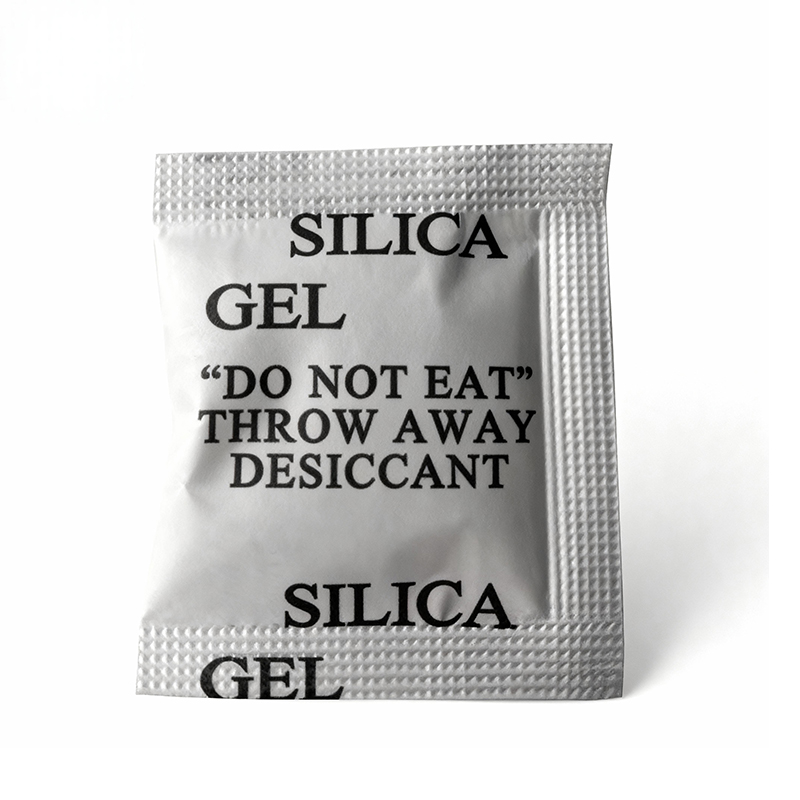 Custom Silica Gel Desiccant for Electronics and General PackagingVersatile custom silica gel desiccant for moisture protection in electronics, pharmaceuticals, leather goods and general packaging; available as OEM supply.View Product →
Montmorillonite clay
Montmorillonite clay is the workhorse for larger volumes where budget matters. Its layered mineral structure adsorbs moisture between the sheets, and it is a sensible choice for general cargo, storage rooms and containers where the goal is to hold humidity in a moderate band rather than protect a precision instrument. Per gram it usually holds a little less water than a premium silica gel, but it costs less and it is widely available in bulk formats.
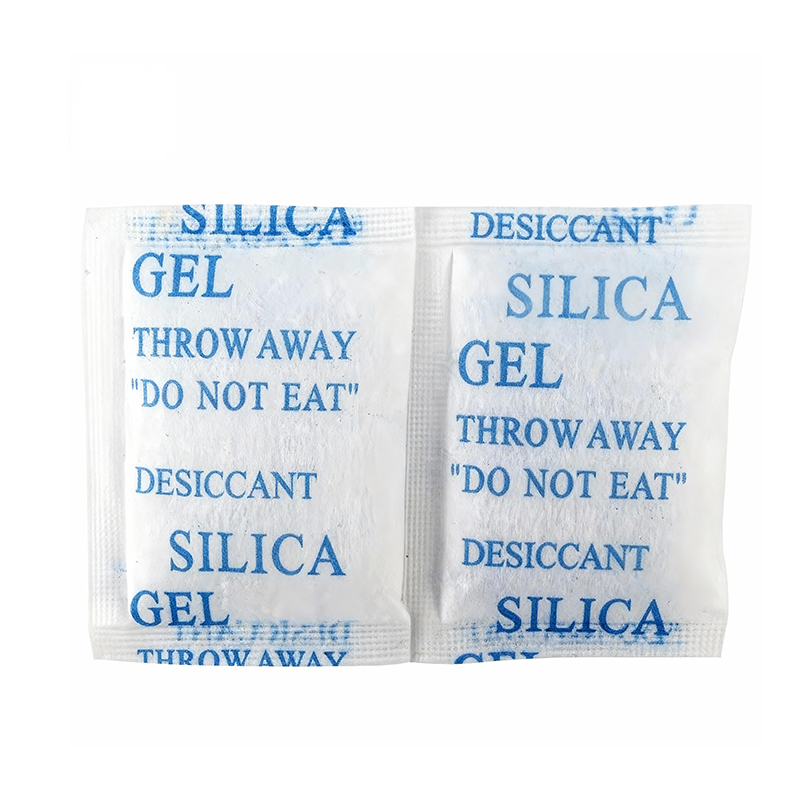 Custom Montmorillonite Desiccant for Eco-Friendly Moisture and Odor ControlHigh-purity mineral clay desiccant offering static dehumidification and odor elimination for natural products, textiles, archival materials and green packaging, with custom supply.View Product →
Calcium chloride
Calcium chloride is the heavy lifter. It absorbs rather than adsorbs, reacting with water to form a gel and continuing to work in air that is already at eighty or ninety percent relative humidity, which is exactly what a container meets on a tropical route. It can hold a substantial share of its own weight in moisture. Because it becomes liquid, it has to be sealed inside a pouch or blanket that will not leak, and it should be kept away from bare steel it was never intended to touch.
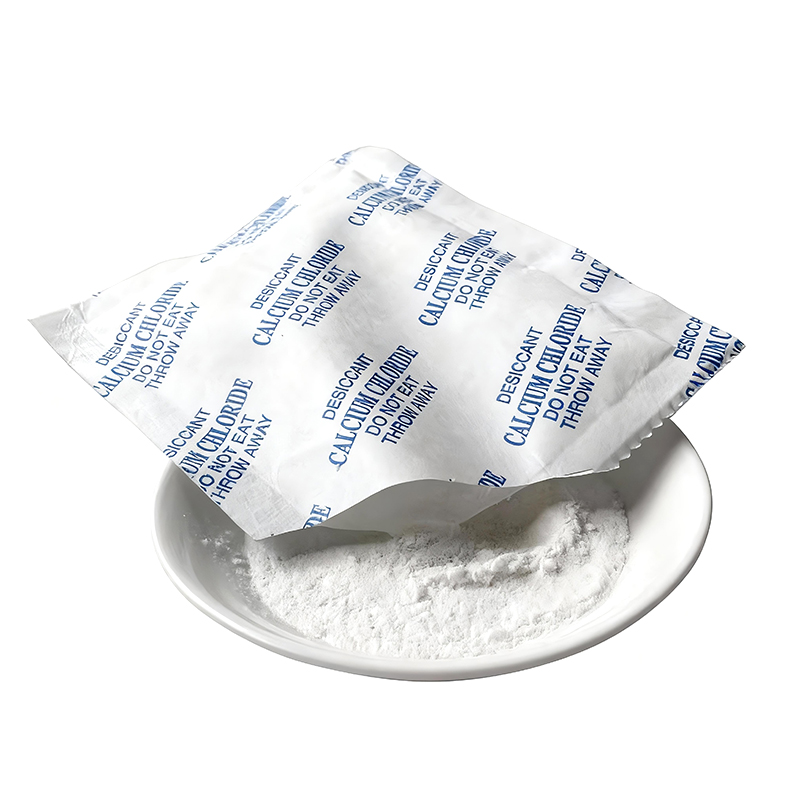 Custom Calcium Chloride Desiccant for High-Capacity Container Moisture ControlHigh-capacity, long-duration calcium chloride desiccant with solid-gel locking technology for high-value shipments and container storage; customizable OEM/ODM packaging.View Product →
Magnesium chloride
Magnesium chloride behaves in a similar way, absorbing moisture and solidifying as it does so. It tends to be chosen where a fast initial drop in humidity is wanted, and it holds up well in harsh, persistently wet conditions. Like calcium chloride, it works best in a leak-proof format and needs sensible handling.
| Desiccant | How it captures moisture | Moisture capacity | Works best for |
|---|---|---|---|
| Silica gel | Adsorption onto pore surfaces | Moderate | Electronics, instruments, footwear, general cartons |
| Montmorillonite clay | Adsorption between mineral layers | Moderate | Cost-sensitive cargo, containers, storage rooms |
| Calcium chloride | Absorption, turns into a gel | High | Long ocean transit, humid climates, metal components |
| Magnesium chloride | Absorption, solidifies | High | Fast humidity reduction in harsh conditions |
Other materials exist, molecular sieve and activated alumina among them, but these are usually found in industrial gas drying and laboratory work rather than inside a shipping carton.
How Much Desiccant Do You Need?
This is the question that decides whether the whole exercise works. Size a desiccant the way you size a jacket: too small does nothing, and oversized is simply money left in the box. A handful of variables drive the answer.
- The volume of air being protected, not the weight of the cargo.
- The length of the journey, since a thirty-five day ocean leg gives moisture far more time to migrate.
- The climate on the route, because a container moving from a cold port into tropical heat cycles through condensation again and again.
- The moisture already inside the cargo, as wood, paper, textiles and unseasoned timber carry a surprising amount.
- The barrier around the goods, since a sealed liner or a wrapped pallet limits how much fresh air reaches the contents.
- The condition of the container itself, including door seals and whether the floor was dry at loading.
Because those factors interact, a dosing figure is best calculated rather than guessed. A supplier who knows your container size, cargo type and voyage length can recommend a quantity instead of a rough estimate. If you want a genuinely sealed micro-environment, pair the desiccant with a liner or a barrier bag: the two together outperform either one used alone.
Where Desiccants Earn Their Keep
The classic case is sea freight. At night a container roof cools faster than the air inside it, water condenses on the ceiling panels and then drips onto whatever is stacked below. This "container rain" is the reason machinery arrives with rust freckles, cardboard collapses and paper stock develops wavy edges.
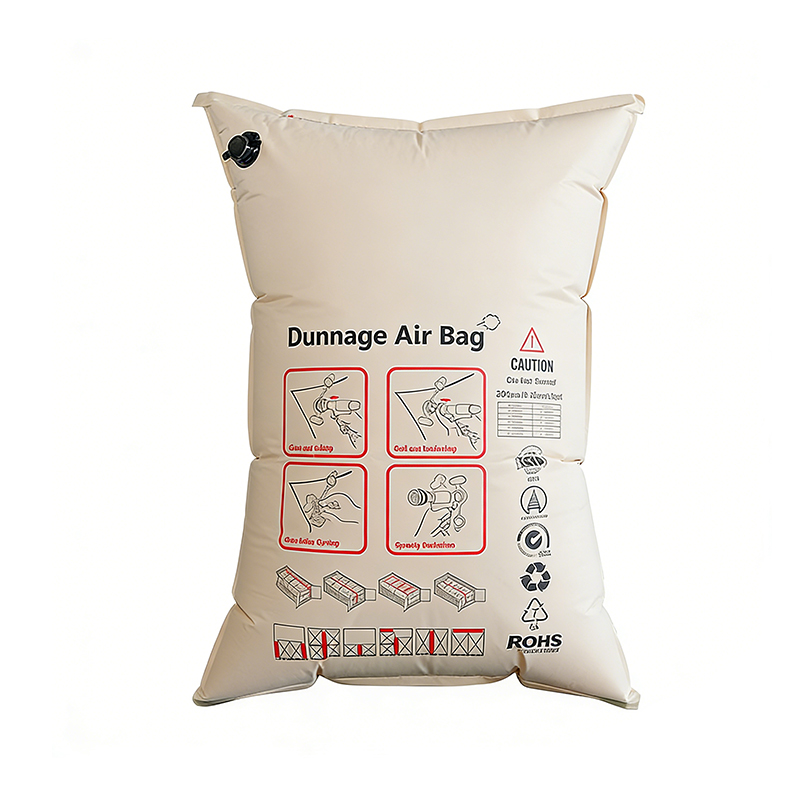
Beyond containers, desiccants protect electronics and electrical equipment, tools and machined metal parts, furniture and wood products, leather and textiles, agricultural commodities and animal feed, and pharmaceuticals where humidity affects stability. In most of these situations the desiccant is one layer of protection, working alongside the physical packaging. Void fillers such as dunnage bags stop cargo from shifting, while desiccants deal with the water that shifting cannot touch.
Handling, Storage and Shelf Life
Desiccants are forgiving, but a few habits make a real difference.
- Keep the product sealed in its original packaging until the moment of use, because an open bag starts working in the warehouse instead of in the container.
- Load desiccants last and close the doors promptly, so as little humid air as possible enters behind them.
- Distribute rather than concentrate, spreading units through the container so air can move between them.
- Hang container units high, near the roof, where condensation actually forms.
- Wear gloves when handling chloride-based products and keep them clear of unprotected steel.
- Store the leftovers somewhere cool and dry, and do not leave sachets sitting loose on a damp floor.
As for shelf life, desiccants do not carry an expiry date the way food does. Their usable life depends on how much moisture they have been exposed to. Kept properly sealed, most will still be effective a year or more later; left open in a humid warehouse, a box can be spent before it ever reaches a container. Some silica gel comes with indicator beads that change colour as they load up, which takes the guesswork out of it.
Desiccants are cheap insurance against an expensive problem. The chemistry is simple and the choice usually comes down to matching capacity and cost against the conditions your cargo will actually meet: a short domestic run needs far less than a six-week crossing through the tropics.
If you are unsure which type or quantity suits your route, start with the four families above, work out how much air you are protecting and how long it will be exposed, and size from there. Getting that part right is often the difference between cargo that arrives ready to sell and cargo that arrives ready for a claim.
Related Products



PRODUCT
CONTACT INFO
-
 +86-137 7421 9489
-
 +86-021-67558008
-
 [email protected]
-
 No.769 ,23# building, Fengliang Road,Fengcheng town,Fengxian District,Shanghai,China
MOBILE QR CODE
Copyright © Shanghai We Pack Co., Ltd. All Rights Reserved.
Cargo Securing Solutions Cargo Transport Protection Solutions

