
 Español

Home / News / Industry News / What Is a Kraft Paper Dunnage Bag and How Does It Keep Your Cargo Safe?
Industry News


What Is a Kraft Paper Dunnage Bag and How Does It Keep Your Cargo Safe?
 2026.07.02
 Industry News
Content
- 1 What Is a Kraft Paper Dunnage Bag and Why It Matters in Shipping
- 2 How a Kraft Paper Dunnage Bag Is Built
- 3 Main Types of Kraft Paper Dunnage Bags
- 4 Key Benefits of Using Kraft Paper Dunnage Bags
- 5 How to Choose the Right Kraft Paper Dunnage Bag Size
- 6 Step-by-Step Guide to Installing a Kraft Paper Dunnage Bag
- 7 Common Mistakes to Avoid When Using Kraft Paper Dunnage Bags
- 8 Kraft Paper Dunnage Bags vs Other Void-Fill Methods
- 9 Storage and Handling Tips for Kraft Paper Dunnage Bags
- 10 Frequently Asked Questions About Kraft Paper Dunnage Bags
What Is a Kraft Paper Dunnage Bag and Why It Matters in Shipping
A kraft paper dunnage bag is an inflatable air bag made from multiple layers of heavy-duty kraft paper, often laminated with polyethylene film for extra strength and moisture resistance. These bags are placed inside the empty spaces of shipping containers, boxcars, or trailers, then inflated with a standard air compressor until they fill the gap between cargo. Once inflated, the kraft paper dunnage bag acts like a cushion, holding pallets, drums, crates, or bundled goods firmly in place so they cannot shift, slide, or collide during transit.
Unlike traditional wooden blocking and bracing, a kraft paper dunnage bag is lightweight, disposable, and quick to install. It has become the go-to void-fill solution for logistics companies, freight forwarders, and manufacturers who need a cost-effective way to protect goods without adding significant weight to a shipment.
How a Kraft Paper Dunnage Bag Is Built
The strength of a kraft paper dunnage bag comes from its layered construction. Most bags are made using two to four plies of kraft paper, with a polyethylene liner sandwiched between them to prevent air leakage. The outer layer resists tearing, punctures, and abrasion from rough cargo edges, while the inner liner holds air pressure steady throughout the trip.
Core Components
- Multi-ply kraft paper outer shell for puncture and tear resistance
- Polyethylene (PE) air-retention liner sealed inside the paper layers
- Reinforced valve stem for quick inflation and deflation
- Heat-sealed or stitched seams to prevent bursting under pressure
This combination allows the kraft paper dunnage bag to withstand the pressure changes, vibration, and rough handling that are common during rail, truck, and ocean freight movement.
Main Types of Kraft Paper Dunnage Bags
Not every kraft paper dunnage bag is built the same way. Manufacturers typically offer several types based on the size of the void and the weight of the cargo being secured.
| Bag Type | Typical Void Size | Best Use Case |
| Level 1 (1-ply) | Small gaps, 2-6 inches | Light cargo, short-distance shipping |
| Level 2 (2-ply) | Medium gaps, 6-10 inches | General palletized freight |
| Level 3 (3-ply) | Large gaps, 10-14 inches | Heavy or dense cargo |
| Level 4/5 (4-5 ply) | Extra-large gaps, 14+ inches | Container shipping, long-haul rail |
Choosing the right level matters because an underrated kraft paper dunnage bag can burst under load, while an oversized one wastes money and storage space.
Key Benefits of Using Kraft Paper Dunnage Bags
Shippers switch to kraft paper dunnage bags for reasons that go beyond simple cargo protection. Below are the most practical advantages that make them a preferred choice across industries.
Cost and Labor Savings
A kraft paper dunnage bag can be inflated in under a minute using a compressor and inflation nozzle, cutting loading time significantly compared to building wooden bracing structures. This translates directly into lower labor costs per shipment.
Lightweight and Space-Efficient
Because the bags ship flat and uninflated, they take up minimal storage space in a warehouse. Their light weight also means they do not add meaningful freight weight, which matters for shipments calculated by weight tier.
Environmentally Friendly Disposal
Kraft paper is biodegradable and recyclable, making disposal far simpler than dealing with wooden dunnage or plastic airbags. Many receiving warehouses can toss used bags directly into standard paper recycling streams.
Reliable Load Stabilization
Once properly inflated, a kraft paper dunnage bag distributes pressure evenly across the cargo face, reducing the point-load stress that can dent, crush, or deform packaging during transit.
How to Choose the Right Kraft Paper Dunnage Bag Size
Selecting the correct size and ply level requires measuring the actual void space and understanding the weight of the cargo on either side of the gap. A bag that is too small will not fill the space fully, allowing movement, while one that is too large may not fit properly or could rupture under excessive pressure.
- Measure the width, height, and depth of the void space before ordering
- Match the ply level to the total weight of cargo pressing against the bag
- Account for shipment duration, since longer transit times increase pressure fluctuation risk
- Consider transport mode, as rail shipments generally experience harsher jolts than truck freight
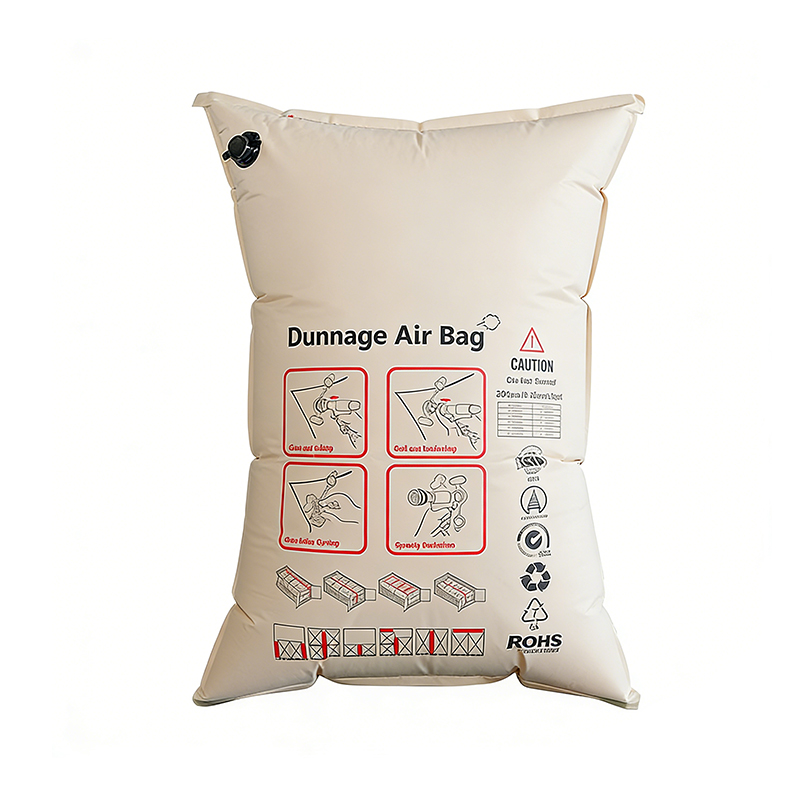
Step-by-Step Guide to Installing a Kraft Paper Dunnage Bag
Proper installation is what determines whether a kraft paper dunnage bag performs as intended. Follow these steps for a secure fit every time.
- Place the deflated bag into the void space, positioning the valve stem for easy access
- Connect the inflation nozzle to a compressed air source rated for dunnage bag use
- Inflate gradually while monitoring the recommended pressure printed on the bag label
- Stop inflating once the bag is firm but not overly rigid, avoiding overpressure
- Check surrounding cargo to confirm there is no visible shifting room left
Common Mistakes to Avoid When Using Kraft Paper Dunnage Bags
Even a well-made kraft paper dunnage bag can fail if used incorrectly. Being aware of common errors helps prevent damaged cargo and wasted materials.
Overinflating the Bag
Pumping too much air into the bag increases the risk of bursting, especially when cargo shifts slightly during loading and adds unexpected pressure.
Using the Wrong Ply Level
Choosing a lightweight bag for heavy palletized freight is one of the most frequent causes of in-transit failures, resulting in cargo damage claims.
Ignoring Sharp Edges Nearby
Placing a kraft paper dunnage bag against exposed nails, metal strapping, or splintered pallet wood can puncture the bag shortly after inflation.
Kraft Paper Dunnage Bags vs Other Void-Fill Methods
Comparing a kraft paper dunnage bag to alternative bracing methods helps clarify why so many shippers have made the switch.
| Method | Setup Time | Reusability | Environmental Impact |
| Kraft Paper Dunnage Bag | Under 1 minute | Single-use, recyclable | Low, biodegradable |
| Wooden Bracing | 15-30 minutes | Sometimes reusable | Moderate, wood waste |
| PP Woven Airbags | Under 1 minute | Single-use, not biodegradable | Higher, plastic waste |
| Airbag Inflatable Foam | 5-10 minutes | Not reusable | Higher, foam waste |
Storage and Handling Tips for Kraft Paper Dunnage Bags
Proper storage extends the shelf life of unused kraft paper dunnage bags and keeps them ready for immediate use when a shipment needs securing.
- Store flat in a dry area away from direct moisture or humidity
- Keep bags away from sharp tools or equipment that could puncture the paper layers
- Avoid stacking heavy items directly on top of stored bags
- Rotate stock using a first-in, first-out system to avoid long-term paper degradation
Frequently Asked Questions About Kraft Paper Dunnage Bags
Can a kraft paper dunnage bag be reused?
Generally no. These bags are designed as single-use products since deflation and repositioning can weaken the paper layers and compromise the air seal.
What air pressure is safe for inflation?
Most kraft paper dunnage bags are rated for a specific PSI printed directly on the bag or included in the manufacturer's technical sheet, and this limit should never be exceeded.
Are kraft paper dunnage bags suitable for ocean freight?
Yes, higher-ply versions are commonly used in ocean containers, though extra attention should be paid to humidity resistance given longer transit exposure to moisture.
Related Products




PRODUCT
CONTACT INFO
-
 +86-137 7421 9489
-
 +86-021-67558008
-
 [email protected]
-
 No.769 ,23# building, Fengliang Road,Fengcheng town,Fengxian District,Shanghai,China
MOBILE QR CODE
Copyright © Shanghai We Pack Co., Ltd. All Rights Reserved.
Cargo Securing Solutions Cargo Transport Protection Solutions

