
 Español

Industry News


How to Use a Ratchet Tie Down the Right Way (and Avoid Strap Failure)
 2026.06.22
 Industry News
A ratchet tie down is one of the simplest tools in any trailer, truck bed, or moving van, yet it's also one of the most misused. Used correctly, a ratchet strap can hold a motorcycle, a load of lumber, or a refrigerator perfectly secure through hours of highway driving. Used incorrectly, it can snap, slip, or fail to hold tension at all, leading to shifted cargo or a dangerous roadside incident. This guide covers how ratchet tie downs work, how to choose the right one, how to use them safely, and how to keep them in good condition for years of reliable use.
Content
- 1 What Is a Ratchet Tie Down and How Does It Work?
- 2 Key Parts of a Ratchet Strap System
- 3 Choosing the Right Ratchet Tie Down for the Job
- 4 How to Use a Ratchet Tie Down Correctly
- 5 Common Mistakes That Lead to Strap Failure
- 6 Caring for Ratchet Straps So They Last Longer
- 7 Ratchet Tie Down Versus Cam Strap: Which One to Use
- 8 Final Thoughts on Securing Loads with Ratchet Tie Downs
What Is a Ratchet Tie Down and How Does It Work?
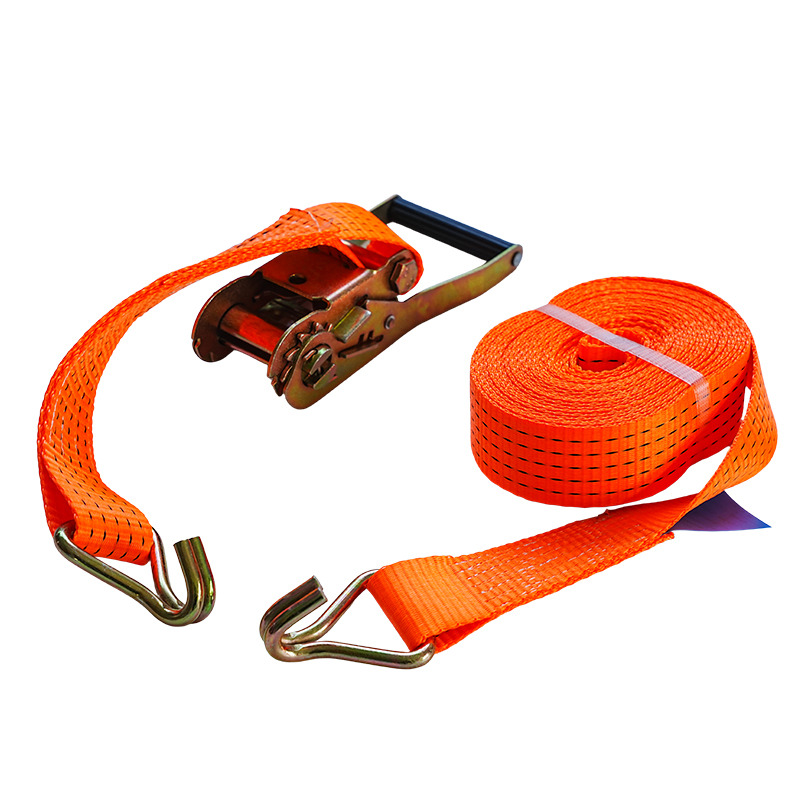
A ratchet tie down, also called a ratchet strap, is a webbing strap fitted with a mechanical ratcheting mechanism that allows the user to tighten the strap far beyond what hand tension alone could achieve. The system typically consists of two webbing pieces: a fixed end with a hook or loop, and a free end that threads through the ratchet's mandrel. As the ratchet handle is pumped back and forth, the mandrel rotates and winds the webbing around itself, progressively pulling the slack out and increasing tension on the load.
This mechanical advantage is what separates a ratchet strap from a simple cam strap or rope. A cam buckle relies entirely on friction and hand pull, which limits how tight a load can be secured. A ratchet mechanism, by contrast, can generate several hundred to a few thousand pounds of working load limit, making it the preferred choice for heavy or rigid cargo that needs to stay completely still during transport.
Key Parts of a Ratchet Strap System
Understanding the individual components of a ratchet tie down makes it much easier to choose the right strap and to inspect it for wear before each use.
| Component | Function |
| Webbing | The woven strap material that wraps around or over the load |
| Ratchet Handle | Lever that the user pumps to wind the mandrel and tighten the strap |
| Mandrel | The spindle that the webbing winds around as tension is applied |
| Release Lever | Allows the ratchet to be unlocked and the strap loosened or removed |
| End Fitting (Hook, Loop, or Flat Hook) | Attaches the strap to anchor points on the vehicle or trailer |
Choosing the Right Ratchet Tie Down for the Job
Not all ratchet straps are created equal, and picking the wrong one is one of the most common mistakes people make when securing a load. The right strap depends on the weight of the cargo, the type of anchor points available, and the conditions the load will face during transport.
Understand Working Load Limit Versus Breaking Strength
Every ratchet strap is rated with two numbers: the working load limit (WLL) and the breaking strength. The working load limit is the maximum force the strap is designed to handle safely during normal use, while the breaking strength is the point at which the strap actually fails. As a rule of thumb, breaking strength is roughly three times the working load limit, but only the working load limit should be used when calculating how much cargo a strap can safely secure.
Match Strap Width to the Load
Ratchet straps commonly come in one-inch, two-inch, and four-inch webbing widths. Narrower straps, around one inch, are suited to lighter cargo such as kayaks or small equipment, while two-inch straps are the standard choice for motorcycles, ATVs, and general trailer loads. Four-inch straps are typically reserved for flatbed trucking and heavy industrial loads where working load limits need to reach into the thousands of pounds.
Pick the Right End Fitting
End fittings should match the anchor points on the trailer or truck bed. Common options include S-hooks, J-hooks, flat hooks, and wire hooks, each designed to fit specific rail or D-ring styles. Using a mismatched hook can lead to slippage or accidental disengagement while driving, so it's worth checking the anchor style before buying a set of straps.
How to Use a Ratchet Tie Down Correctly
Even a high-quality ratchet strap will fail to do its job if it's used incorrectly. Following a consistent process each time helps avoid the most common securing mistakes.
- Inspect the webbing and ratchet mechanism for cuts, fraying, or rust before each use
- Attach both end fittings to solid, load-rated anchor points, never to plastic trim or weak brackets
- Remove twists in the webbing before tightening, since a twisted strap loses strength and can fray faster
- Open the ratchet, thread the loose webbing through the mandrel, and pull out the initial slack by hand
- Pump the ratchet handle until the strap is snug and the load no longer shifts, without overtightening to the point of crushing soft cargo
- Close the ratchet handle fully and secure any loose strap tails so they don't flap or get caught while driving
- Recheck tension after the first few miles, since loads often settle and straps can loosen slightly
Common Mistakes That Lead to Strap Failure
Most ratchet strap accidents come down to a handful of preventable errors rather than a defective product. Recognizing these mistakes ahead of time can prevent a load from shifting or a strap from snapping mid-drive.
- Using a strap with a working load limit lower than the actual cargo weight
- Routing the webbing over sharp edges without an edge protector, which can cut through the fibers
- Continuing to use a strap after the webbing shows fraying, cuts, or UV damage
- Forcing the ratchet handle with a pipe extension to overtighten beyond the rated capacity
- Leaving the webbing twisted, which reduces strength and accelerates wear at the twist point
- Hooking onto a weak or non-rated anchor point instead of a proper D-ring or rail
Caring for Ratchet Straps So They Last Longer
A ratchet tie down is a relatively low-maintenance tool, but a little care goes a long way toward extending its usable life and keeping it safe to use.
- Store straps in a dry place away from direct sunlight, since UV exposure breaks down webbing fibers over time
- Rinse off mud, salt, or chemical residue after use, especially after winter driving or marine use
- Lightly oil the ratchet mechanism if it becomes stiff or starts squeaking during operation
- Coil straps loosely rather than folding them sharply, to avoid creasing the webbing fibers
- Replace any strap immediately if the stitching at the end fitting looks loose or pulled
Ratchet Tie Down Versus Cam Strap: Which One to Use
Many people wonder whether a ratchet strap or a cam strap is the better choice for a given job, and the answer really depends on the type of cargo being secured.
| Feature | Ratchet Strap | Cam Strap |
| Tightening Method | Mechanical ratchet handle | Hand-pull friction buckle |
| Typical Working Load Limit | 500 to 3,000+ lbs | 200 to 500 lbs |
| Best For | Heavy or rigid cargo like motorcycles, furniture, lumber | Lightweight or soft cargo like kayaks, mattresses |
| Risk of Overtightening | Higher, can crush soft items | Lower, limited by hand strength |
For most towing and hauling situations involving anything heavier than a kayak or a few boxes, a ratchet strap is the safer and more dependable choice because of the added holding power and the ability to fine-tune tension with the ratchet mechanism.
Final Thoughts on Securing Loads with Ratchet Tie Downs
A ratchet tie down is a small investment that pays off every time it keeps cargo exactly where it belongs during a drive. Choosing a strap with the right working load limit, using proper anchor points, avoiding twists and sharp edges, and storing the straps properly between uses are all simple habits that make a big difference in safety and longevity. Whether hauling a motorcycle, securing furniture for a move, or strapping down lumber for a job site, taking a few extra minutes to set up the ratchet strap correctly is always worth it.
Related Products


PRODUCT
CONTACT INFO
-
 +86-137 7421 9489
-
 +86-021-67558008
-
 [email protected]
-
 No.769 ,23# building, Fengliang Road,Fengcheng town,Fengxian District,Shanghai,China
MOBILE QR CODE
Copyright © Shanghai We Pack Co., Ltd. All Rights Reserved.
Cargo Securing Solutions Cargo Transport Protection Solutions

