
 Español

Home / News / Industry News / PVC Dunnage Bag Explained: A Simple Guide to Keeping Your Cargo Safe in Transit
Industry News


PVC Dunnage Bag Explained: A Simple Guide to Keeping Your Cargo Safe in Transit
 2026.08.18
 Industry News
Content
- 1 What Exactly Is a PVC Dunnage Bag?
- 2 Why PVC Dunnage Bags Matter for Cargo Protection
- 3 Main Types of PVC Dunnage Bags
- 4 How to Choose the Right PVC Dunnage Bag for Your Shipment
- 5 Step-by-Step: Installing and Inflating a PVC Dunnage Bag
- 6 Common Mistakes That Reduce Dunnage Bag Performance
- 7 PVC Dunnage Bags vs. Kraft Paper Dunnage Bags
What Exactly Is a PVC Dunnage Bag?
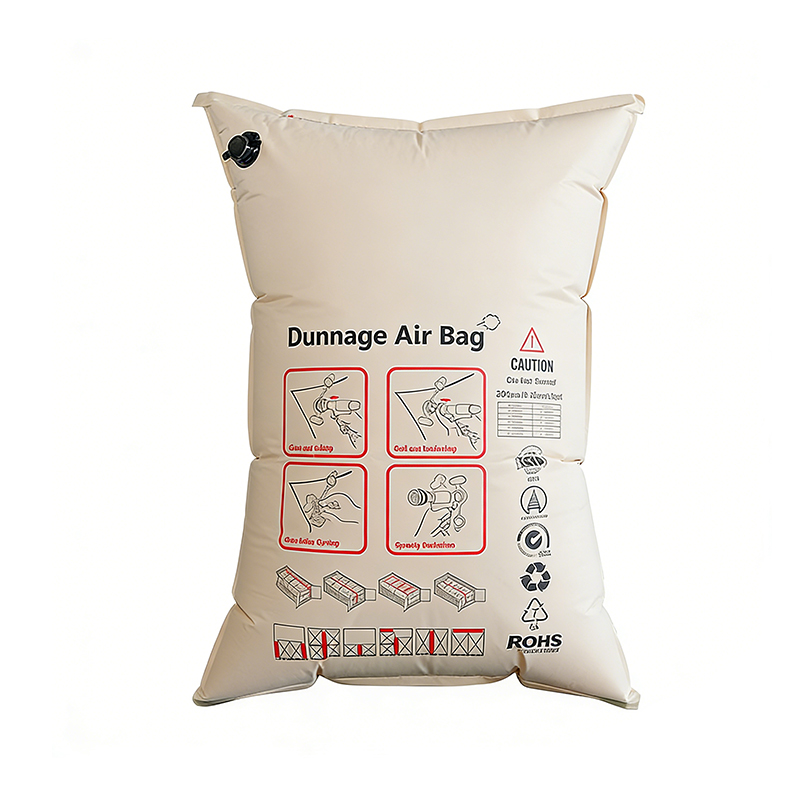
A PVC dunnage bag is an inflatable air bag made from layers of polyvinyl chloride (PVC) film, designed to fill the empty gaps between cargo inside containers, trucks, or railcars. Once placed in the void space and inflated with a standard air compressor, the bag expands to press gently but firmly against the cargo on either side, holding everything in place during transit. Unlike wooden blocking, strapping, or airbags made of kraft paper, a PVC dunnage bag is reusable, waterproof, and resistant to punctures caused by rough handling or sharp-edged packaging. This makes it a go-to solution for shippers who move goods repeatedly and want a cost-effective way to prevent cargo shifting, crushing, and collision damage.
Why PVC Dunnage Bags Matter for Cargo Protection
Cargo damage during shipping rarely happens because of a single dramatic event. More often, it's the small, constant movements — the swaying of a container on a ship, the sudden braking of a truck, the jolts of a train coupling — that slowly shift boxes, pallets, or drums until they collide or topple. A properly inflated PVC dunnage bag acts like a cushion that absorbs these forces instead of letting them transfer directly into your goods. It fills irregular gaps that wood blocking simply can't reach, and because PVC is flexible yet strong, it conforms to oddly shaped cargo while still providing enough resistance to keep loads from moving.
Where They're Commonly Used
PVC dunnage bags show up across nearly every industry that ships palletized or boxed goods. Beverage companies use them to stop cans and bottles from crushing each other. Auto parts manufacturers rely on them to protect stacked components from shifting inside 40-foot containers. Furniture, appliance, and electronics exporters use them to prevent scuffing and impact damage between crates. Even food and beverage distributors use food-grade PVC bags to keep pallets steady without contaminating products.
Main Types of PVC Dunnage Bags
Not all PVC dunnage bags are built the same. They differ mainly in the number of PVC layers used, which affects their strength, burst resistance, and price. Choosing the right type depends on how heavy your cargo is and how much void space you need to fill.
| Type | Layers | Typical Load Capacity | Best For |
| 1-Ply PVC Bag | 1 layer | Light to medium loads | Small gaps, lighter cartons |
| 2-Ply PVC Bag | 2 layers | Medium to heavy loads | General container shipping |
| Woven PVC-Laminated Bag | Reinforced woven core | Heavy, high-pressure loads | Steel coils, machinery, drums |
Beyond layer count, sizes vary widely as well, ranging from small 12 x 24-inch bags used to plug narrow gaps to large 48 x 96-inch bags designed to fill the entire width of a container. Picking the correct size ensures the bag inflates fully within the void without over-stretching, which is key to both safety and effectiveness.

How to Choose the Right PVC Dunnage Bag for Your Shipment
Selecting the right bag isn't just about grabbing whatever size looks close enough. A poorly matched dunnage bag can under-fill a gap and fail to hold cargo in place, or it can be forced into too small a space and burst under pressure. Consider the following factors before placing an order.
- Measure the void space accurately, including width, height, and depth, before selecting a bag size.
- Estimate the total weight of cargo pressing against the bag to determine the required layer count and burst strength.
- Check the transport mode — ocean freight typically demands higher burst resistance than short-haul trucking due to longer transit times and rougher handling.
- Consider the cargo's surface — sharp corners or metal edges may require an additional protective wrap or a reinforced woven bag.
- Confirm whether the bag needs to be food-grade or chemical-resistant, depending on what's being shipped nearby.
Step-by-Step: Installing and Inflating a PVC Dunnage Bag
Correct installation is just as important as choosing the right bag. Even the highest-quality PVC dunnage bag will underperform if it's placed or inflated incorrectly. Here's a simple process that shipping and warehouse teams can follow.
- Inspect the bag for visible tears, punctures, or valve damage before use.
- Position the deflated bag flat and centered in the gap between cargo, avoiding folds or twists.
- Connect the compressor hose to the valve and inflate gradually rather than all at once.
- Stop inflating once the bag is firm to the touch but not rock-hard; overinflation increases the risk of bursting.
- Recheck pressure after 10-15 minutes, since bags can settle slightly as they conform to the surrounding cargo.
- Seal or cap the valve securely to prevent slow air leakage during transit.
Common Mistakes That Reduce Dunnage Bag Performance
Even experienced logistics teams sometimes run into avoidable problems with dunnage bags. Overinflating a bag beyond its rated pressure is one of the most frequent causes of bursting, especially when workers assume "firmer is always better." Using a bag that's too small for the gap is another common issue, since it forces the bag to overextend just to make contact with cargo on both sides, weakening the material. Placing a bag directly against sharp metal edges without protective padding can also lead to punctures mid-transit. Finally, reusing a bag that has visible seam damage or valve wear, just to save costs, often ends up causing far more expensive cargo damage than the price of a replacement bag.
PVC Dunnage Bags vs. Kraft Paper Dunnage Bags
Shippers often compare PVC dunnage bags with kraft paper dunnage bags, since both serve the same basic purpose. The key difference lies in durability and reusability. PVC bags are waterproof and can typically be reused multiple times if handled carefully, making them more economical for companies that ship regularly along the same routes. Kraft paper bags, on the other hand, are usually single-use and more vulnerable to moisture damage, but they tend to be lighter and slightly cheaper upfront. For long ocean voyages or humid climates, PVC is generally the safer choice, while kraft paper may suit short, dry, one-time shipments where budget is the primary concern.
Ultimately, the right dunnage bag comes down to balancing shipment frequency, cargo weight, transport conditions, and budget. For most container and truck shipments carrying moderate to heavy loads across variable weather conditions, a quality PVC dunnage bag remains one of the most reliable and cost-effective ways to keep cargo secure from origin to destination.
Related Products


PRODUCT
CONTACT INFO
-
 +86-137 7421 9489
-
 +86-021-67558008
-
 [email protected]
-
 No.769 ,23# building, Fengliang Road,Fengcheng town,Fengxian District,Shanghai,China
MOBILE QR CODE
Copyright © Shanghai We Pack Co., Ltd. All Rights Reserved.
Cargo Securing Solutions Cargo Transport Protection Solutions

