
 Español

Home / News / Industry News / Automatic Strapping Machine Buyer's Guide: How to Choose the Right Strapper
Industry News


Automatic Strapping Machine Buyer's Guide: How to Choose the Right Strapper
 2026.09.15
 Industry News
A packing supervisor watching an operator strap 400 boxes an hour can see the bottleneck clearly: one repetitive pull, tension, seal, and cut cycle, repeated thousands of times a shift. Automatic strapping machines exist to remove that manual cycle. Instead of relying on an operator's arm strength and attention, the machine feeds the strap around the carton, tensions it to a preset value, seals it with a heat weld, and cuts it — all in a few seconds.
This guide covers what an automatic strapping machine realistically does for a packing line, where it generates the fastest payback, and which specifications decide whether you get a dependable workhorse or a machine that fights your carton mix.
Content
What Counts as an Automatic Strapping Machine?
The difference between a fully automatic, semi-automatic, and manual strapping tool comes down to who does the work. With a manual tool, the operator pulls the strap tight by hand. A semi-automatic machine receives the strap after the operator wraps it around the package; the machine then tensions, seals, and cuts. A fully automatic strapping machine does the entire job: strap feeding, tensioning, sealing, and cutting happen without the operator touching the strap.
Fully automatic models typically cycle at 20 to 40 straps per minute, depending on arch size, strap width, and package dimensions. That throughput explains why they appear in printing plants, corrugated box lines, building material packing stations, and e-commerce fulfillment areas where volume justifies the investment.
Why Automation Earns Its Place on the Line
The strongest argument for an automatic strapping machine is consistency. Manual strapping produces joint strength that varies with the operator's technique and fatigue toward the end of a shift. An automatic machine applies the same tension every cycle, which means the strap joint is far less likely to fail in transit.
The practical benefits follow from that consistency:
- Higher throughput: 20 to 40 straps per minute versus 2 to 5 by hand.
- Labor redeployment: one operator can feed the machine, inspect boxes, and build pallets instead of pulling a strap tensioner.
- Less strap waste: the machine cuts precise lengths, while manual operators leave long tails.
- Fewer repetitive-motion injuries: less wrist and shoulder strain over a full shift.
Taken together, these factors usually produce a payback measured in months rather than years for operations that strap several hundred cartons per day.
Where Automatic Strappers Make the Most Sense
Automatic strapping works best when carton sizes are stable and volume is steady. Publishing plants strapping book cartons, box plants bundling flat cases, and distribution centers consolidating orders all fit this profile. If your line processes many different carton sizes, look for a machine with an adjustable arch or one designed for quick changeovers.
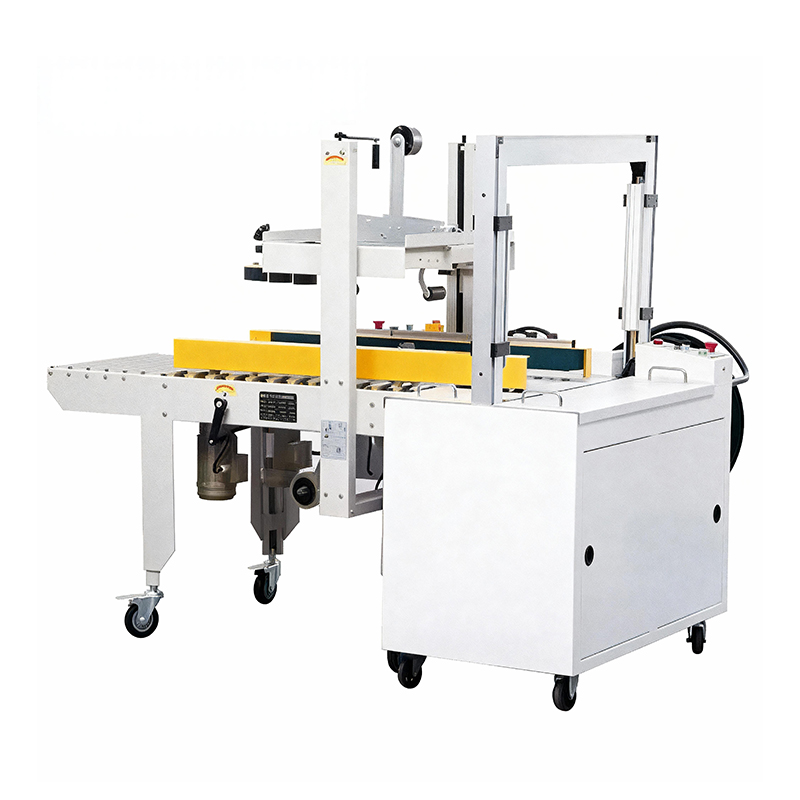
A compact unit such as the MH101A automatic strapping machine for books and cartons shows what a dedicated machine can do: it is sized for the box dimensions common in printing and e-commerce, and it does not require a full conveyor system to earn its keep.
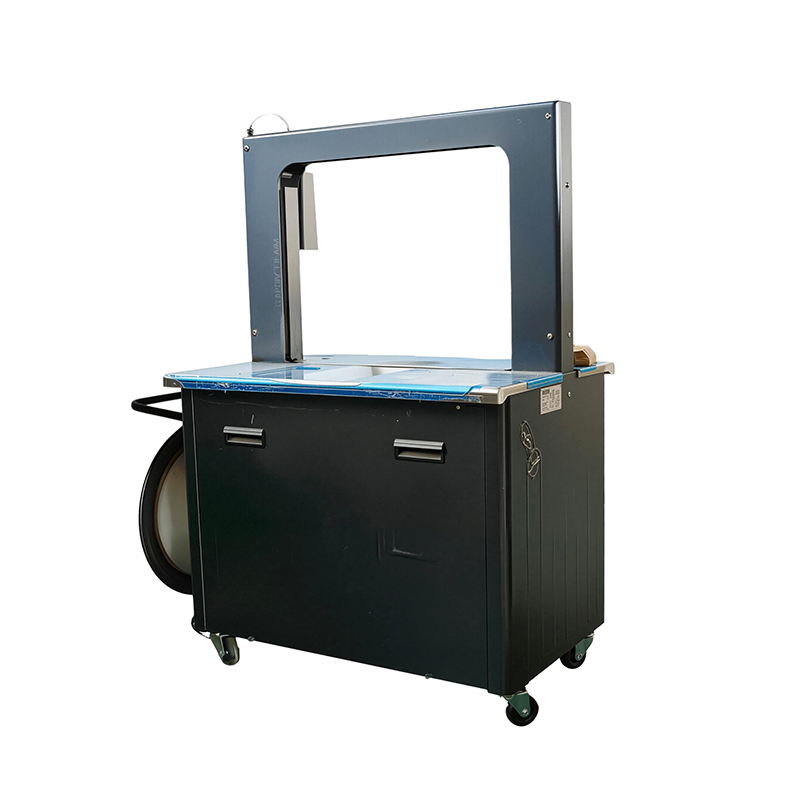 MH-101A Automatic Strapping Machine for Books and CartonsThis compact automatic strapper is sized for typical printing and e-commerce cartons and integrates flap folding, conveying, and sealing. It suits mixed carton sizes without a full conveyor system, making it a practical upgrade for manual taping lines.View Product →
Key Specifications to Check Before You Buy
Four specifications determine whether a machine matches your carton mix and throughput target: arch size, strap width range, tension range, and sealing method. Get these right and the machine runs for years. Get them wrong and you will be hand-feeding boxes through a machine that cannot handle them.
| Specification | What It Limits | Typical Range |
|---|---|---|
| Arch width | Maximum carton width | 400–850 mm |
| Arch height | Maximum carton height | 200–600 mm |
| Strap width | Compatible strap sizes | 6–16 mm |
| Tension force | How tightly the strap is pulled | 5–40 kg |
| Cycle speed | Straps per minute | 18–40 |
Arch size is the most common mistake. An arch that is too small forces operators to angle boxes awkwardly, which slows the cycle and risks jams. An arch that is much larger than needed is slower because the strap has to travel farther around the loop. Measure the largest carton you plan to strap, add clearance on every side, and choose the arch that fits without excess.
Sealing method deserves equal attention. Heat sealing melts the strap ends together and produces a joint that is nearly invisible and very reliable on PP strap. Friction welding is common on PET strap and heavy-duty machines. Make sure the machine's sealing head matches the strap material you intend to use, because a mismatch shows up immediately as failed joints.
Matching the Strap to the Machine
The strap material affects joint strength, cost, and how the machine feeds. PP (polypropylene) strap is the default for cartons and lightweight bundles because it is economical and stretches slightly under impact, which helps absorb transit shocks. PET (polyester) strap is stiffer and stronger, so it suits heavier loads where creep and elongation have to be minimized.
If you are comparing materials for the first time, our PP packing strap guide explains the types, selection criteria, and common mistakes. For heavy loads, a high-tensile PET strap keeps its tension longer over long distances and temperature swings.
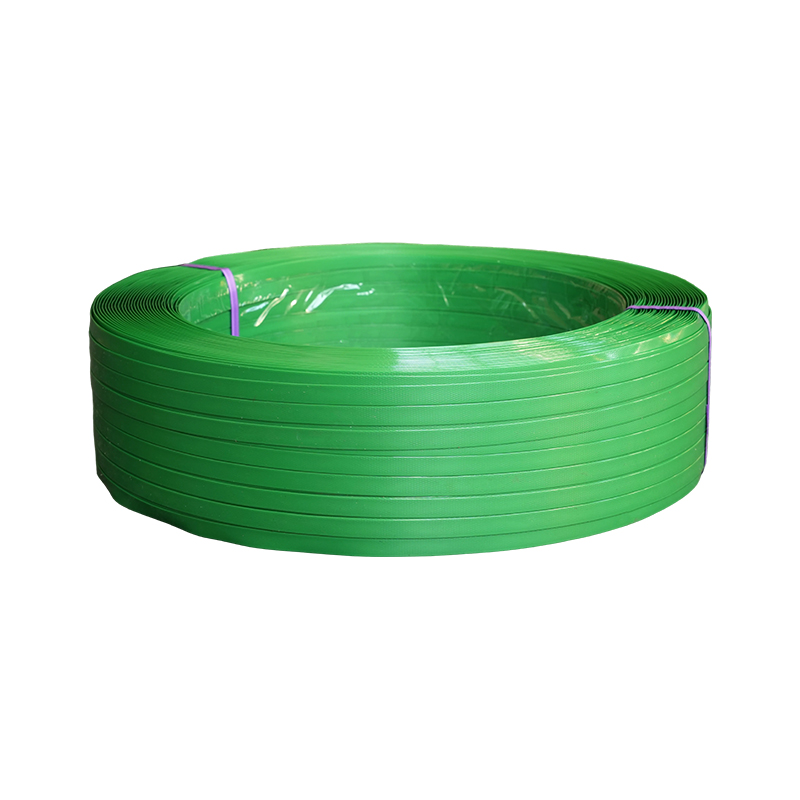 High Tensile PET Strapping for Heavy-Duty CargoThis PET strap offers high tensile strength, 10% elongation at break, and resistance to temperature and chemicals. It is a reliable alternative to steel for securing metals, building materials, and heavy equipment, especially where long-term tension retention is needed.View Product →
Belt width matters too. A 9 mm strap is typical for cartons up to moderate weight; 12 mm and 16 mm widths are used when the load is heavy or the carton edges are soft. The machine's strap guide and sealing head must match the chosen width, so decide the strap first and confirm compatibility before ordering the machine.
Don't Skip Edge Protection
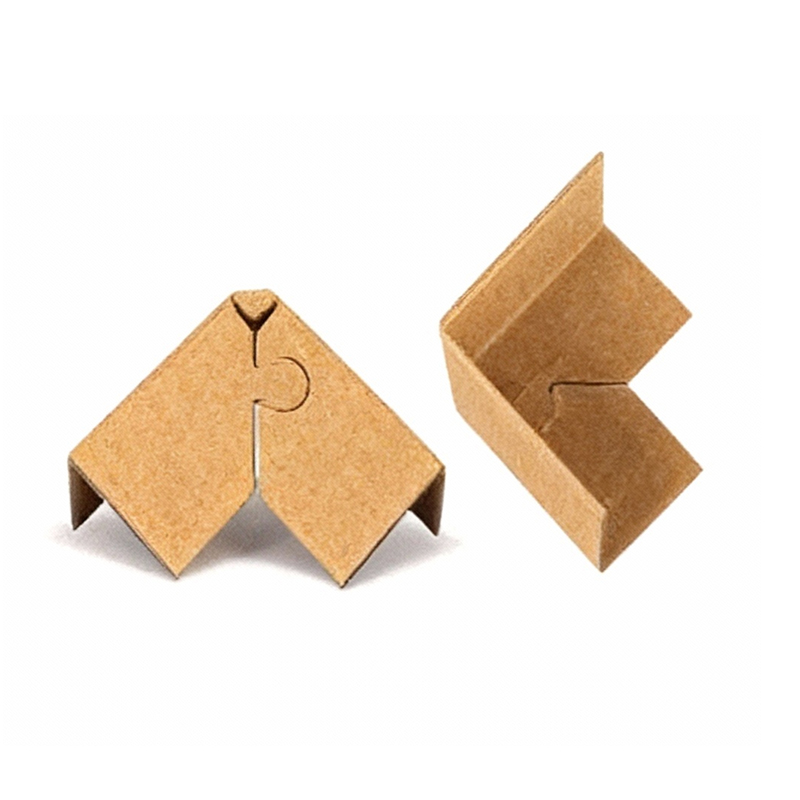
When a strap is tensioned to 20 kg or more, the strap can crush the edges of a corrugated box, especially during long storage or stacking. L-shaped paper corner protectors spread the strap force over a wider area and keep the strap from cutting into the board.
Corner protectors also stabilize the load by holding the strap perpendicular to the carton edge. That geometry matters for automatic strap feeding as well: a crushed corner leaves a gap under the strap, reducing holding force and allowing the load to shift during handling.
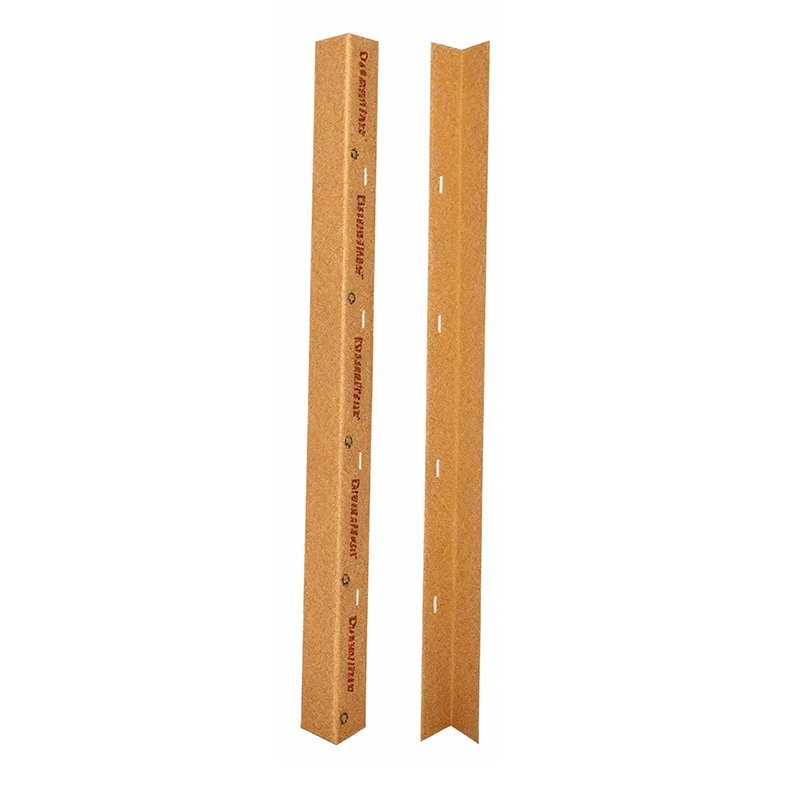
Our paper corner protector sizing guide covers the dimensions and grades available, and a heavy-duty L-shaped edge protector is a straightforward addition to any strapping line.
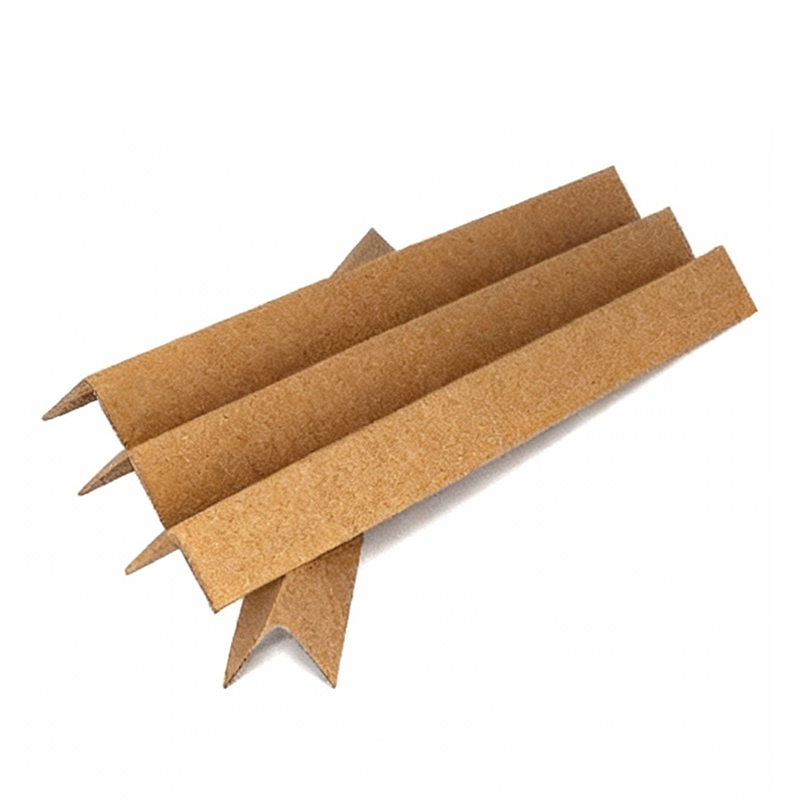 L-Shaped Heavy-Duty Paper Edge ProtectorMade from kraft liner and sand tube paper, this L-shaped protector reinforces carton corners and pallet edges during transport. It is FSC-certified, recyclable, and customizable in thickness and length, helping prevent impact damage on boxes before strapping.View Product →
Cost, Payback, and Service Life
An automatic strapping machine costs more than a semi-automatic unit, but the payback calculation is direct: compare the labor hours saved with the machine cost and expected service life. A line that straps 1,000 cartons per day at a manual pace of 3 straps per minute needs more than 5 hours of operator time. The same volume on an automatic machine at 25 straps per minute takes under 45 minutes. If that operator's loaded cost is $20 per hour, the automatic machine saves close to $100 per day, which adds to more than $2,000 per month on a single shift.
Maintenance is modest but not zero. Keep the strap path clear of dust and debris, check the sealing head regularly for residue, and avoid cheap strap with rough edges, which causes more jams than any other single factor. Plan for wear parts such as sealing blades and heating elements, and keep a spare set on hand.
Final Word
An automatic strapping machine delivers its return when volume justifies it, carton sizes fit a sensible arch, and the strap material matches the load. Define the throughput target, measure the carton envelope, and work with a supplier who can support the whole system — strap, edge protection, and machine.
The strapper is the visible investment, but the strap tension, joint quality, and edge protection are what actually protect the cargo. A good automatic strapping machine does not just speed up the line; it guarantees that every carton leaves with the same level of security.
Related Products

PRODUCT
CONTACT INFO
-
 +86-137 7421 9489
-
 +86-021-67558008
-
 [email protected]
-
 No.769 ,23# building, Fengliang Road,Fengcheng town,Fengxian District,Shanghai,China
MOBILE QR CODE
Copyright © Shanghai We Pack Co., Ltd. All Rights Reserved.
Cargo Securing Solutions Cargo Transport Protection Solutions

