
 Español

Home / News / Industry News / Composite Strap Explained: Types, Strength, Tools and Cargo Securing Tips
Industry News


Composite Strap Explained: Types, Strength, Tools and Cargo Securing Tips
 2026.10.09
 Industry News
If you have ever watched a coil of steel, a bundle of pipes or a stack of timber travel by truck, rail or sea, you already know that the strap holding it together does more work than it gets credit for. Composite strap has quietly become one of the most practical answers to that job: strong enough for heavy loads, gentle enough to leave no metal marks, and forgiving when cargo settles on a long haul. What follows is what we have learned from supplying composite strapping, buckles and tensioning tools to exporters, manufacturers and freight forwarders.
Content
- 1 What a Composite Strap Actually Is
- 2 Why Composite Straps Earn Their Place on Heavy Loads
- 3 Where Composite Straps Fit Best
- 4 Buckles and Tensioning Tools: the Other Half of the System
- 5 Choosing Width, Strength and Buckle Size
- 6 How to Install a Composite Strap Step by Step
- 7 Mistakes and Safety Limits Worth Respecting
- 8 Storage, Handling and Inspection
- 9 Wrapping It Up
What a Composite Strap Actually Is
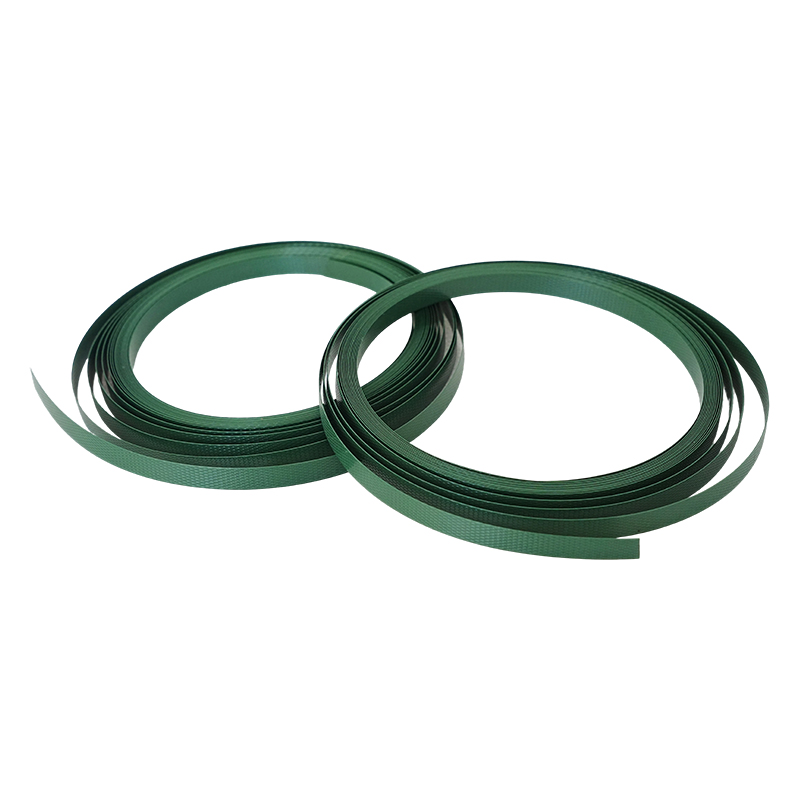
A composite strap, often called composite cord strap or composite polyester strapping, is not a single material but a small engineered system. High-tenacity polyester yarns run lengthwise, side by side, and are bonded inside a polymer coating, usually polypropylene or a polyester blend. The yarn carries the load; the coating keeps the yarns aligned and shields them from abrasion and moisture.
- Core: parallel high-tenacity polyester filaments that carry the breaking load.
- Binder and coating: a polymer layer that locks the yarns together and keeps the surface smooth.
- Profile: flat, flexible and free of the sharp edges that metal strap brings to a bundle.
- Supply form: coils or spools in widths from roughly 13 mm up to 32 mm.
Because the strength sits in the yarn rather than the coating, the strap feels like a tough textile and behaves like a spring. It also means no rust rings on your goods, though gloves and safety glasses are still a good habit with any tensioned strap.
Why Composite Straps Earn Their Place on Heavy Loads
Composite strapping has grown quickly in load securing because it balances properties that older materials rarely combine. Steel is stronger; plastic strapping is cheaper. Composite strap sits in the useful middle, and on many real loads that middle is exactly where you want to be.
| Property | Composite strap | Steel strap | PET / PP strap |
|---|---|---|---|
| Breaking strength | High, commonly up to around 2,000 kg at 32 mm | Highest | Moderate to high |
| Behaviour when cargo settles | Stretches and recovers, so tension is largely retained | Very little elongation; can go slack | Creeps and may stay loose |
| Cargo damage risk | Soft edges, no metal contact marks | Sharp edges, edge protection essential | Generally soft |
| Corrosion | Rust-free | Rusts unless coated | Rust-free |
| Handling | Light, cut with standard cutters | Heavy, springback hazard | Light |
| Typical role | Heavy bundling and load securing | Extreme loads, steel coils | Cartons, light pallets |
The elastic memory is the real star. When timber shrinks, when a pallet of bricks settles or a coil shifts a few millimetres, a composite strap takes up the movement instead of surrendering its tension. That is often the difference between a load that arrives tight and one that arrives leaning on the container doors.
Where Composite Straps Fit Best
Composite strapping is happiest on loads that are heavy, dense and prone to settling, the kind of cargo where steel would be overkill and plastic would be under-prepared. In practice, we see it doing well in these situations:
- Steel coils, wire coils and rolled sheet bundled for road or sea freight.
- Pipes, tubes, profiles and other long metal or plastic products.
- Timber packs, boards and engineered wood.
- Bricks, blocks, stone and heavy building materials.
- Machinery, castings and fabricated parts on pallets or skids.
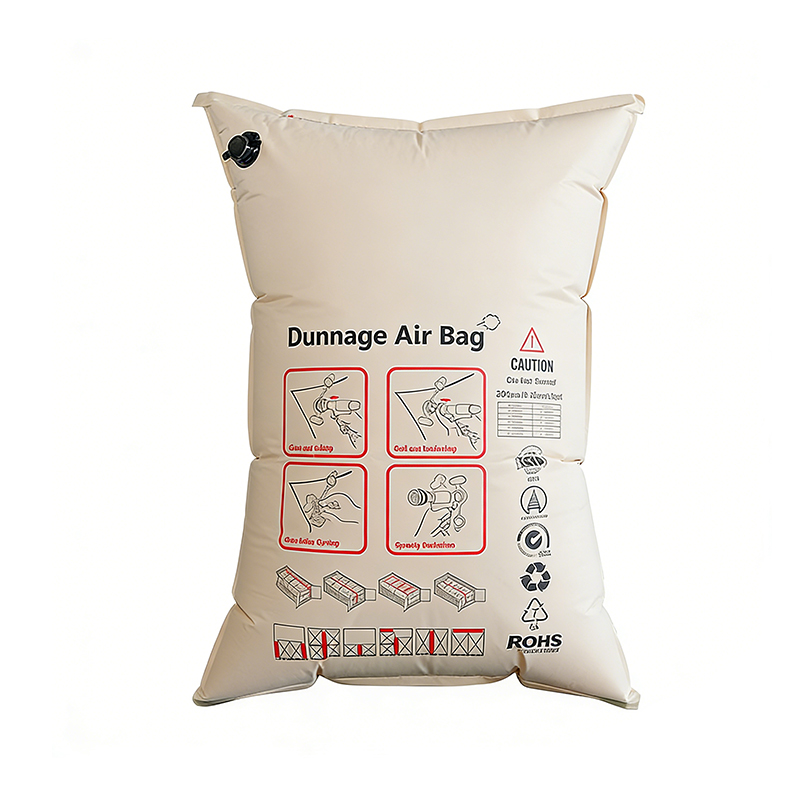
- Export bundles inside containers, usually combined with dunnage bags and edge protection.
If you would like to compare it with other strapping families before you commit, our complete guide to composite strap types and uses walks through the differences in more detail.
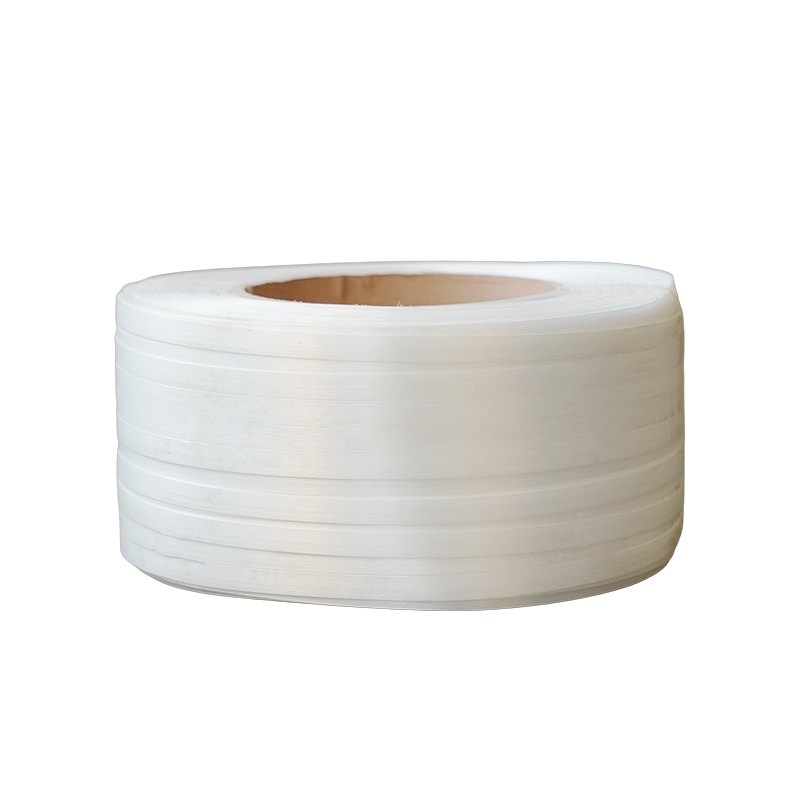 UV-Resistant Polyester Fiber Strapping for Outdoor Heavy-Duty LoadsA flexible 100% polyester composite strapping for heavy machinery, steel, timber, and outdoor loads, offered in multiple duty series and widths.View Product →
Buckles and Tensioning Tools: the Other Half of the System
A strap is only as good as the hardware that closes the loop. Two components decide whether a unit load stays put: the buckle and the tensioner.
Matching the buckle to the strap
Composite strap is normally closed with a zinc-plated steel buckle sized exactly to the strap width. A 25 mm strap needs a 25 mm buckle; a 19 mm buckle on a 25 mm strap will slide under load, however hard you pull. Buckle and strap also have to survive the same weather, which is why plated steel is the usual choice. When we quote a strapping system, we quote the buckle with it, because mismatched sizes are one of the most common field failures we see.
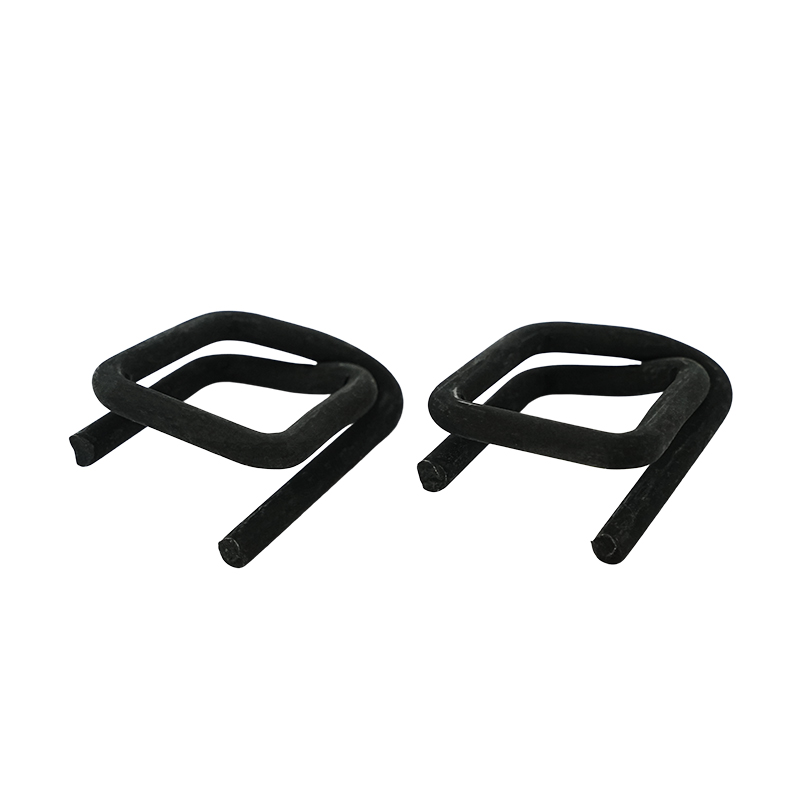 Zinc-Plated Steel Buckles for Composite Strapping SystemsA stamped, heat-treated buckle that mechanically joins polyester strap ends, sized by strap width and matched to manual or pneumatic tensioners.View Product →
Choosing a tensioner
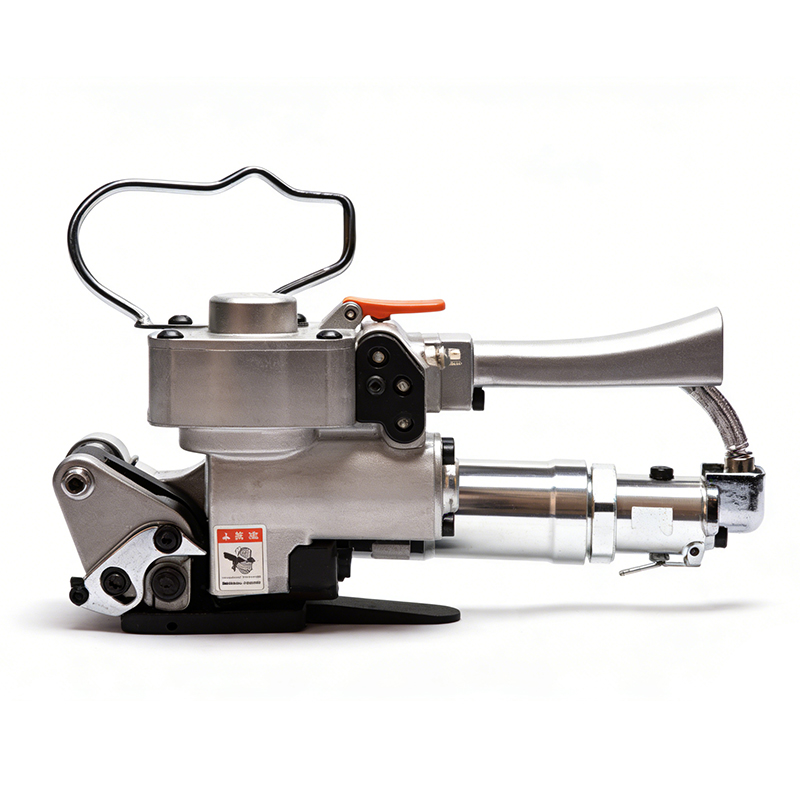
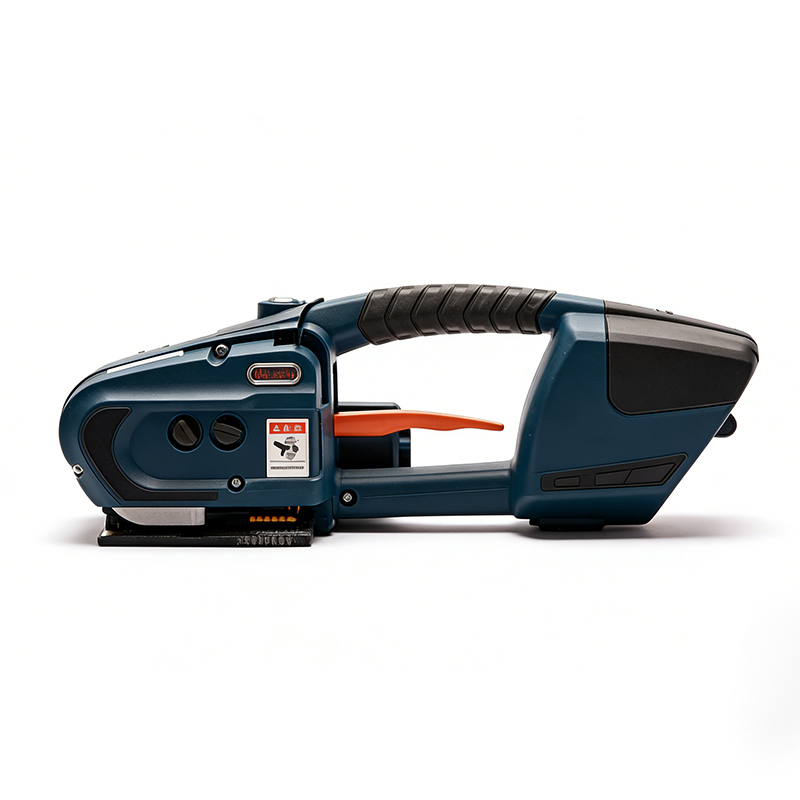
For low and medium volumes a manual tensioner is still the simplest, most reliable option; a good tool covers several strap widths and releases cleanly so you keep the tension you have just built. On production lines closing dozens of bundles per shift, battery and pneumatic tools pay for themselves quickly by delivering the same pull every time.
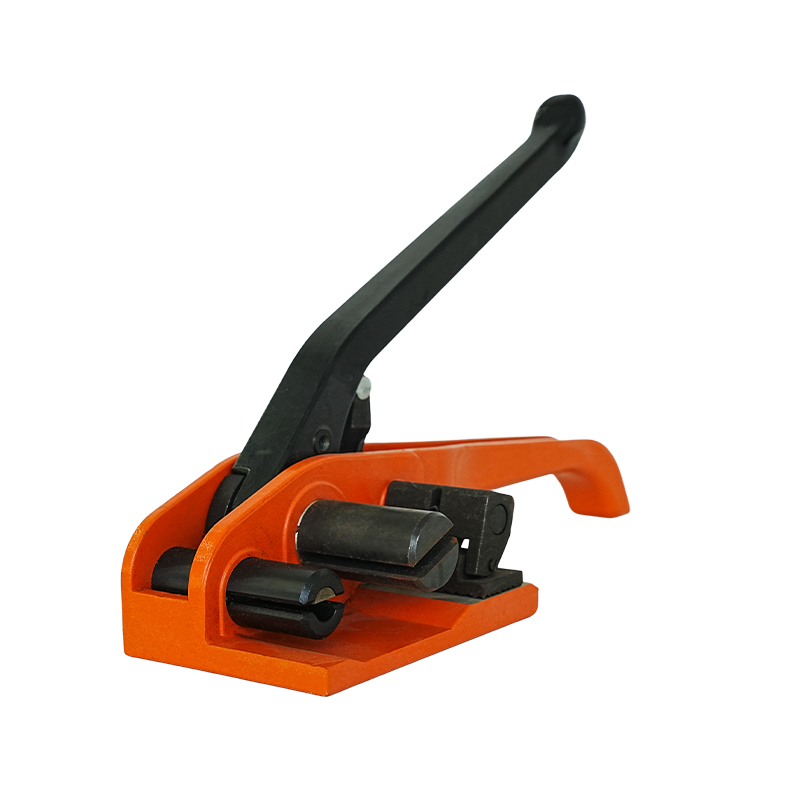 Manual Polyester Fiber Belt Tensioner for PET and PP StrappingA no-power manual tensioning tool for PET/PP straps, with gear-lever operation and models covering 13–50 mm widths for low-to-medium volumes.View Product →
Choosing Width, Strength and Buckle Size
Most selection decisions come down to one question: how much load will the strap hold, and how much movement should it absorb? The table below shows the usual family of composite straps with the buckle that belongs with each width.
| Nominal width | Typical breaking strength | Buckle width | Where it is usually used |
|---|---|---|---|
| 13 mm | Around 500 to 600 kg | 13 mm | Light bundles and small pallets |
| 16 mm | Around 800 kg | 16 mm | General bundling and parcel packs |
| 19 mm | Around 1,000 to 1,200 kg | 19 mm | Timber, pipes and medium coils |
| 25 mm | Around 1,500 to 1,800 kg | 25 mm | Heavy coils and machinery |
| 32 mm | 2,000 kg and above | 32 mm | Very heavy loads, steel coils, rail shipments |
Two habits keep you out of trouble. Size the system by the assembly, not by the strap alone, because buckle, edge protection and contact points all share the load. And check the coating on arrival, since a damaged coating lets moisture into the yarn, and that is where strength quietly disappears.
How to Install a Composite Strap Step by Step
Applying composite strapping is simple once you have a routine. On site we usually recommend this sequence:
- Inspect strap and buckle first; reject anything with a split coating, frayed yarn or a bent buckle.
- Protect contact points with corner protectors or edge guards wherever the strap crosses a sharp corner.
- Pass the strap around the load, keeping it as close to right angles to the cargo as the shape allows.
- Thread the strap through the buckle and fold it back so the buckle sits flat against the load.
- Tension with a manual tensioner, or with a battery or pneumatic tool on high-volume lanes.
- Stop at a firm, even pull; over-tensioning can crush cartons or distort a coil as easily as under-tensioning lets it shift.
- Finish the end neatly, trim the tail, and log the check so the next shift knows the load is secured.
Mistakes and Safety Limits Worth Respecting
Composite strap is forgiving, but it is not a lifting sling and it is not indestructible. The problems we see most often are predictable ones:
- Using the strap for overhead lifting, when it is designed for bundling and load securing.
- Running the strap straight over a sharp edge without protection, which cuts the yarns from the outside in.
- Reusing strap that has been abraded, over-stretched or left in the sun for months.
- Mismatching buckle and strap widths, or mixing parts from different systems.
- Assuming that a higher breaking strength alone fixes a loose load, when tensioning and edge protection matter just as much.
Storage, Handling and Inspection
Keep coils indoors, away from direct sunlight, heat sources and standing water, and off floors where forklifts run. Store them away from oils and solvents, which soften the coating over time, and cut straps with a proper cutter so the coil end does not fray. Before every use, run a quick visual check: coating intact, no yarn breaks, buckle straight and free of rust, and the strap end still long enough to fold back safely. It takes seconds and it is the cheapest insurance on the load.
Wrapping It Up
Composite strap is a small line item in a freight budget and a large factor in whether goods arrive intact. Pick the right width, pair it with the correct buckle, protect the edges and tension it consistently, and you will quietly prevent most transport damage. If you are building or reviewing a load securing system, our team is glad to talk it through with you, from the strap and buckle through to the tensioning tools that go with them.
Related Products

PRODUCT
CONTACT INFO
-
 +86-137 7421 9489
-
 +86-021-67558008
-
 [email protected]
-
 No.769 ,23# building, Fengliang Road,Fengcheng town,Fengxian District,Shanghai,China
MOBILE QR CODE
Copyright © Shanghai We Pack Co., Ltd. All Rights Reserved.
Cargo Securing Solutions Cargo Transport Protection Solutions

