
 Español

Home / News / Industry News / The Complete Guide to Composite Strap: Types, Uses, and How to Apply It Right
Industry News


The Complete Guide to Composite Strap: Types, Uses, and How to Apply It Right
 2026.06.09
 Industry News
Content
- 1 What Is a Composite Strap and How Is It Different from Steel or Poly Strapping?
- 2 How Composite Strapping Is Made
- 3 Composite Strap vs. Steel, PET, and PP Strapping: A Side-by-Side Look
- 4 Key Industries and Applications That Rely on Composite Strapping
- 5 Composite Strap Widths, Grades, and How to Choose the Right One
- 6 Tools and Buckles Used with Composite Strapping
- 7 Proper Tensioning: How Tight Should a Composite Strap Be?
- 8 Composite Strap Storage, Handling, and Shelf Life
- 9 Environmental Considerations of Composite Fiber Strap
- 10 Common Mistakes to Avoid When Using Composite Strapping
- 11 Is Composite Strapping Right for Your Application?
What Is a Composite Strap and How Is It Different from Steel or Poly Strapping?
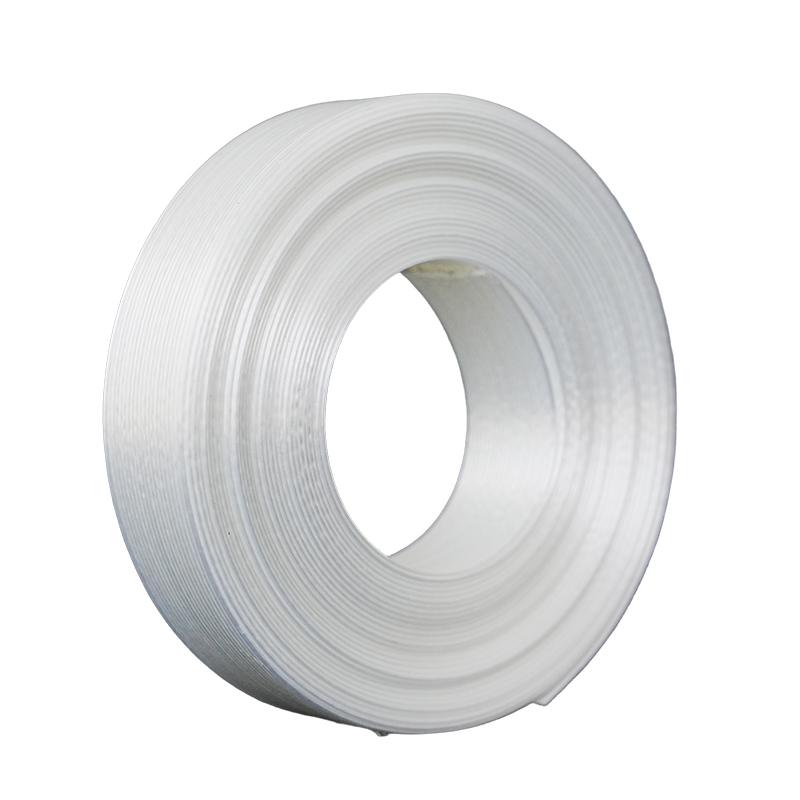
A composite strap is a high-performance bundling and unitizing material made by combining multiple materials — most commonly polyester fibers encased in a polymer coating or woven together into a flat band. The result is a strapping product that delivers the tensile strength close to steel banding but with the flexibility, safety, and corrosion resistance of plastic alternatives. Composite strapping is sometimes called composite cord strap, polyester composite strap, or fiber composite strap, depending on the manufacturer and construction method.
Unlike standard polypropylene (PP) or polyester (PET) strapping, composite straps are engineered for heavy-duty applications where load security under dynamic stress is critical. They don't rust like steel, they won't snap back dangerously when cut, and they maintain tension far better than conventional plastic straps over long transit periods. These properties make composite cord strapping a preferred choice in industries ranging from construction materials and steel coil packaging to timber bundling and heavy machinery shipment.
How Composite Strapping Is Made
The construction of a composite strap is what sets it apart from simpler strapping materials. Most composite straps are built around a core of high-tenacity polyester filament yarns — the same type of fiber used in industrial ropes and conveyor belts. These parallel fibers are responsible for the strap's load-bearing capacity. They're then bound together and encapsulated in a polypropylene or polyethylene sheath that protects the fibers from moisture, abrasion, UV exposure, and chemical contact.
Some composite strapping products use a woven or braided construction instead of parallel filaments, which offers slightly different elongation and recovery characteristics. The outer coating can be smooth or slightly textured, and the overall strap width typically ranges from 13mm to 32mm, with break strengths commonly ranging from 800 lbs to over 3,000 lbs depending on the grade and width selected.
Because the strap is manufactured without the single-point failure modes common in woven or twisted cord products, composite straps distribute load stress across all filaments simultaneously. This means a strap under tension doesn't fail suddenly — it degrades gradually, giving workers a visible warning before any failure occurs.
Composite Strap vs. Steel, PET, and PP Strapping: A Side-by-Side Look
Choosing the right strapping material for a specific application requires understanding the real-world trade-offs between each option. The table below compares composite cord strap against the three most common alternatives:
| Property | Composite Strap | Steel Strapping | PET Strapping | PP Strapping |
| Tensile Strength | Very High | Very High | High | Medium |
| Elasticity / Recovery | High | Very Low | Medium | Low |
| Corrosion Resistance | Excellent | Poor | Excellent | Excellent |
| Safety When Cut | Safe | Dangerous Recoil | Safe | Safe |
| Product Surface Damage | Very Low | High | Low | Low |
| Weight | Light | Heavy | Light | Very Light |
| Typical Cost | Medium–High | Medium | Low–Medium | Low |
The standout advantage of composite strapping over steel is its elastic recovery — the ability to absorb shocks and vibrations during transit and spring back to maintain consistent tension on the load. Steel strapping has almost no elasticity, meaning it can loosen over time as loads settle or shift. Composite cord strap, on the other hand, acts more like a spring, keeping constant pressure on the bundle throughout the entire journey.
Key Industries and Applications That Rely on Composite Strapping
Composite fiber strap has carved out a strong position across several industries where conventional strapping falls short. Its combination of strength, flexibility, and safety makes it a natural fit for the following sectors:
Building Materials and Construction Products
Bundling bricks, concrete blocks, lumber, drywall panels, and roofing materials requires a strap that can handle heavy static loads and won't degrade in outdoor storage conditions. Composite strapping handles both demands well. It resists UV exposure and moisture better than steel, which oxidizes and stains masonry or wood surfaces when left in contact with wet materials. Many brick and block manufacturers have switched entirely from steel banding to composite cord strap for this reason.
Steel Coils and Metal Products
Securing steel coils, pipe bundles, and structural metal profiles during shipping is traditionally a job for steel strapping. But composite strapping has made significant inroads here, particularly for coated, galvanized, or stainless steel products where surface protection is critical. The polymer-encased fibers won't scratch or mark metal surfaces, and the elastic recovery keeps coils secure even as they shift during road or rail transport.
Timber and Engineered Wood
Lumber yards and sawmills use composite fiber strap extensively for bundling boards, beams, and engineered wood products like LVL and glulam. Timber loads are notorious for settling and shifting as moisture content changes during transit, and the elastic properties of composite strapping maintain tension through these dimensional changes far better than rigid steel banding.
Heavy Machinery and Industrial Equipment
When securing heavy machinery components for shipment, load stability is non-negotiable. Composite straps provide the high break strength needed to restrain dense, heavy items while offering the shock absorption that protects both the load and the strap during rough handling. The fact that a failed or cut composite strap doesn't recoil violently — unlike steel — is a significant safety advantage in warehouse and dock environments.
Glass and Fragile Products
Glass manufacturers and distributors use composite cord strapping to unitize glass packs and panel bundles. The strap's ability to apply consistent, controlled tension without damaging delicate surfaces — and to absorb vibration during transit — makes it far preferable to steel or even rigid PET strapping for this application.
Composite Strap Widths, Grades, and How to Choose the Right One
Composite strapping is not one-size-fits-all. Selecting the correct grade and width is essential for both load safety and cost efficiency. Here's a practical breakdown of the key specifications to consider:
Width
Composite straps are most commonly available in 13mm, 16mm, 19mm, 25mm, and 32mm widths. Narrower straps (13–16mm) are suitable for lighter loads and smaller bundles, while wider straps (25–32mm) are used for heavy unitizing tasks like steel coil strapping or large timber bundles. Matching the strap width to your buckle or tool system is essential — composite strapping tools and buckles are not interchangeable across all widths.
Break Strength
Always work from the break strength specification when selecting a composite strap grade. Common break strengths range from around 800 lbs (350 kg) for light-duty 13mm straps up to 3,500 lbs (1,590 kg) or more for heavy-duty 32mm products. A general rule of thumb is to use a strap with a break strength at least three times greater than the maximum expected load force to ensure an adequate safety margin.
Core Fiber Type
Most composite straps use high-tenacity polyester filaments as the load-bearing core. Some premium products use aramid fibers for applications requiring even higher strength-to-weight ratios or superior heat resistance. For standard industrial use, polyester-core composite straps offer the best balance of performance and cost.
Coil Length and Packaging
Composite strapping is typically supplied on cardboard cores in coil lengths ranging from 100 meters to 1,000 meters depending on strap width and supplier. For high-volume operations, larger coils reduce change-over time and per-meter cost. Ensure your dispensing system or strap cart is compatible with the coil dimensions before ordering in bulk.
Tools and Buckles Used with Composite Strapping
One of the practical advantages of composite strapping over steel is that it can be applied with lighter, simpler tooling. Here's what you need to work with composite cord strap effectively:
Buckles and Clasps
Composite strapping is most commonly tensioned and secured using steel wire buckles or push-pull buckles. The strap is threaded through the buckle, tensioned manually or with a tool, and then the buckle locks the strap in place. Unlike steel strapping, composite cord strap does not require crimped seals or notched joints — the buckle system is simpler and quicker. Wire buckles are available in sizes matched to each strap width and must be rated for the strap's break strength.
Manual Tensioning Tools
For light to medium-duty applications, a simple hand-held tensioning tool or strapping tensioner is all that's needed. The strap is looped around the load, fed through a buckle, inserted into the tensioner, and cranked to the desired tension. Manual tools are inexpensive, portable, and require no power source, making them ideal for field use or low-volume operations.
Pneumatic and Battery-Powered Tensioners
For high-volume strapping operations or applications requiring precise, repeatable tension levels, pneumatic or battery-powered composite strapping tools are available. These apply consistent tension without operator fatigue and typically include tension gauges so you can verify the applied force. They're particularly common in automated packaging lines and high-throughput shipping operations.
Strap Cutters
Composite straps can be cut with standard utility knives, shears, or dedicated strap cutters. Unlike steel strapping, there is no dangerous snap-back when a composite strap under tension is cut. This makes handling much safer at the receiving end. Dedicated composite strap cutters with angled blades make clean cuts quickly without fraying the polymer sheath.
Proper Tensioning: How Tight Should a Composite Strap Be?
Over-tensioning and under-tensioning are both common mistakes when working with composite fiber strapping. Getting the tension right requires understanding the load characteristics and the strap's working load limit.
As a general guideline, the applied tension should not exceed 50% of the strap's rated break strength. So for a 19mm composite strap with a break strength of 1,800 lbs, the maximum applied working tension should be no more than 900 lbs. Over-tensioning weakens the strap prematurely and can cause buckle slippage or fiber damage that isn't visible from the outside.
For loads that are likely to settle, compress, or lose volume during transit — such as timber, baled fiber, or compressible packaging — apply tension at the higher end of the working range to compensate for the anticipated loss. The elastic recovery of composite strapping will maintain effective clamping force as the load dims, but starting with adequate tension is still important.
Composite Strap Storage, Handling, and Shelf Life
Composite cord strapping is relatively durable in storage, but proper handling extends its usable life and ensures performance in the field. Keep the following guidelines in mind:
- Store composite strap coils in a cool, dry location away from direct sunlight. Prolonged UV exposure degrades the polymer sheath and can weaken the polyester filaments over time.
- Keep coils off the floor on pallets or shelving to prevent moisture absorption and physical damage to the strap edges.
- Do not store composite strapping near strong solvents, fuels, or oxidizing chemicals that may attack the polymer sheath or degrade the fiber core.
- Inspect coils before use for visible damage, kinks, cuts, or fraying. A damaged composite strap should never be used under load regardless of where the damage is located.
- Most manufacturers recommend a shelf life of two to three years from the date of manufacture when stored correctly. Check the product specification sheet for your specific strap grade.
Environmental Considerations of Composite Fiber Strap
Sustainability is an increasingly important factor in packaging material selection. Composite strapping compares reasonably well against steel on several environmental metrics. It's significantly lighter than steel — a coil of composite strap contains far more usable length per kilogram than a comparable steel banding coil — which reduces transportation weight and fuel consumption across the supply chain.
Because composite strapping is made primarily from polyester and polypropylene, it is technically recyclable in facilities that accept mixed plastics, though recycling infrastructure varies by region. Some composite strap manufacturers offer take-back programs or produce straps with recycled polyester content to reduce virgin material use. Compared to steel, which requires significant energy to produce and is prone to rust contamination of packaging waste streams, composite cord strap has a cleaner end-of-life profile in many disposal scenarios.
For organizations tracking packaging waste metrics or pursuing sustainability certifications, switching from steel to composite strapping is a change that can yield measurable reductions in packaging weight, material volume, and associated carbon footprint.
Common Mistakes to Avoid When Using Composite Strapping
Even with a high-quality composite strap, application errors can compromise load security. Here are the most frequent mistakes and how to avoid them:
- Using the wrong buckle size: Buckles must match the strap width exactly. An oversized buckle will allow the strap to slip under load, and an undersized one will damage the strap edges during tensioning.
- Running straps over sharp edges without edge protectors: Composite straps can be cut through by sharp metal corners or rough surfaces under tension. Always use corner protectors or edge guards when strapping loads with hard, angular edges.
- Twisting the strap during application: A twisted composite strap dramatically reduces its effective break strength because only a fraction of the fibers bear the load. Always ensure the strap lies flat against the load surface.
- Reusing straps that have been under load: Once a composite cord strap has been tensioned and used in service, the fibers may have experienced micro-fatigue or creep. Reusing straps for critical load restraint is not recommended — treat them as single-use items.
- Ignoring the working load limit: Break strength is not the same as working load limit. Always apply a safety factor and never load a strap to its rated break strength in regular use.
Is Composite Strapping Right for Your Application?
Composite strap is one of the most versatile and high-performing strapping materials available today, but it isn't always the right choice for every application. It makes the most sense when you need high tensile strength combined with elastic recovery, when surface protection is a concern, when safety in handling is a priority, or when steel strapping is causing rust staining or product damage.
For very light loads where standard polypropylene strapping is adequate, composite strap is overkill and adds unnecessary cost. For applications where automated strapping machines are already in place and configured for PET strapping, a changeover to composite cord strap may require tooling modifications that aren't justified by the performance gain.
The best approach is to evaluate your specific load weights, transit conditions, surface sensitivity, and handling environment, then test a composite strap product with your actual loads before committing to a full changeover. Most reputable composite strapping suppliers will provide samples and technical support to help you select the right product and application method for your operation.
Related Products

PRODUCT
CONTACT INFO
-
 +86-137 7421 9489
-
 +86-021-67558008
-
 [email protected]
-
 No.769 ,23# building, Fengliang Road,Fengcheng town,Fengxian District,Shanghai,China
MOBILE QR CODE
Copyright © Shanghai We Pack Co., Ltd. All Rights Reserved.
Cargo Securing Solutions Cargo Transport Protection Solutions

