
 Español

Home / News / Industry News / Black Plastic Slip Sheet Guide: Thickness, Benefits and Palletless Shipping
Industry News


Black Plastic Slip Sheet Guide: Thickness, Benefits and Palletless Shipping
 2026.09.23
 Industry News
If your outbound loads still leave the dock on wooden pallets, you are paying for weight, height and paperwork that many of your customers would rather not accept. A black plastic slip sheet is the thin, tough alternative that lets you move the same unit load with a push-pull forklift: no pallet, no fumigation certificate, no wasted container space.
Our group has spent close to two decades in transport packaging, supplying slip sheets, dunnage bags, strapping and corner protection to exporters, freight forwarders and distribution centres. The questions we hear are always the same. Which colour should I choose? Which thickness? And will my forklift actually handle it? This guide answers those questions with practical numbers rather than theory.
Content
- 1 What Exactly Is a Black Plastic Slip Sheet?
- 2 Why Choose Black Rather Than White or Natural?
- 3 Black Plastic vs White Plastic vs Paper Slip Sheets
- 4 The Practical Benefits on the Loading Dock
- 5 How to Choose Thickness, Size and Tab Design
- 6 Handling Habits That Keep Sheets Alive
- 7 Where Black Slip Sheets Fit Best
- 8 What to Ask a Supplier Before You Order
What Exactly Is a Black Plastic Slip Sheet?
A slip sheet is a flat, pallet-sized sheet of high-density polyethylene, usually shortened to HDPE, with a folded or extruded tab along one or two edges. A push-pull attachment on the forklift grips that tab and drags the entire unit load onto the carriage, so the goods travel without a wooden base underneath them.
Black sheets commonly run from 0.6 mm to 1.5 mm thick and weigh roughly 1 to 3 kg each, which is a fraction of a comparable wooden pallet. They are cut to standard footprints such as 1200 x 1000 mm, 1200 x 800 mm and 1100 x 1100 mm, and custom sizes are available for non-standard containers or automated lines. Many designs add a light anti-slip coating on one or both faces so that bags, cartons or shrink-wrapped layers do not creep during a hard brake or a sharp turn.
The colour is not a surface coating. Carbon black pigment is compounded into the resin, so a scratch does not expose a different colour underneath. Because the raw material is frequently recycled HDPE, black slip sheets have become a common choice for cost-sensitive, high-turnover freight where appearance still matters.
Why Choose Black Rather Than White or Natural?
Slip sheets are usually offered in black, white and natural translucent grades, and the difference is more practical than aesthetic.
Black sheets hide dust, scuff marks and minor staining, so they still look presentable after many trips through a dusty warehouse or an open yard. The carbon black pigment also gives the material useful resistance to UV degradation when loads sit outside between shifts, and black is often the most economical grade in recycled resin.
White or natural HDPE sheets reflect sunlight and heat, which matters when the cargo is temperature sensitive or when staff handle sheets for long shifts in direct summer sun. A light surface also makes residue, moisture marks and damage easier to spot during incoming inspection, and many customers simply prefer the cleaner look for food, pharmaceutical or retail-facing loads.
If your priority is the lowest cost per trip combined with a tidy appearance after repeated use, black is typically hard to beat. If visibility and heat reflection come first, the light option wins.
Black Plastic vs White Plastic vs Paper Slip Sheets
| Consideration | Black HDPE slip sheet | White HDPE slip sheet | Paper slip sheet |
|---|---|---|---|
| Base material | HDPE with carbon black pigment | HDPE, natural or white | Kraft or recycled paperboard |
| Moisture resistance | High, suited to humid containers | High | Low, softens when wet |
| Typical reuse | Roughly 20 to 50 trips | Roughly 20 to 50 trips | Often one way |
| Appearance after use | Hides scuffs and dirt | Shows marks and staining | Degrades quickly |
| Best suited to | High-turnover, humid, heavier freight | Light-sensitive loads, clean areas, audits | One-way export where cost rules |
Every option has a place. Paper sheets are inexpensive, recyclable and excellent for one-way export loads in dry conditions. Black HDPE comes into its own in humid, repetitive and heavier cycles. When a customer or an audit simply prefers a light surface, a reusable HDPE white slip sheet does the same job with better visibility.
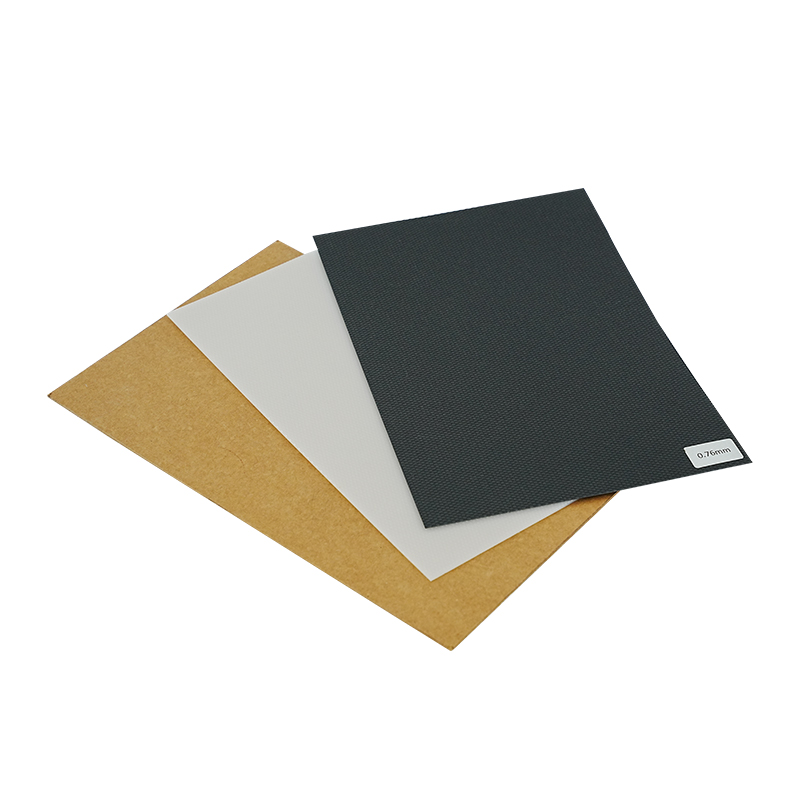 Reusable HDPE White Slip Sheet for General Cargo TransportInjection-molded in one piece from high-density polyethylene (HDPE), this product is sturdy, durable and reusable. It features excellent impact resistance, moisture re...View Product →
The Practical Benefits on the Loading Dock
Teams that switch from pallets to slip sheets usually notice the same set of gains, and most of them show up in the freight invoice rather than in a marketing brochure.
- Lower material cost per trip: one sheet replaces a pallet and survives dozens of handling cycles.
- Less dead weight and height: you ship product instead of timber, and the reduced stack height can free up container volume.
- No phytosanitary paperwork: plastic does not carry pests, so fumigation marks and heat-treatment certificates disappear from your export file.
- Better moisture behaviour: HDPE does not swell, rot or lose strength in a humid sea container.
- Practical storage: a stack of hundreds of sheets takes the floor space of a handful of pallets.
- Cleaner handling: no splinters, no loose nails, no dust breaking out of the wood.
We have looked at the economics of this change before in our article on how slip sheets cut freight and material costs, and the arithmetic is consistent: fewer kilos on the truck, fewer kilos on the ship, and one less consumable to reorder every month.
How to Choose Thickness, Size and Tab Design
Thickness is the single specification that decides how a black slip sheet performs. Too thin and the sheet folds under a heavy load; too thick and you pay for stiffness you will never use. The table below reflects the ranges we most often quote, but a trial load is always worth the effort before a volume order.
| Unit load weight | Suggested thickness | Typical cargo |
|---|---|---|
| Up to 1,000 kg | 0.6 - 0.8 mm | Cartons, bagged goods, light palletised freight |
| 1,000 - 1,500 kg | 0.8 - 1.0 mm | Beverages, appliances, packaged food |
| Above 1,500 kg | 1.0 - 1.5 mm | Drums, machinery parts, building materials |
Tab configuration
A single tab keeps costs down and suits a fixed loading direction. Double tabs let operators pull from either side and reduce the risk of grabbing the wrong edge in a busy bay. Whichever you choose, the tab must stay flat and undamaged, because it is the only part of the sheet the equipment actually touches.
Coating, size and marking
Anti-slip coating is worth specifying when you stack bagged or shrink-wrapped goods that tend to slide. Size should match your pallet footprint and your container plan rather than an old purchasing record, and printed logos or colour-coded edges help you track sheets through a returnable pool.
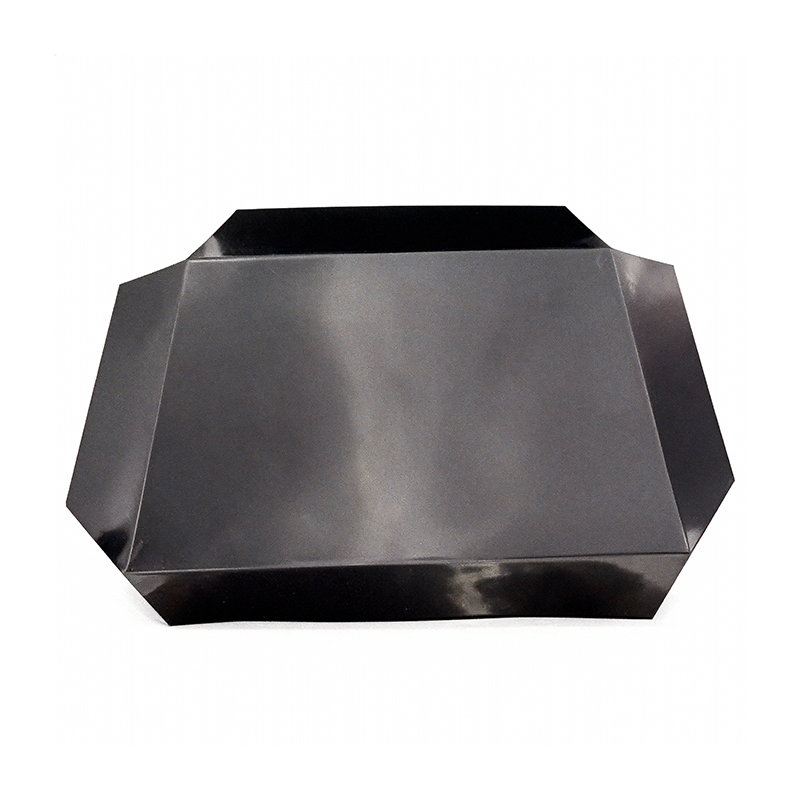
Economical Black Slip Sheet for High-Turnover Cargo TransportInjection-molded in one piece from high-density polyethylene (HDPE), this product is sturdy, durable and reusable. It features excellent impact resistance, moisture re...View Product →Handling Habits That Keep Sheets Alive
Most damage we see is caused by handling rather than by the sheet itself. A few simple routines extend service life considerably.
- Check the push-pull attachment before every shift; worn grippers tear tabs.
- Centre the load on the sheet so the pull force stays even across the tab.
- Lift rather than drag sheets across rough concrete or broken floor joints.
- Keep the tab straight and clean; folded or dirty tabs are hard to grip.
- Store sheets flat and out of direct sun when they are not in use.
- Rotate stock so the oldest sheets are used first and wear is spread evenly.
Operators who understand how the attachment grips the tab generally damage fewer sheets, so a short training session pays for itself within weeks.
Where Black Slip Sheets Fit Best
- Beverage and bagged goods: heavy, uniform loads that move on fixed routes.
- Building materials and packaged cement: dusty yards where a dark surface stays presentable.
- Appliances and electronics: unit loads that must stay dry and free of wood dust.
- Printing and paper reels: loads where corner and edge protection matter as much as the base.
- Agricultural exports: one-way container shipments that need moisture resistance.
- Third-party logistics and distribution centres: returnable pools where trip counts are tracked.
In each case the logic is the same: the load leaves on a sheet, travels without a pallet, and arrives without the marks, splinters or fumigation stamps that come with timber.
What to Ask a Supplier Before You Order
Slip sheets look simple, but the differences between a good sheet and a cheap sheet only appear after a few hundred trips. Ask for the thickness tolerance, the tensile strength, the surface friction value if a coating is specified, and the recycled content if sustainability reporting matters to your customers.
Ask also for samples and a trial quantity. Our own team works from a group facility with dedicated research, testing and quality control functions, so we can check thickness, tab strength and coating behaviour before a container is loaded. Where a product carries a standard such as AAR approval or EN 12195-2 certification, we are happy to show the documentation behind the claim.
Black plastic slip sheets are one of those quiet upgrades that rarely make headlines but show up clearly in freight weight, material spend and container utilisation. If you would like to compare thicknesses, request samples or price a returnable pool for your own routes, you can browse our full range of transport packaging supplies or send us your load profile and we will come back with a concrete recommendation.
Related Products

PRODUCT
CONTACT INFO
-
 +86-137 7421 9489
-
 +86-021-67558008
-
 [email protected]
-
 No.769 ,23# building, Fengliang Road,Fengcheng town,Fengxian District,Shanghai,China
MOBILE QR CODE
Copyright © Shanghai We Pack Co., Ltd. All Rights Reserved.
Cargo Securing Solutions Cargo Transport Protection Solutions

