
 Español

Home / News / Industry News / Automatic Carton Sealer Guide: Key Specs, Selection Tips, and Benefits for Packing Lines
Industry News


Automatic Carton Sealer Guide: Key Specs, Selection Tips, and Benefits for Packing Lines
 2026.09.08
 Industry News
Consider a packing station where two operators spend most of the day taping cartons by hand. One of them pulls the tape too long on every third box, the other leaves gaps on the longer cartons. The floor manager estimates that 8% of the tape goes to waste, and customers have started noticing sloppy seals on the shipping line.
An automatic carton sealer changes that picture. It feeds and applies tape to the top and bottom seams at a consistent speed, with a fixed amount of tape per box. The result is a cleaner seal, lower consumable cost, and fewer people needed on the line. In this guide, you will learn the key specifications to compare, how to choose the right model, and how it fits into a complete packaging line.
Content
What an Automatic Carton Sealer Does Well
An automatic carton sealer is not complex equipment. It has side belts that pull the carton through, a tape head that dispenses pressure-sensitive tape, and an upper arm that applies tape to the top seam while the bottom roller applies tape underneath. Because the machine handles the tape application, every carton gets the same tape length and the same placement.
Speed is the most immediate difference. A careful operator can hand-tape 4 to 8 cartons per minute, depending on box size and tape roll changes. A typical automatic carton sealer runs 10 to 20 cartons per minute, and some models reach higher when the box sizes are consistent. The operator no longer needs to lean over each carton, so fatigue is lower and the line can run with one person monitoring two or three machines.
Tape consumption also drops. Manual taping tends to add extra length because operators over-pull or double-tape if the first attempt is crooked. Automatic units feed a measured length, and the adjustable tape head fits standard 48 mm, 60 mm, or 72 mm rolls. For a line packing 5,000 cartons per day, the tape savings can add up to between 10% and 20% of the previous consumable cost.
| Comparison Point | Manual Taping | Automatic Carton Sealer |
|---|---|---|
| Throughput | 4 to 8 cartons per minute | 10 to 20 cartons per minute |
| Seal Consistency | Varies by operator and carton size | Uniform length and placement on every carton |
| Tape Waste | Frequent overpull or double taping | Measured feed with adjustability |
| Labor Requirement | 2 to 3 operators per shift | 1 operator can monitor multiple units |
Key Specifications to Compare Before Buying
Before you request a quote, compare these specifications against your actual carton range. The wrong dimension set shows up quickly when the first carton jams or the tape misses the seam.
| Specification | Typical Range | Selection Advice |
|---|---|---|
| Carton Length | 150 to 600 mm | Measure your longest and shortest carton |
| Carton Width | 120 to 500 mm | Narrow cartons may need special belt positioning |
| Carton Height | 100 to 500 mm | Ensure the upper tape head has enough travel |
| Tape Width | 48 / 60 / 72 mm | 72 mm for heavy cartons, 48 mm for light goods |
| Sealing Speed | 10 to 20 cartons per minute | Match your line rate, not the maximum possible speed |
| Motor Power | 0.25 to 0.75 kW | Higher power helps with frequent start stop cycles |
Be careful with the minimum box dimensions. Some machines struggle with very narrow boxes under 150 mm wide because the side drive belts may not grip them correctly. Check whether the model has adjustable belt positions or a specific narrow box option.
Consider the tape width. Heavier cartons or cartons with a final packing weight above 20 kg usually need 72 mm tape. If you pack only light goods like documents or small electronics, 48 mm tape is enough and costs less.
Speed should not be the only target. If your current packing rate is 12 cartons per minute, buying a machine capable of 20 per minute gives you headroom, but it also costs more. A simpler model that matches your line rate is often the better investment.
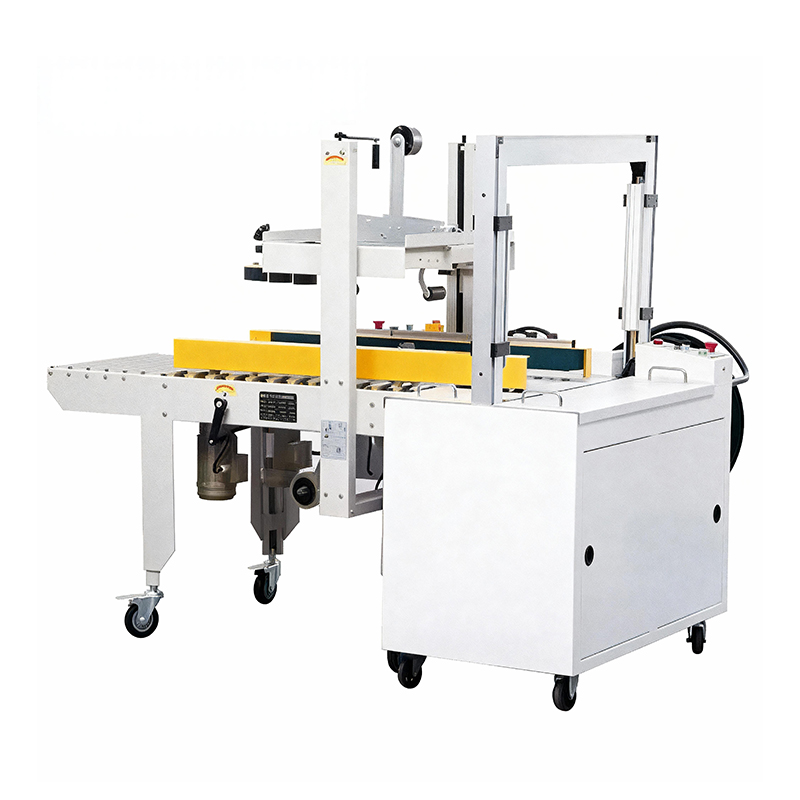 MH-FJ-1AWE Automatic Carton Sealer, Adjustable Top and Bottom TapingAuto-folds flaps seals (kraft/BOPP tape), fits multi-size cartons, integrated operation, cost-saving efficient for e-commerce, logistics, and production line standardi...View Product →
How to Choose the Right Model for Your Packing Line
E-commerce and Warehouse Packing
E-commerce and warehouse packers often handle many different carton sizes each day. Look for a unit with quick manual adjustment of the width and height. Screw knob or hand crank adjustments take a few seconds and let the operator change from a small gift box to a medium shipping box without tools.
Food and Beverage Production
Food and beverage companies usually face a different scenario. The cartons are heavier, the sizes are more standardized, and the line speed is driven by filling machines. Here the sealer needs to handle 72 mm tape and offer consistent top pressure to avoid crushing the product inside.
Electronics and Parts
Electronics manufacturers and parts suppliers have lighter cartons but strict visual requirements. The tape should be centered exactly, and the bottom seal must be dust tight. A machine with a precision tape head and an adjustable bottom roller is preferable.
Then think about integration. If you also need to strap or wrap the cartons after sealing, the sealer should leave enough space on the conveyor for the downstream equipment.
Integrating with Other Packaging Equipment
An automatic carton sealer is often just one piece of the packing station. The next steps are usually strapping, wrapping, or edge protection.
Many customers run a carton sealer together with an automatic strapping machine. The carton exits the sealer, goes through a photo eye, and the strapper applies a PP or PET strap around the box. This combination is common for export shipments and for cartons that will be palletized.
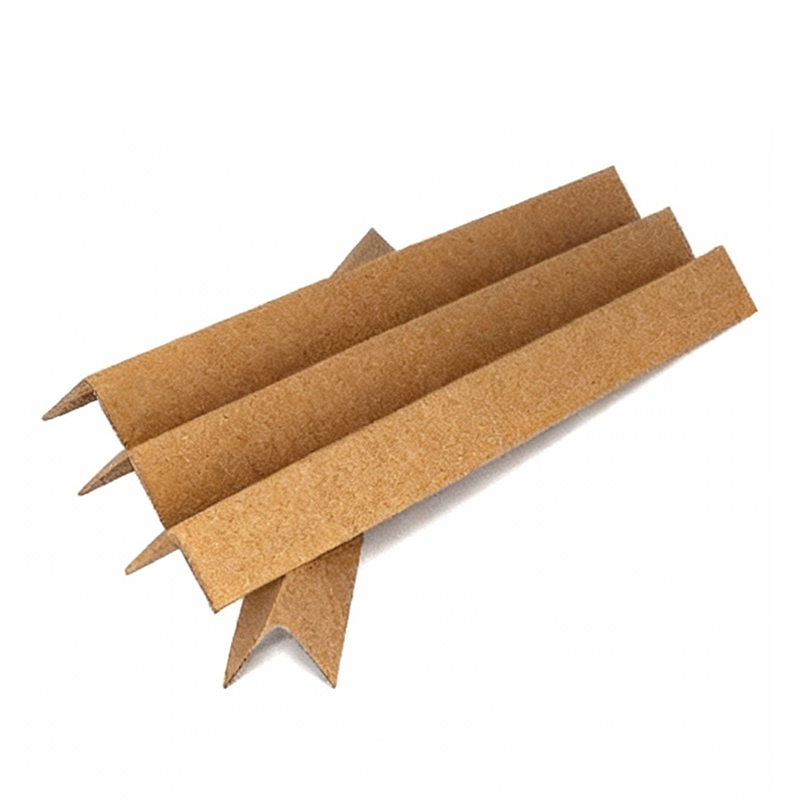
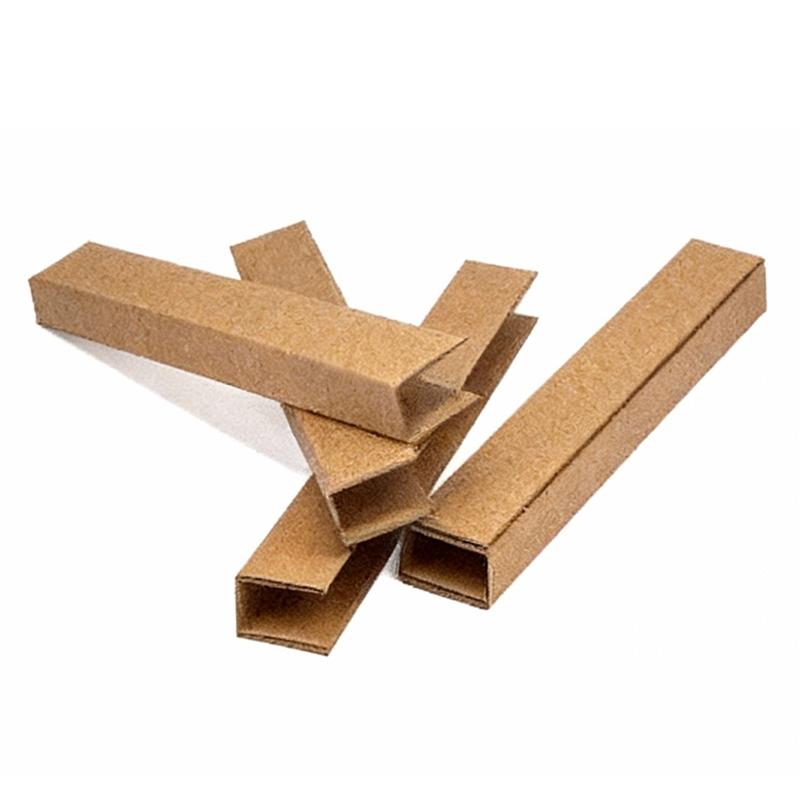
Paper corner protectors are another practical addition. After sealing, you can place L shaped or U shaped protectors on the vertical edges of the carton. They prevent forklift forks or adjacent pallets from crushing the edges. If you want to choose the right size and thickness, this guide on paper corner edge protectors explains the key specs and sizing steps.
Beyond that, stretch film can secure the sealed cartons on a pallet. A hand use or machine use LLDPE film keeps the load stable and protects against dust.
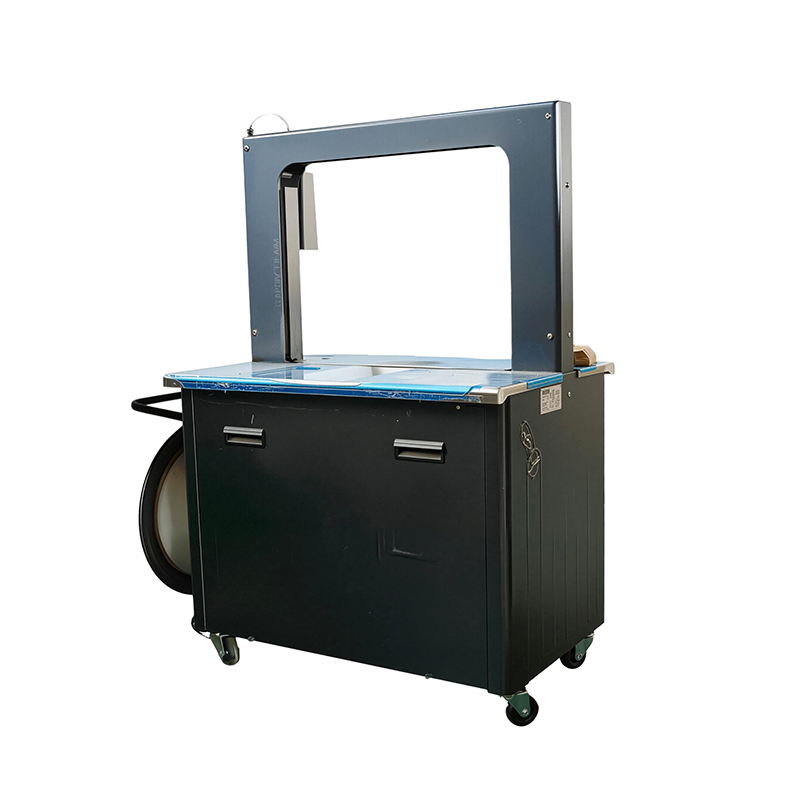 MH-101A Automatic Strapping Machine, for Books and Cartons with Photo EyeReplaces manual labor, automatically folds flaps, and seals with kraft paper/BOPP tape. Auto-adapts to multi-size cartons, integrating conveying, folding, and sealing,...View Product →
What to Look for in a Supplier
Buying a carton sealer is about more than the listed specifications. Reliability, service response, and spare parts availability decide how long the machine stays useful.
Ask the supplier about the warranty period and what it covers. A standard warranty for this type of equipment is one year, but a supplier with its own R&D and QC team may offer a more specific commitment.
Check the availability of spare parts such as tape head belts, drive belts, and rollers. A machine that needs a two month wait for a replacement belt is a production bottleneck.
Also look at the installation and commissioning support. Some suppliers include on site training for your operators. Others provide remote video guidance. Either way, your team needs to know how to adjust the width and height, thread the tape, and clear a jam.
An experienced supplier can also advise on how the sealer fits with your existing conveyor or carton erector. If you are new to this equipment, ask for a video of the machine running with cartons similar to yours.
Automatic carton sealers solve a simple but expensive problem: inconsistent tape application and wasted time at the packing station. They raise throughput, cut tape cost, and standardize the final look of your shipment. The key is to compare box size ranges, tape width, and speed honestly against your daily order profile, and to make sure the supplier supports the machine after the sale.
Start with your largest carton and your narrowest carton. Those two measurements will eliminate half of the models on the market. Then add the expected speed, and evaluate the supplier's service level. With those steps, the right automatic carton sealer becomes a straightforward purchase.
Related Products



PRODUCT
CONTACT INFO
-
 +86-137 7421 9489
-
 +86-021-67558008
-
 [email protected]
-
 No.769 ,23# building, Fengliang Road,Fengcheng town,Fengxian District,Shanghai,China
MOBILE QR CODE
Copyright © Shanghai We Pack Co., Ltd. All Rights Reserved.
Cargo Securing Solutions Cargo Transport Protection Solutions

