
 Español

Home / News / Industry News / Anti-Slip Paper Guide: Benefits, Specifications, and Buying Tips for Safe Transport
Industry News


Anti-Slip Paper Guide: Benefits, Specifications, and Buying Tips for Safe Transport
 2026.09.02
 Industry News
Picture a pallet load leaving your warehouse in perfect alignment. Somewhere between the loading bay and the customer's dock, the top boxes slide forward by a few centimeters. That small shift is enough to compromise stability, tear labels, or crush lower layers. In a standard mixed-load shipment, this is one of the most common and least visible causes of damage claims.
Anti-slip paper addresses this problem at its root. A sheet placed between each layer creates controlled friction that resists lateral movement. The result is a stable pallet that survives handling, braking, and stacking without requiring heavy plastic film or complex strapping.
Content
- 1 What anti-slip paper is and how it prevents load shifting
- 2 Four practical benefits that show up on your bottom line
- 3 Key specifications to check before you buy
- 4 Anti-slip paper vs. other pallet stabilisation methods
- 5 Real-world buying pitfalls and how to avoid them
- 6 Getting started with anti-slip paper
What anti-slip paper is and how it prevents load shifting
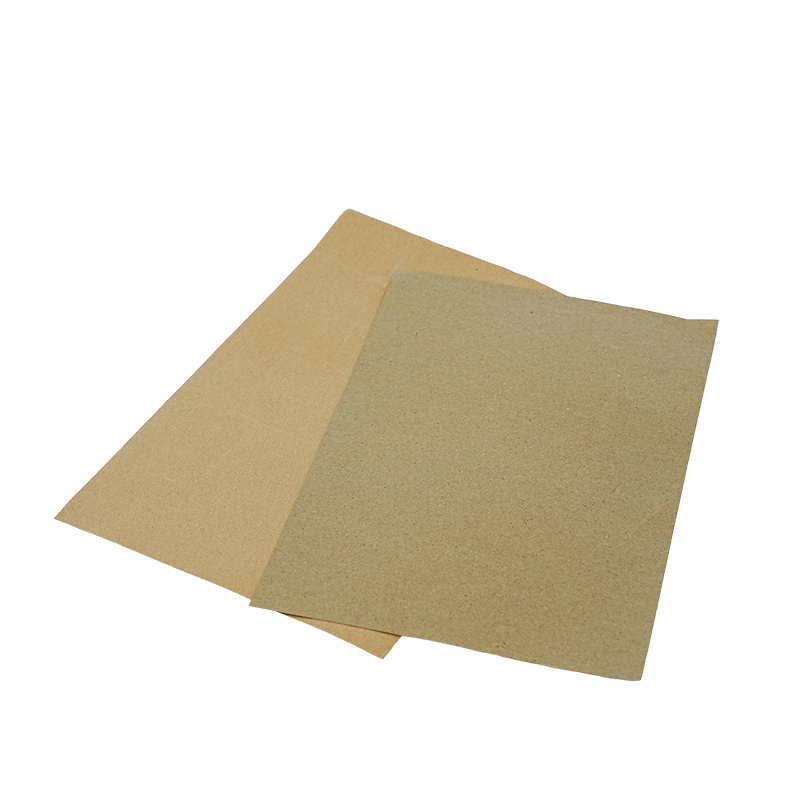 Degradable High-Adhesion Kraft Anti-Slip Paper for TransportThis kraft paper provides reliable friction between cargo layers, preventing shifting during transport. It offers an eco-friendly, cost-effective alternative to stretch film and is suitable for various goods and pallet stabilization.View Product →
Anti-slip paper, also called anti-skid paper or grip sheet, is a heavy-duty kraft sheet with a friction-enhancing surface. The coating or embossing pattern on the sheet increases the coefficient of friction between the bottom layer and the top layer of boxes or bags. When loads shift during acceleration, cornering, or braking, that friction keeps each layer in place.
The material is usually sold in rolls or pre-cut sheets. The kraft base provides strength and tear resistance, while the treated surface delivers grip. Well-made anti-slip paper can be used in combination with pallets, slip sheets, stretch film, or corner boards, depending on the load pattern.
The practical effect is immediate: fewer damaged cartons, fewer crushed products, and a lower risk of workplace injuries from unstable pallets.
Four practical benefits that show up on your bottom line
Choosing anti-slip paper is not just about preventing damage claims. The benefits extend into labour costs, packaging consumption, and warehouse safety.
- Less stretch film consumption. Many warehouses currently use 80 micron or thicker film just to hold a stack together. A single layer of anti-slip paper can do the same job with less film, which directly cuts material cost and plastic waste.
- Lower product damage. For products like printed cartons, ceramic tiles, or glass bottles, even 5 mm of lateral movement can cause scuffing or breakage. Anti-slip paper prevents that movement, meaning fewer returns and lower replacement costs.
- Improved safety. Unstable pallets can tip over during forklift handling. In a busy distribution centre, a tipping pallet is both a financial loss and an accident waiting to happen. The extra friction makes loads easier to handle.
- Recyclable material. High-quality anti-slip paper is made from kraft paper, which can be recycled with other paper waste. This gives companies a way to reduce single-use plastic without sacrificing load stability.
Key specifications to check before you buy
Not all anti-slip paper performs the same. When comparing products from different suppliers, focus on these four parameters.
| Specification | What to look for | Common pitfalls |
|---|---|---|
| Basis weight (gsm) | Higher grammage means better tear resistance for heavy loads. Common commercial grades fall between 70 and 120 gsm. | Choosing a low-grammage paper for heavy cartons can cause tearing between layers. |
| Coefficient of friction | Look for a consistent COF across the sheet surface. The higher the COF, the better the anti-slip effect. | Uneven coating can cause some boxes to slide while others stay put. |
| Sheet size | Sheets should match the pallet or slip sheet footprint. Oversized sheets waste material; undersized sheets leave gaps. | Ordering standard sizes without checking your actual load dimensions leads to misalignment. |
| Moisture resistance | For humid or maritime transport, choose a coated paper that maintains friction when wet. | Standard kraft paper may lose grip in high humidity, causing loads to shift in ocean containers. |
Beyond these specifications, check whether the paper is suitable for automated palletising lines. Some anti-slip papers have a smooth side designed for padding or printing, while others are double-treated. The right choice depends on your packaging line speed and the type of load you handle.
Anti-slip paper vs. other pallet stabilisation methods
Many logistics teams already use some kind of stabilisation. The question is whether anti-slip paper is the right addition. The table below gives a quick comparison.
| Method | Best for | Drawbacks |
|---|---|---|
| Anti-slip paper | Cartons, bags, and boxes that need interlayer friction. Works with any load pattern. | Does not hold the load vertically; still needs a base and wrap for complete stability. |
| Stretch film | Wrapping the whole pallet; ideal for irregular loads. | Plastic waste, high film consumption, and can trap moisture. |
| Cardboard slip sheets | Replacing pallets for certain automated systems; also provide a friction layer. | Less tear-resistant than kraft anti-slip paper; more expensive. |
| Strapping | Heavy or tall loads that need vertical containment. | Can dig into cartons if not protected by corner boards. |
In practice, anti-slip paper is often combined with stretch film or strapping. The paper handles the horizontal forces between layers; the film or strap handles the vertical forces. This combination lets you reduce film gauge while maintaining load integrity. For shipments where a recyclable paper slip sheet is already in use, adding a layer of anti-slip paper on top offers an additional safeguard.
Real-world buying pitfalls and how to avoid them
Even when the specifications look right, small oversights can turn a good product into a costly mistake. Here are three issues we see most often.
- Choosing the wrong basis weight for the load. A 70 gsm sheet may be fine for lightweight cartons, but if you load heavy steel components, the paper can tear under the weight. Always test with your heaviest SKU before committing to a bulk order.
- Ignoring the effect of humidity. In ocean containers, moisture can affect the grip of uncoated paper. A degradable high-adhesion kraft paper with a moisture-resistant coating maintains friction even after condensation forms.
- Assuming one sheet size fits all. A 1200 mm x 1000 mm sheet is standard for a 1200 mm pallet, but many loads are stacked with gaps. Measure the actual load footprint, not the pallet size, before you order.
Getting started with anti-slip paper
If you are evaluating anti-slip paper for your operation, start with a two-step approach. First, request a sample sheet and test it on a representative pallet. Check whether it keeps the layers in place during forklift handling and a short journey. Second, measure the potential savings in stretch film and damage claims. For many shippers, the payback time is a few shipments.
You can read more about the mechanics of anti-slip paper in our article on anti-slip pallet paper, or contact our sales team to discuss the right specification for your environment.
Related Products



PRODUCT
CONTACT INFO
-
 +86-137 7421 9489
-
 +86-021-67558008
-
 [email protected]
-
 No.769 ,23# building, Fengliang Road,Fengcheng town,Fengxian District,Shanghai,China
MOBILE QR CODE
Copyright © Shanghai We Pack Co., Ltd. All Rights Reserved.
Cargo Securing Solutions Cargo Transport Protection Solutions

