
 Español

Home / News / Industry News / Anti Slip Pallet Paper: What It Is and How to Use It to Protect Your Loads
Industry News


Anti Slip Pallet Paper: What It Is and How to Use It to Protect Your Loads
 2026.05.12
 Industry News
Content
- 1 What Anti Slip Pallet Paper Is and Why It Matters
- 2 How Anti Slip Pallet Paper Works
- 3 Types of Anti Slip Pallet Paper by Material Construction
- 4 Anti Slip Pallet Paper Types Compared
- 5 Standard Sizes and Grammage Options for Pallet Anti Slip Sheets
- 6 Where and How to Apply Anti Slip Pallet Paper Correctly
- 7 Industries and Applications That Rely on Anti Slip Pallet Sheets
- 8 Anti Slip Paper vs. Other Pallet Load Securing Methods
- 9 How to Choose the Right Anti Slip Pallet Paper for Your Operation
What Anti Slip Pallet Paper Is and Why It Matters
Anti slip pallet paper is a friction-coated or textured sheet material placed between layers of products on a pallet — or between the pallet deck and the bottom tier of goods — to prevent individual boxes, bags, trays, or cartons from sliding and shifting during transit, storage, and handling. The paper works by dramatically increasing the coefficient of friction at the interface between stacked layers, so that the normal forces generated by the weight of the load above translate into strong frictional resistance against horizontal movement rather than allowing layers to slide freely over one another.
In warehousing, distribution, and logistics operations, load stability on pallets is one of the most practically consequential factors in operational safety and product protection. A pallet load that shifts during forklift transport, tips during racking storage, or collapses during transit causes product damage, delays, potential injury to workers, and increased costs from damaged goods, repalletizing labor, and supply chain disruption. Stretch wrap alone is often insufficient to maintain load integrity — particularly for heavy, smooth-surfaced packaging, tall unstable loads, or high-vibration transport environments. Anti slip pallet paper addresses exactly this gap, providing a cost-effective, easy-to-apply friction layer that significantly improves load cohesion without adding complexity to the palletizing process.
How Anti Slip Pallet Paper Works
The friction-enhancing performance of non-slip pallet paper comes from the surface coating applied to one or both faces of the base sheet material. The most common coating used is a water-based dispersion of natural or synthetic rubber particles, EVA (ethylene-vinyl acetate), or acrylic compounds applied in a pattern — typically a random dot matrix, wave pattern, or full-coverage coating — that creates a high-grip surface texture. When two surfaces coated or in contact with this material are pressed together under the weight of the load, the microscopic rubber or polymer particles interlock and compress, creating a frictional interface that resists lateral shear forces far more effectively than uncoated paper or cardboard surfaces.
The effectiveness of anti slip layer pads is directly related to the applied load pressing the surfaces together — the heavier the load above a given layer, the greater the normal force and therefore the greater the frictional resistance. This means that the lowest layers of a tall pallet load typically benefit most from interleave sheets, and that lightly loaded pallets may need fewer intermediate layers than heavily loaded ones. The friction coefficient of quality anti skid pallet paper is typically in the range of 0.5 to 1.0 or higher depending on the coating type and surface combination, compared to values of 0.2 to 0.4 for typical uncoated cardboard-on-cardboard interfaces — representing a two to five times improvement in lateral slip resistance.
Types of Anti Slip Pallet Paper by Material Construction
Anti slip pallet paper is manufactured in several different material configurations, each offering different combinations of strength, friction performance, moisture resistance, and cost. Choosing the right type for your application depends on the nature of the load, the handling environment, and any sustainability or recycling requirements.
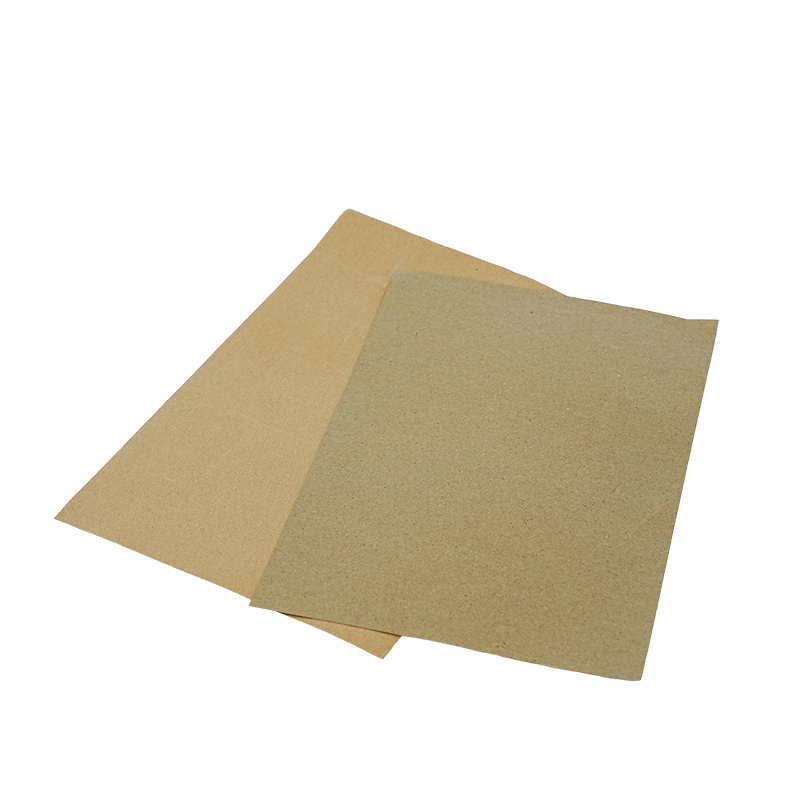
Kraft Paper with Rubber or EVA Coating
The most widely used type of anti slip pallet paper uses a kraft paper base — typically made from virgin or recycled kraft pulp — with a single-side or double-side application of friction coating. Kraft-based anti slip sheets offer a practical balance of tear strength, surface area coverage, ease of handling, and cost. The grammage (weight per square meter) of the base paper ranges from around 60 g/m² for lighter-duty applications up to 120 g/m² or more for heavy-duty industrial use. Single-sided coated sheets are used when friction is only needed at one interface (such as between the pallet deck and the bottom layer), while double-sided sheets provide friction at both faces and are used as interleave layers between product tiers. Kraft paper anti slip sheets are widely recyclable with standard cardboard and paper waste streams, which is an important advantage for operations with sustainability targets.
Corrugated or Honeycomb Reinforced Anti Slip Pads
For very heavy loads or applications where the interleave sheet also needs to provide some load distribution or cushioning, corrugated cardboard or honeycomb paper core sheets with anti slip coating on one or both faces offer greater structural rigidity than flat kraft sheets. These thicker pads distribute concentrated point loads from heavy cartons more evenly across the layer below, reducing the risk of crushing softer packaging while simultaneously providing the friction function. They are heavier, bulkier, and more expensive per sheet than flat kraft alternatives, so they are typically reserved for specific high-load or fragile-product applications rather than general palletizing use.
Recycled and Recovered Fiber Anti Slip Paper
Many manufacturers now produce anti slip pallet paper from recovered and recycled fiber content rather than virgin kraft pulp. Recycled-content anti slip sheets can achieve equivalent friction performance to virgin paper products when the coating application is consistent, and they offer meaningfully better environmental credentials for companies with circular economy or recycled-content procurement commitments. Some grades are manufactured from 100% recycled content and are fully recyclable after use. The main consideration with recycled-fiber base papers is ensuring consistency of sheet strength across batches, as recycled fiber can have more variable tensile and tear strength than virgin kraft — a factor that matters in applications where the sheets are handled at high speed by automated palletizing systems.
Moisture-Resistant Anti Slip Paper
Standard kraft anti slip pallet paper loses significant strength when wet, which is a problem in applications involving refrigerated goods, outdoor storage, or pallets exposed to condensation during temperature changes. Moisture-resistant grades use water-repellent treatments on the base paper — typically a clay coating, silicone treatment, or polyethylene laminate — that maintain sheet integrity and friction performance even in damp conditions. These are essential in food cold chain logistics, frozen goods distribution, fresh produce palletizing, and any application where the pallet will transition between temperature zones. The moisture resistance treatment may affect recyclability, so confirm end-of-life disposal options with your supplier if sustainability is a key requirement.
Anti Slip Pallet Paper Types Compared
The table below summarizes the key differences between the main anti slip pallet paper types to help match the right product to your application:
| Type | Friction Performance | Moisture Resistance | Recyclable | Best For |
| Virgin Kraft + Rubber Coating | High | Low | Yes (paper stream) | General dry warehouse use |
| Corrugated / Honeycomb Pad | High | Low–Medium | Yes | Heavy or fragile loads |
| Recycled Fiber + Coating | Medium–High | Low | Yes | Sustainability-focused operations |
| Moisture-Resistant Grade | High | High | Check with supplier | Cold chain, refrigerated goods |
Standard Sizes and Grammage Options for Pallet Anti Slip Sheets
Anti slip pallet paper is manufactured in sizes designed to match standard pallet footprints, allowing sheets to be placed quickly and accurately during manual or automated palletizing without cutting or trimming. The most common sizes correspond to the two globally dominant pallet formats: the EUR/EPAL pallet at 1,200 mm × 800 mm and the standard industrial pallet at 1,200 mm × 1,000 mm. North American operations commonly use sheets sized to the 48" × 40" (1,219 mm × 1,016 mm) standard pallet. Sheets are typically supplied with a 10–20 mm overhang relative to the pallet deck dimensions, ensuring full coverage of the load footprint and leaving a small tab that operators can grip to position the sheet accurately.
Grammage — the weight of the sheet per square meter, expressed in g/m² — is the primary specification that determines the thickness, stiffness, and tear resistance of the anti slip paper. Lower grammage sheets (60–80 g/m²) are lighter, more flexible, and lower cost per sheet, making them well-suited to light and medium loads where the sheet does not need to support significant point load forces. Higher grammage sheets (90–120 g/m²) are stiffer and stronger, better able to maintain their shape during handling and resist tearing when positioned under heavy cartons. For most general warehouse applications, sheets in the 70–90 g/m² range represent a practical cost-performance balance. Custom sizes outside the standard pallet dimensions are available to order from most manufacturers for operations using non-standard pallet formats.
Where and How to Apply Anti Slip Pallet Paper Correctly
The load stabilization benefit of pallet grip paper depends entirely on correct application — placing sheets in the right locations within the pallet build, ensuring full coverage of the layer footprint, and using the right number of sheets for the load height and product type. Incorrect or inconsistent application undermines the friction benefit and wastes material.
Between the Pallet Deck and the First Layer
Placing an anti slip sheet directly on the pallet deck beneath the first product layer is one of the highest-value applications. The pallet deck surface — whether wood, plastic, or metal — typically has limited friction when in contact with smooth-bottomed cartons or shrink-wrapped trays. A single non-slip pallet liner at this interface dramatically reduces the tendency of the entire first layer to slide as a unit when the pallet is accelerated or turned by a forklift. For single-sided coated sheets used in this position, orient the coated face upward against the product, with the uncoated face on the pallet deck — though double-sided sheets provide friction at both the deck surface and the product bottom simultaneously, which is often preferable.
Between Product Layers as Interleave Sheets
For tall pallet loads — typically three or more layers high — placing anti slip interleave sheets between each product tier multiplies the friction benefit throughout the stack. Each sheet creates an additional friction plane that prevents the layer above from sliding on the layer below independently. The general recommendation for unstable or high-value loads is to use an interleave sheet at every layer interface. For more stable loads or in combination with good stretch wrapping, sheets at every second or third layer interface may be sufficient. When placing interleave sheets, ensure the sheet extends to all four edges of the pallet footprint to prevent any area of the product base from resting on an unprotected surface.
Automated Palletizing and Dispenser Integration
High-volume palletizing operations that use robotic or automated palletizing machines can integrate automatic sheet dispensers into the production line. These dispensers hold a stack or roll of anti slip pallet paper and place a sheet onto the pallet build at programmed layer intervals, eliminating the need for manual placement and ensuring consistent sheet positioning on every pallet. Sheet dispensers are available in formats compatible with most major palletizing robot brands and conveyor configurations. When specifying sheets for automated dispensing, stiffness and flatness are important — sheets that are too limp or that curl due to humidity changes can cause misfeeds and jams in the dispenser mechanism. Higher grammage sheets or sheets with a stiffer base construction generally perform more reliably in automated systems.
Industries and Applications That Rely on Anti Slip Pallet Sheets
Anti slip pallet paper is used across a broad range of industries wherever palletized goods must maintain load integrity through warehousing, handling, and distribution. Some sectors have particularly strong reliance on friction layer pads due to the nature of their products or supply chains.
- Food and beverage: Canned goods, bottled beverages, and packaged food products are among the most common uses for anti slip pallet paper. Smooth-sided cans and glass bottles have very low friction against each other and against cardboard surfaces, making layer stability a constant challenge. Anti slip sheets between layers of canned or bottled product dramatically reduce the risk of layer collapse during pallet movement. Food-grade and ink-free sheet options are available for direct contact applications where product packaging may be in contact with the sheet surface.
- Building materials and construction products: Bags of cement, plaster, tile adhesive, and similar powdered or granular products in woven polypropylene or paper bags are prone to sliding on pallets, particularly when the bag surfaces are smooth or slightly contaminated with powder. Anti slip pallet paper interleave sheets between bag layers significantly reduce the risk of the pallet load shifting during forklift handling or transit on rough surfaces.
- Chemical and agricultural products: Drums, jerricans, and bulk bags of chemicals, fertilizers, and agricultural inputs create tall, heavy pallet loads where stability is a safety-critical concern. Anti slip layer pads between drum tiers and beneath bottom layers prevent movement that could compromise the structural integrity of stacked drums — a particular concern for hazardous materials.
- Retail distribution: Mixed retail pallets carrying a variety of product types, weights, and packaging formats are inherently less stable than homogeneous loads. Anti slip sheets between layers help maintain the structural integrity of mixed pallets through the multiple handling cycles of retail distribution, from DC to store delivery.
- Pharmaceutical and healthcare: Temperature-controlled pharmaceutical distribution uses anti slip pallet paper in combination with stretch wrap to stabilize high-value product loads during cold chain transit. Compliance with good distribution practice (GDP) requirements often includes documented load securing measures, of which anti slip sheets are a recognized component.
- E-commerce fulfillment: High-throughput fulfillment centers handling large volumes of diverse products on pallets use anti slip sheets to reduce the frequency of pallet load collapses that cause product damage and repalletizing delays. Even with automated stretch wrapping, the combination of wrap and anti slip sheets provides significantly better load stability than wrap alone for mixed or unstable product profiles.
Anti Slip Paper vs. Other Pallet Load Securing Methods
Anti slip pallet paper does not replace other load securing methods — it works most effectively as part of a combined load stabilization approach. Understanding how it compares to and complements other methods helps logistics managers develop the most cost-effective and reliable load securing strategy for their specific operations.
- vs. Stretch wrap alone: Stretch wrap binds the outside of the load to the pallet but does nothing to prevent internal layer movement — if the layers can slide relative to each other, stretch wrap may simply allow the load to bulge outward or the wrap itself to tear. Anti slip sheets prevent internal layer movement, making stretch wrap more effective by ensuring the layers remain in their intended position when the wrap is applied.
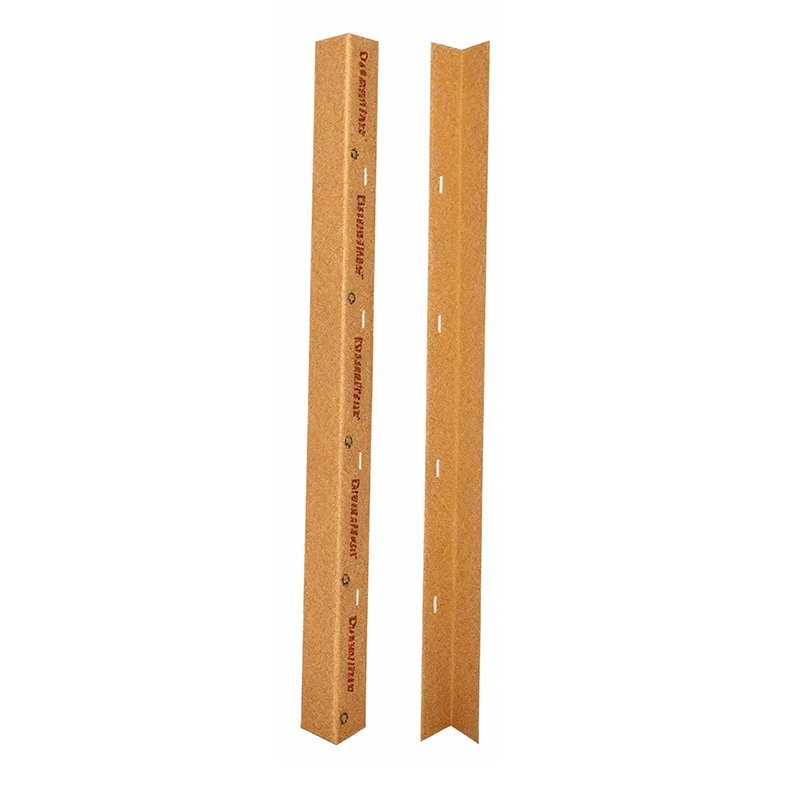
- vs. Corner boards and edge protectors: Corner boards protect load edges during handling and add vertical compression strength to pallet loads, but they do not address horizontal layer slippage. Anti slip sheets and corner boards address different failure modes and are frequently used together for maximum load integrity on fragile or tall pallet loads.
- vs. Pallet strapping: Strapping secures the load to the pallet vertically and can prevent tipping, but horizontal strapping around the load perimeter does not prevent internal layer movement. Anti slip sheets address the internal layer stability that strapping cannot reach. For heavy or high-value loads, strapping and anti slip sheets used together provide comprehensive load security.
- vs. Rubber or foam anti slip mats: Reusable rubber or foam anti slip mats offer similar friction performance to anti slip paper but are heavier, harder to integrate into high-speed palletizing operations, more expensive per unit, and create return logistics challenges. Anti slip paper is single-use but dramatically simpler to apply and dispose of, making it more practical for high-volume operations. Reusable mats may be preferred in closed-loop pallet systems where returns are systematic and predictable.
How to Choose the Right Anti Slip Pallet Paper for Your Operation
Selecting the most appropriate anti slip pallet paper for a specific application involves evaluating several parameters in combination rather than focusing on a single specification in isolation. Working through this selection process systematically ensures the product chosen delivers the required performance at the right cost.
Start by defining the load characteristics: the average pallet weight, the number of layers, the packaging surface material of the product (smooth plastic wrap, paper bags, corrugated cases, glass, etc.), and the stability of the pallet build. Smooth-surfaced products on heavy pallets require higher-performance coating and heavier base paper; lighter loads in corrugated cases may be adequately served by a lighter sheet grade. Next, consider the handling and transport environment: will pallets be stored in ambient, chilled, or frozen conditions? Will they be exposed to condensation? If yes, moisture-resistant grades are necessary. If the operation is entirely in a dry ambient warehouse, standard kraft grades are appropriate and more cost-effective.
Evaluate how sheets will be applied — manually by palletizing operators or automatically by a sheet dispenser integrated into a palletizing line. Manual application is tolerant of a wider range of sheet stiffnesses and sizes; automated dispensing requires sheets that reliably separate from the stack, feed without jamming, and hold their shape when placed. Request samples of candidate products and test them with your actual pallet build and handling conditions before committing to a bulk order. Verify that the supplier can provide consistent quality across production batches — coating uniformity and base paper strength should be specified with defined tolerances and supported by quality documentation. Finally, confirm end-of-life recyclability and any applicable product certifications (food contact compliance, ISPM 15 exemption for export pallets) that may be relevant to your specific application.
Related Products



PRODUCT
CONTACT INFO
-
 +86-137 7421 9489
-
 +86-021-67558008
-
 [email protected]
-
 No.769 ,23# building, Fengliang Road,Fengcheng town,Fengxian District,Shanghai,China
MOBILE QR CODE
Copyright © Shanghai We Pack Co., Ltd. All Rights Reserved.
Cargo Securing Solutions Cargo Transport Protection Solutions

