
 Español

Home / News / Industry News / The Complete Guide to Paper Corner Protectors: What They Are and How to Use Them
Industry News


The Complete Guide to Paper Corner Protectors: What They Are and How to Use Them
 2026.04.14
 Industry News
Paper corner protectors are one of those simple, low-cost packaging and storage solutions that make a surprisingly big difference. Whether you're shipping framed artwork, storing books, moving furniture, or packing flat-pack goods, corner protectors made from paper or cardboard prevent dents, crushing, and scuffing at the most vulnerable points of any item — its corners and edges. This guide covers everything you need to know about selecting, using, and sourcing the right paper corner protectors for your specific needs.
Content
- 1 What Are Paper Corner Protectors and Why Do Corners Need Extra Protection?
- 2 Types of Paper and Cardboard Corner Protectors
- 3 Key Sizes and Dimensions to Know
- 4 Common Uses for Paper Corner Protectors
- 5 How to Choose the Right Paper Corner Protector for Your Needs
- 6 Paper vs. Plastic vs. Foam Corner Protectors: How They Compare
- 7 Tips for Using Paper Corner Protectors Effectively
What Are Paper Corner Protectors and Why Do Corners Need Extra Protection?
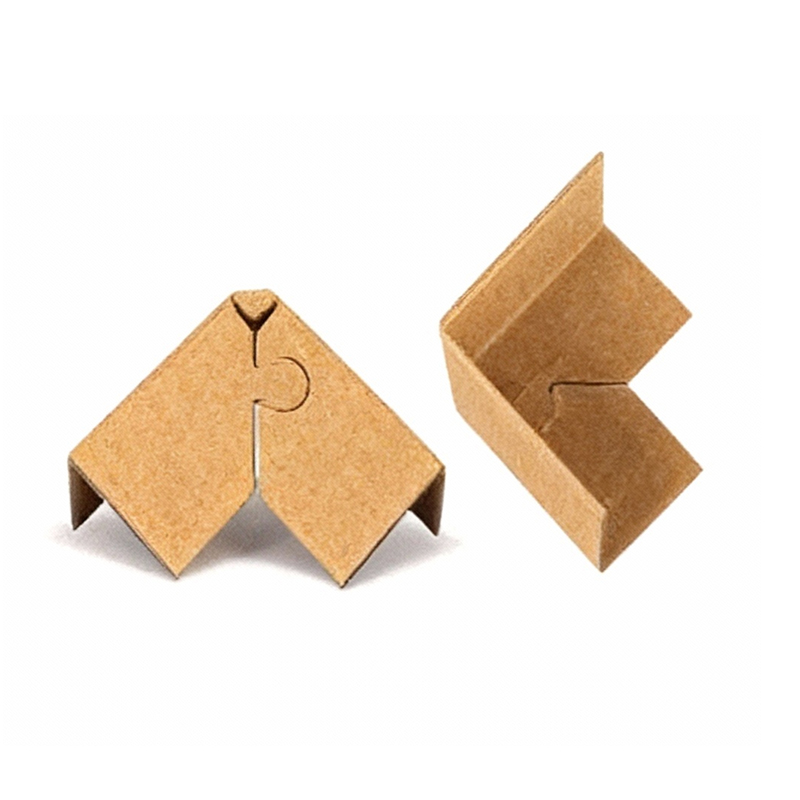
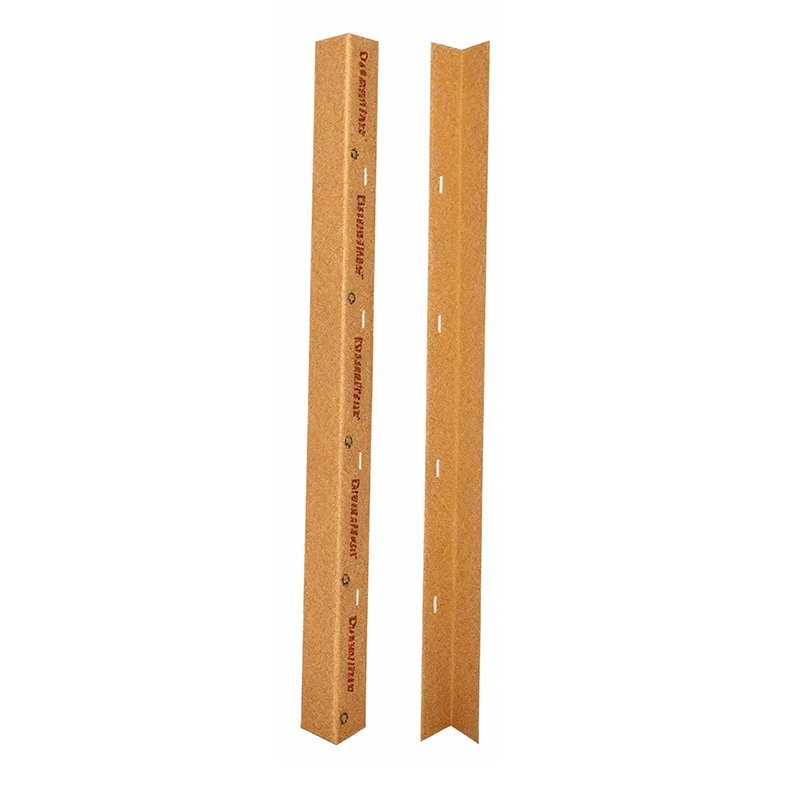
Paper corner protectors — also called cardboard corner protectors, edge boards, or paper corner guards — are L-shaped or U-shaped strips made from compressed paperboard, kraft paper, or recycled cardboard. They slip over or wrap around the corners and edges of an item to absorb impact, distribute pressure, and prevent surface damage during handling, transit, or storage.
Corners are structurally the weakest point of most packaged goods. When a box is dropped, stacked under weight, or knocked during transit, the force concentrates at the corners first. Without protection, this causes crushed edges on cardboard boxes, chipped corners on picture frames, dented edges on furniture panels, and torn covers on books or binders. A paper corner guard intercepts that impact before it reaches the item itself, acting as a sacrificial buffer layer that can crumple or compress without transferring the full force to the product.
Types of Paper and Cardboard Corner Protectors
Paper corner protectors come in several distinct configurations, each suited to different applications. Understanding the differences helps you choose the right type for your situation.
L-Shape Corner Protectors
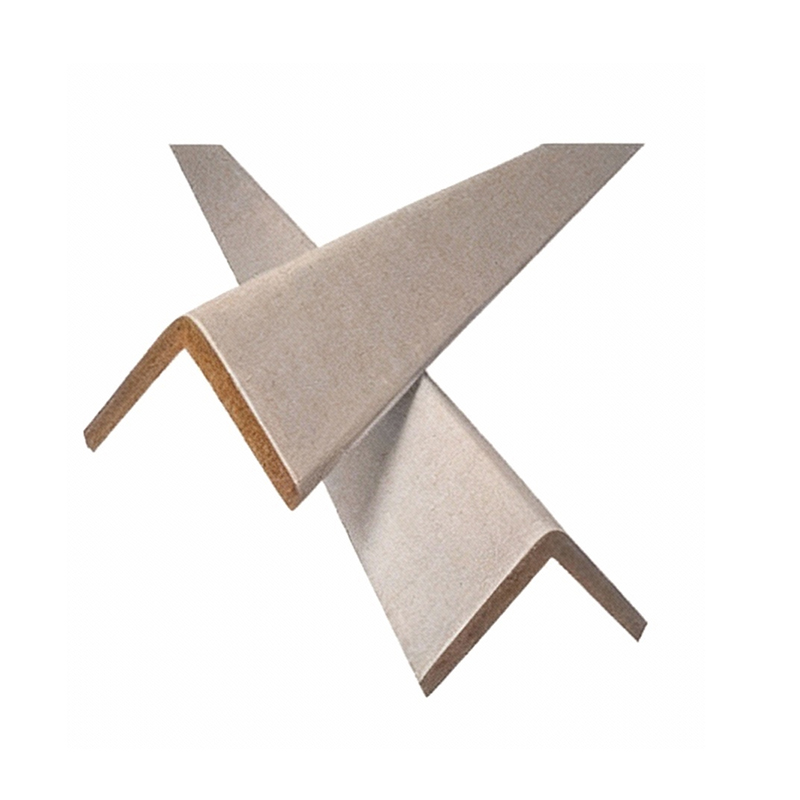
The most common type, L-shaped paper corner protectors fit over a single corner or along a straight edge. They're made from layers of compressed paperboard bonded together to form a rigid 90-degree angle. These are widely used in furniture shipping, appliance packaging, and pallet securing. The two wings of the L-shape can be the same length (square) or different lengths to match asymmetric items. They're typically held in place with stretch wrap, strapping tape, or packing tape applied over the top.
U-Channel Edge Protectors
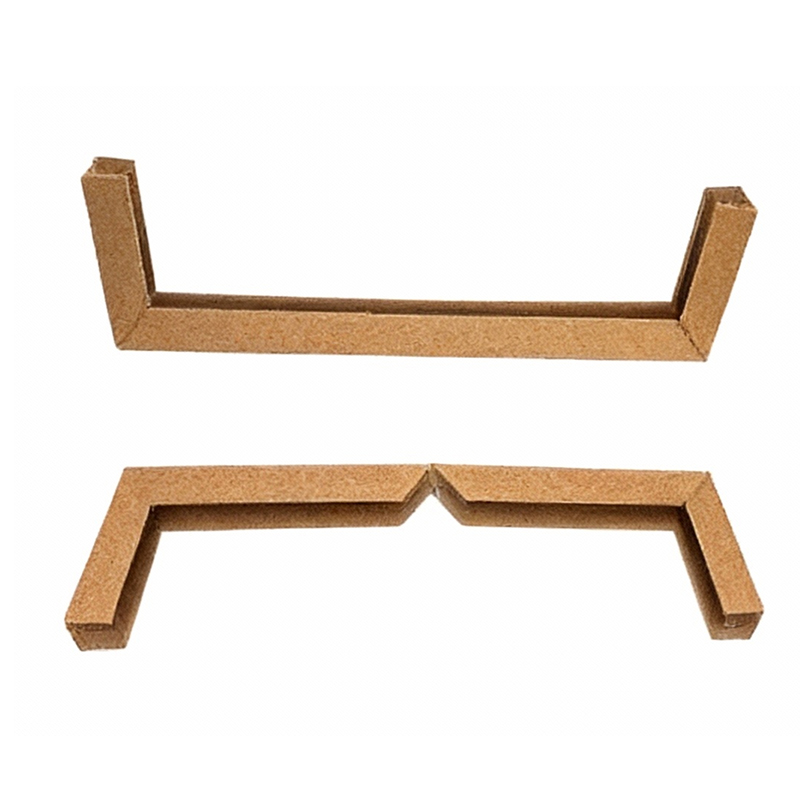
U-channel protectors, sometimes called edge boards or edge protectors, are folded into a U-shape and slide over the flat edge of an item rather than a 90-degree corner. They're commonly used on the edges of glass panels, mirrors, canvas prints, and sheet materials like MDF or plywood during transport. The U-channel grips the edge firmly and prevents the surface from being scratched or chipped during handling.
Wrap-Around or Flat Corner Protectors
These are flat sheets of kraft paperboard or corrugated cardboard scored and folded to wrap around the corner of an item from two or three sides. They're popular for protecting book corners, file folders, binders, and framed prints. Because they can be sized and folded to fit, they work well for irregularly sized items or when you need a custom fit without ordering specially sized guards.
Self-Adhesive Paper Corner Guards
These smaller paper corner protectors have a peel-and-stick backing for permanent or semi-permanent attachment. They're frequently used in archival and library applications to protect the corners of book covers, photo albums, scrapbooks, and document folders. Self-adhesive paper corner guards are typically made from acid-free or archival-grade paperboard to prevent yellowing or chemical transfer to the items they protect.
Key Sizes and Dimensions to Know
Selecting the right size of paper corner protector is critical. A protector that's too small won't cover the corner adequately; one that's too large will be bulky, wasteful, and harder to secure. Here are the main sizing considerations:
| Dimension | What It Means | Typical Range |
| Wing Width | Width of each arm of the L or U shape | 25mm – 100mm |
| Length | How far the protector runs along the edge | 50mm – 2000mm (custom) |
| Thickness / Wall | Thickness of the paperboard wall | 1.5mm – 6mm |
| Flute Type (corrugated) | Internal flute structure affecting rigidity | B-flute, C-flute, E-flute |
For most standard shipping applications, a wing width of 35mm to 50mm and a wall thickness of 2mm to 3mm provides a good balance of protection and economy. For heavy industrial palletized goods, thicker walls (4mm–6mm) and longer lengths are necessary to withstand the compression force of stacking and strapping.
Common Uses for Paper Corner Protectors
Cardboard and paper corner guards are used across a remarkably wide range of industries and everyday situations. Here are the most practical and frequently encountered applications:
Shipping and E-Commerce Packaging
Online retailers and fulfillment centers use paper corner protectors extensively to reinforce the outer corners of shipping boxes and protect the items inside. When a parcel is tossed, stacked, or compressed in a delivery vehicle, corner guards prevent the box from collapsing inward at its weakest points. For items like framed prints, canvases, mirrors, and glass panels shipped directly to consumers, corner protectors are often the difference between a safe delivery and a damaged return.
Furniture and Appliance Transport
Furniture manufacturers and removal companies rely heavily on large-format cardboard corner protectors to protect table corners, cabinet edges, wardrobe panels, and appliance housing during transit. These industrial-grade paper corner guards are secured with stretch wrap or banding straps directly over the protector, creating a firm, protected outer shell. For high-value pieces, multiple corner protectors are combined with moving blankets or foam padding for full coverage.
Art and Frame Packaging
Galleries, artists, and framers use paper corner guards specifically designed for framed artwork and stretched canvases. These are typically made from sturdy but lightweight corrugated cardboard and fit snugly over the corners of a frame without adding excessive bulk. They protect both the frame moulding and the glazing from chips and cracks when multiple pieces are stored together or shipped in a flat-pack configuration.
Books, Binders, and Archival Materials
Self-adhesive paper corner protectors made from acid-free materials are standard in archival preservation. Libraries, museums, and collectors use them on book covers, portfolio corners, scrapbook pages, and document folders to prevent the corners from fraying, bending, or tearing with repeated handling. They add minimal weight and thickness while significantly extending the lifespan of the item.
Pallet Stabilization
In warehouse and logistics operations, heavy-duty paper edge boards are placed along the vertical edges of palletized loads before stretch-wrapping. This distributes the tension of the wrap evenly across the load, prevents the wrap from cutting into packaged goods, and reinforces the structural integrity of the pallet stack. Paper corner guards used in this way are typically 50mm x 50mm or wider, with wall thicknesses of 4mm or more to handle the compressive load.
How to Choose the Right Paper Corner Protector for Your Needs
With so many options available, narrowing down the right paper corner guard requires thinking through a few key questions:
- How heavy is the item? Lightweight items like framed prints need thinner, lighter corner guards (1.5mm–2mm wall). Heavy furniture or palletized goods need thick, rigid industrial-grade protectors (4mm–6mm).
- What's the corner profile? Standard 90-degree corners work with L-shaped protectors. Flat edges need U-channel guards. Irregular or angled corners may require custom cut or wrap-around solutions.
- Will they be seen by the customer? For retail or gift packaging, consider white kraft paper corner protectors for a cleaner appearance. For internal logistics, brown recycled board is perfectly adequate.
- Do you need archival quality? For books, photographs, or documents, always choose acid-free paper corner protectors to prevent chemical degradation of the item over time.
- How will they be secured? If you're using stretch wrap or banding straps, standard board protectors work well. If you need them to stay in place during handling without additional wrapping, self-adhesive or clip-on types are more practical.
Paper vs. Plastic vs. Foam Corner Protectors: How They Compare
Paper corner protectors are not the only option on the market. Plastic and foam corner guards are also widely used, and each material has distinct strengths and trade-offs. Here's how they compare:
| Feature | Paper / Cardboard | Plastic | Foam |
| Impact resistance | Good (absorbs and crumples) | Good (rigid, deflects) | Excellent (cushions) |
| Eco-friendliness | Excellent (recyclable) | Poor (non-recyclable) | Poor (landfill) |
| Cost | Low | Medium–High (reusable) | Medium |
| Water resistance | Low (unless coated) | High | Medium |
| Best for | Shipping, pallets, archiving | Reusable transit packaging | Delicate or fragile items |
For most single-use shipping and packaging scenarios, paper corner protectors are the most cost-effective and environmentally responsible choice. They're fully recyclable alongside regular cardboard, require no special disposal, and perform well in the vast majority of everyday transit conditions.
Tips for Using Paper Corner Protectors Effectively
Getting the most out of cardboard corner protectors comes down to correct application. Even the best protectors won't perform well if they're improperly fitted or secured.
- Match the wing width to the item face: The wings of the protector should cover a meaningful portion of the item's surface — at minimum 25mm on each side of the corner. Too-narrow wings concentrate stress rather than spreading it.
- Use enough length: For tall or long items, use protectors that run the full height or length of the edge rather than short corner-only pieces. Continuous edge protection prevents mid-edge damage, not just corner damage.
- Secure them properly: Paper corner guards are passive protectors — they must be held in place. Use packing tape, stretch film, or banding straps over the protector. Never rely on friction alone, especially for items being shipped long distances.
- Layer with other packaging materials: For fragile or high-value items, combine paper corner protectors with bubble wrap, foam padding, or inner box liners. Corner protectors handle edge and corner impact; they don't replace overall cushioning.
- Don't reuse damaged protectors: Once a paper corner guard has been compressed, dented, or wet, its structural integrity is compromised. Replace used protectors rather than reusing them for new shipments.
Related Products

PRODUCT
CONTACT INFO
-
 +86-137 7421 9489
-
 +86-021-67558008
-
 [email protected]
-
 No.769 ,23# building, Fengliang Road,Fengcheng town,Fengxian District,Shanghai,China
MOBILE QR CODE
Copyright © Shanghai We Pack Co., Ltd. All Rights Reserved.
Cargo Securing Solutions Cargo Transport Protection Solutions

