
 Español

Home / News / Industry News / PP Packing Strap: What It Is, How to Use It, and How to Pick the Right One
Industry News


PP Packing Strap: What It Is, How to Use It, and How to Pick the Right One
 2026.04.22
 Industry News
Content
- 1 What Is a PP Packing Strap and What Is It Made Of?
- 2 How PP Packing Straps Are Made
- 3 Types of PP Packing Straps Available
- 4 PP Strapping vs. PET Strapping vs. Steel Strapping
- 5 How to Choose the Right PP Packing Strap Width and Thickness
- 6 Sealing Methods for PP Strapping Bands
- 7 Common Applications of PP Packing Straps Across Industries
- 8 How to Use a PP Packing Strap Correctly
- 9 What to Look for When Buying PP Packing Straps in Bulk
- 10 Environmental Considerations and Recycling of PP Strapping
What Is a PP Packing Strap and What Is It Made Of?
A PP packing strap — short for polypropylene packing strap — is a flat plastic strapping band used to bundle, unitize, or secure goods during storage, shipping, and transportation. It is one of the most widely used packaging materials in the world, found everywhere from small warehouses and brick-and-mortar retailers to large logistics hubs, agricultural operations, and industrial manufacturing plants. The strap works by being looped around a package or bundle, tensioned tightly, and then sealed — either with a metal clip, a heat weld, or a friction weld — to hold the load firmly in place.
Polypropylene is a thermoplastic polymer derived from propylene monomer. In its raw form, it is lightweight, chemically resistant, and relatively flexible. For strapping applications, PP is extruded into flat bands with a highly oriented molecular structure — this means the polymer chains are aligned along the length of the strap during manufacturing, significantly increasing tensile strength in that direction. The result is a strap that resists elongation under steady load while remaining light enough to handle easily and inexpensive enough to use at high volumes.
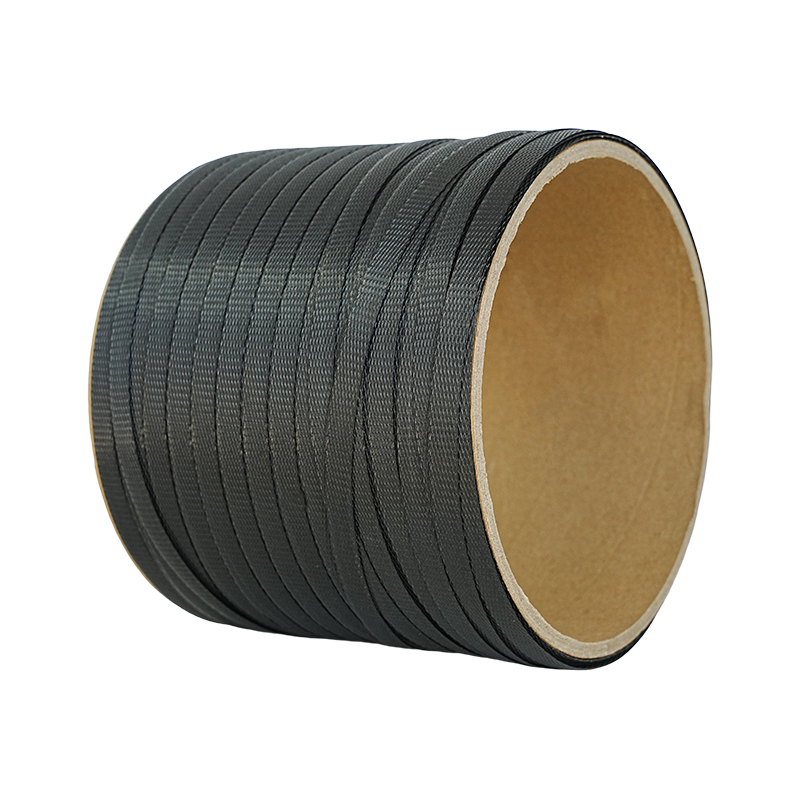
PP strapping is produced in a range of widths (typically 9 mm to 19 mm), thicknesses (0.5 mm to 1.0 mm), and coil weights. It can be transparent, white, black, or custom-colored, and it is available in both embossed and smooth surface finishes. The embossed pattern is not purely cosmetic — the textured surface improves grip during tensioning and enhances the performance of friction-weld seals.
How PP Packing Straps Are Made
Understanding how PP strapping is manufactured helps explain why product quality varies so much between suppliers — and why the cheapest option is rarely the best value in practice.
The production process begins with raw polypropylene resin pellets being fed into an extrusion machine. The pellets are melted and forced through a flat die to create a continuous thick film or ribbon. This ribbon is immediately quenched in a water bath to set the basic shape, then passed through a series of heated stretching rollers. This stretching — called orientation — is the critical step that aligns the polymer chains and develops the strap's tensile strength. The degree of stretch (the draw ratio) directly determines how strong the final strap will be. After orientation, the strap is embossed if required, wound onto cores, and cut into coils of specified length.
Higher-quality PP strapping uses virgin polypropylene resin and tightly controlled draw ratios, resulting in consistent tensile strength, low elongation at break, and reliable seal performance. Lower-grade products often incorporate recycled or mixed resin content, which produces straps with higher variability in strength, increased brittleness, and poorer performance at low temperatures. This distinction matters especially in cold chain logistics, outdoor storage, and heavy-load applications.
Types of PP Packing Straps Available
Not all PP strapping bands are the same. Product categories vary based on application method, strap construction, and intended load type. Choosing the right category is the starting point for getting good performance.
Hand-Grade PP Strapping
Hand-grade PP packing straps are designed for use with manual tensioning tools — either handheld tensioners and sealers, or combination tools that tension and seal in a single operation. These straps are typically softer and more pliable than machine-grade alternatives, making them easier to thread and handle manually. They are available in widths from 9 mm to 16 mm and are the go-to choice for low-to-medium volume operations, light to medium-weight packages, and situations where powered strapping equipment is not practical. Coil sizes for hand-grade strapping commonly range from 1 kg to 5 kg.
Machine-Grade PP Strapping
Machine-grade PP strapping is produced to tighter dimensional tolerances and formulated for use in semi-automatic and fully automatic strapping machines. These machines require consistent strap width, thickness, and coil geometry to feed, tension, and seal reliably at high cycle speeds — sometimes exceeding 30 straps per minute. Machine-grade PP straps are wound onto cores of specific diameter (usually 200 mm or 280 mm inner diameter) and produced in larger coil weights, typically 5 kg to 20 kg, to reduce changeover frequency. Surface finish must be consistent so the strap feeds smoothly through the machine's track and feed rollers without jamming.
High-Tensile PP Strapping
Standard PP strapping has a break strength in the range of 100 to 250 kg depending on width and thickness. High-tensile PP strapping is produced with a higher draw ratio during manufacturing, pushing break strength up to 300–400 kg in wider widths. This category sits between standard PP and PET strapping in terms of load-holding capability and is used for unitizing heavier palletized goods, bundling timber or construction materials, or reinforcing large boxes where standard PP would be insufficient but the added cost of PET strapping is not justified.
Woven and Composite PP Strapping
Woven polypropylene strapping consists of multiple PP filaments woven together rather than a single extruded film. This construction makes the strap significantly more flexible and resistant to shock loading and vibration than standard extruded PP strapping, while maintaining good tensile strength. Woven PP banding straps are popular in applications where the load shifts during transit — such as in open flatbed trucking, lumber transport, or palletized loads on rough terrain. They are also considerably less likely to cut into soft or fragile surfaces than rigid extruded straps.
PP Strapping vs. PET Strapping vs. Steel Strapping
PP packing straps compete directly with PET (polyester) strapping and steel strapping in many industrial and logistics applications. Each material has a distinct performance profile, and choosing the wrong one can lead to load failures, product damage, or unnecessary cost. Here's how they compare across the most important dimensions:
| Property | PP Strapping | PET Strapping | Steel Strapping |
| Tensile Strength | Low to medium | Medium to high | Very high |
| Elongation / Elasticity | High (10–25%) | Low (6–10%) | Very low (<2%) |
| Tension Retention Over Time | Low (creeps under sustained load) | High | Excellent |
| Weight | Lightest | Light | Heaviest |
| Safety When Cut | Safe, no recoil | Safe, minimal recoil | Dangerous snap-back |
| Moisture Resistance | Excellent | Excellent | Rusts without coating |
| Cost | Lowest | Medium | Highest |
| Typical Applications | Light to medium loads, short transit | Heavy pallets, long-distance shipping | Very heavy industrial loads |
The most important practical difference between PP and PET strapping is tension retention. PP strapping creeps — meaning it gradually relaxes under a sustained static load over time. For loads that are strapped, stored, and shipped within a short time frame, this is rarely a problem. But for loads that will sit in a warehouse for days or weeks before moving, PP's tendency to lose tension can allow packages to shift. In those scenarios, PET strapping is the more reliable choice despite its higher cost.
How to Choose the Right PP Packing Strap Width and Thickness
Selecting the correct strap dimensions is not just about breaking strength — it's about matching the strap's physical properties to the load, the application method, and the sealing system being used. The wrong size creates waste, failure risk, or incompatibility with your strapping tools.
Width Selection
Wider straps distribute load over a larger contact area, reducing the pressure per unit area on the package surface. This matters when strapping soft goods, cartons, or any material that can be cut or deformed by a narrow strap under tension. Common widths and their typical use cases are:
- 9 mm: Light-duty bundling of small cartons, newspapers, magazines, and thin board. Very common in retail and office environments.
- 12 mm: The most widely used width for general-purpose packing and shipping. Suitable for cartons up to approximately 20–30 kg and most standard courier and freight applications.
- 15 mm: Medium-duty applications including pallet unitizing of lighter goods, bundling of pipes or profiles, and reinforcement of larger cardboard boxes.
- 19 mm: Heavy-duty applications, typically for heavier pallet loads, timber bundling, brick and block banding, and industrial unitizing where higher break strength is needed.
Thickness Selection
Thickness directly affects tensile strength and stiffness. Thicker straps are stronger but also harder to bend around tight corners and more demanding on manual tensioning tools. For a given width, a 0.9 mm strap can be 30–50% stronger than a 0.6 mm strap. However, thicker straps also cost more per meter and add more weight to each coil. For most carton-sealing and general packing applications, a thickness of 0.6 mm to 0.75 mm is sufficient. Palletizing and industrial bundling applications typically call for 0.8 mm to 1.0 mm.
Sealing Methods for PP Strapping Bands
The seal is the weakest point in any strapping joint — if the seal fails, the strap fails regardless of its tensile strength. Choosing the right sealing method for your PP packing strap is just as important as choosing the right strap itself.
Metal Seal (Clip) Sealing
Metal seals — also called clips or buckles — are small pressed-metal components crimped over the overlapping strap ends using a sealer tool. They create a mechanical joint that is quick to apply and does not require heat. Metal seal joints typically achieve 60–70% of the strap's break strength, which is adequate for most light and medium-duty applications. This method is reliable, requires minimal skill, and works consistently even in cold or wet environments where heat-sealing can be less effective.
Friction Weld (Heat-Free) Sealing
Friction weld sealing is performed by combination tools — handheld or battery-powered — that vibrate the strap overlaps rapidly against each other. The friction generates enough heat to partially melt and fuse the two strap surfaces together, creating a joint that is part mechanical and part thermal. Friction weld joints on PP strapping typically achieve 70–85% of break strength and require no separate seals or clips, which reduces consumable costs. This method is fast, clean, and very widely used in distribution centers, warehouses, and export packing operations.
Heat Seal (Hot Knife / Ultrasonic) Sealing
Automatic strapping machines for PP typically use a hot-knife heat seal — a heated plate briefly contacts the overlapping strap ends under pressure, melting them together. This creates a very clean, consistent seal with joint efficiency of 80–90% and is the preferred method for high-speed automated operations. Ultrasonic sealing is a more advanced variant used in premium machines, achieving similar or better joint strength with faster cycle times and no heated element to maintain or replace.
Common Applications of PP Packing Straps Across Industries
The versatility and low cost of PP strapping bands make them the standard bundling and unitizing solution across an exceptionally wide range of industries. Below are some of the most common real-world uses:
- E-commerce and courier shipping: PP strapping reinforces corrugated cardboard boxes and poly mailers for last-mile delivery, preventing boxes from bursting open during automated sortation and rough handling in transit hubs.
- Pallet unitizing: PP strapping bands are applied over stretch-wrapped pallets to add vertical stability and prevent the top layers of cartons from shifting during fork-lift handling or road transport on uneven surfaces.
- Printing and publishing: Stacks of newspapers, magazines, brochures, and printed catalogs are bundled with PP strapping for delivery to distribution points, newsstands, and direct mail customers.
- Textile and garment industry: Bales of fabric, rolls of material, and stacks of folded garments are banded with PP strapping for warehouse storage and international shipping in containers.
- Construction materials: Bundles of pipes, rebar, timber planks, bricks, and roofing tiles are strapped with PP banding for yard storage and site delivery. Wider, higher-tensile grades are used for heavier loads.
- Agriculture and food production: PP strapping secures bales of hay, straw, and compressed agricultural waste, as well as cartons of fresh produce on pallets destined for supermarket distribution centers.
- Waste management and recycling: Baled cardboard, plastic bottles, and metal cans at recycling facilities are bound with PP strapping to create compact, stackable bales for efficient transport to processing plants.
How to Use a PP Packing Strap Correctly
Even the best PP strapping will underperform if applied incorrectly. Following a consistent application technique prevents load failures and reduces strap and consumable waste.
Manual Application with Hand Tools
Thread the strap around the package or load, ensuring it sits flat and does not twist. If using a separate tensioner and sealer, feed the strap end through the tensioner's gripper, engage the feed wheel, and crank until the desired tension is reached — you should not be able to compress the strap by hand once it is correctly tensioned. Thread the strap overlap into the sealer, crimp the metal seal firmly, and then cut the tail with the built-in cutter. If using a combination friction-weld tool, position the overlap in the tool, apply tension, and trigger the weld cycle. Always ensure the weld has fully cooled (1–2 seconds) before releasing the tool to avoid peeling the joint apart prematurely.
Tips for Consistent Results
- Always keep the strap flat and aligned with the direction of load movement — a twisted strap has significantly lower effective strength and can cause uneven pressure on the package surface.
- Use strap protectors or edge guards on sharp-cornered loads such as metal profiles, stone slabs, or wooden crates. PP strapping has poor resistance to cutting at sharp edges under load, and a notched strap can fail at a fraction of its rated break strength.
- Do not over-tension straps on compressible loads such as cardboard boxes — excessive tension will crush or deform the package, weakening the box structure and potentially damaging the contents.
- Store PP strapping rolls in a cool, dry location away from direct UV light. Prolonged UV exposure degrades polypropylene, making it brittle and reducing its tensile strength significantly.
- Inspect your sealing tools regularly. Worn tensioner wheels slip and produce inconsistent tension. Dull or dirty sealer jaws create weak, peeling friction welds. Tool maintenance directly affects seal quality and load security.
What to Look for When Buying PP Packing Straps in Bulk
When purchasing PP strapping rolls in volume for a warehouse, distribution center, or production facility, evaluating a few key quality and specification factors upfront saves significant cost and frustration down the line.
- Virgin vs. recycled resin content: Ask suppliers explicitly whether their PP strapping is made from virgin resin or contains recycled content. Recycled PP strapping is cheaper but has less consistent strength, higher brittleness at low temperatures, and more color variation between batches. For critical load-securing applications, virgin resin grades are worth the modest price premium.
- Coil dimensions and core size: Confirm that coil inner diameter, outer diameter, and coil weight match the specifications of your strapping machines. Incompatible coil geometry is one of the most common causes of machine jams and feed failures.
- Tensile strength and elongation data: Reputable suppliers provide test data sheets showing average break strength and elongation at break for each product code. Compare these figures rather than relying solely on price to evaluate value.
- Width and thickness tolerance: Tight dimensional tolerances are essential for machine-grade strapping. Strap that is even 0.2 mm narrower than specified can cause feed failures in automatic strapping machines. Request tolerance specifications from the supplier before approving a product for machine use.
- Meter length per coil: Calculate cost per meter rather than cost per coil — the same coil weight in a thinner strap produces more meters but less strength per meter. Compare the cost per meter at equivalent strength ratings for a true like-for-like price comparison between suppliers.
- UV stabilization: If the strapping will be used in outdoor applications or stored in areas with high UV exposure (such as open-sided warehouses or agricultural yards), specify UV-stabilized PP strapping. Standard PP degrades rapidly in sunlight and can fail in as little as a few weeks of outdoor exposure.
Environmental Considerations and Recycling of PP Strapping
Polypropylene is classified as plastic resin code 5 (PP) and is technically recyclable through industrial plastic recycling streams. In practice, the recyclability of used PP strapping depends heavily on local recycling infrastructure, contamination levels, and the presence of metal seals or clips mixed into the waste stream. Large-volume users — such as distribution centers and manufacturing plants — often find it worthwhile to segregate used strapping for collection by specialist plastic recyclers, particularly as the market for recycled PP has grown with increasing demand from manufacturers of secondary packaging products.
For companies with sustainability targets, several manufacturers now offer PP strapping made from post-consumer recycled (PCR) content — typically 30% to 100% recycled PP — certified to various recycled content standards. These products perform adequately for many light and medium-duty applications and can contribute to packaging sustainability metrics without sacrificing the core functionality of the strapping. Some manufacturers also offer bio-based PP strapping derived from sugarcane feedstock, though these products remain a niche and premium segment of the market.
From a design perspective, switching from metal seal closures to friction-weld or heat-seal closures also improves end-of-life recyclability, since it removes the contaminating metal component from the plastic waste stream and creates a single-material strap that is cleaner and easier to recycle as pure PP.
Related Products

PRODUCT
CONTACT INFO
-
 +86-137 7421 9489
-
 +86-021-67558008
-
 [email protected]
-
 No.769 ,23# building, Fengliang Road,Fengcheng town,Fengxian District,Shanghai,China
MOBILE QR CODE
Copyright © Shanghai We Pack Co., Ltd. All Rights Reserved.
Cargo Securing Solutions Cargo Transport Protection Solutions

