
 Español


Home / News / Industry News / Flat Paper Corner Protector: Applications, Selection Criteria, and Practical Guidance
Industry News


Flat Paper Corner Protector: Applications, Selection Criteria, and Practical Guidance
 2026.11.12
 Industry News
Nobody thinks much about a flat paper corner protector until something goes wrong. A carton arrives with a strap that has bitten into the printed panel, a stack of flat-packed boards shows grey rub marks along the edges, or a bundle of sheet material reaches the customer with abrasion scars that were never there when it left the plant. Small, inexpensive and easy to overlook, flat protectors are one of the simplest ways to stop that kind of damage before it starts. What follows is a practical look at what they are, where they work best, and how to specify the right one without over-buying.
Content
What a Flat Paper Corner Protector Actually Is
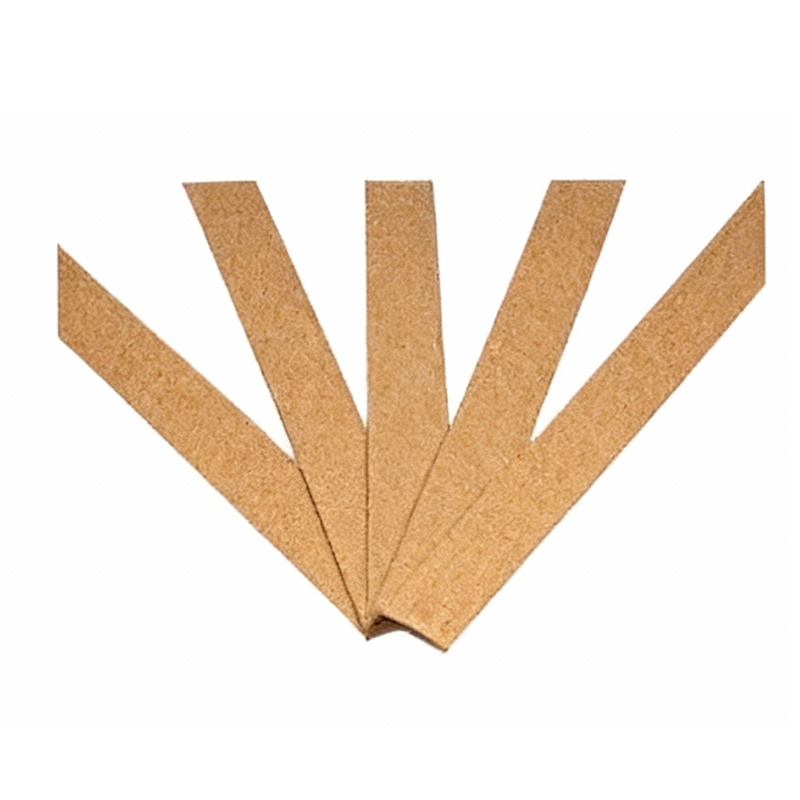
A flat paper corner protector is a straight strip of laminated paperboard, supplied flat rather than folded into an angle. Typical stock runs from roughly 1.5 mm to 5 mm thick and 30 mm to 100 mm wide, and arrives cut to length, in reels, or in sheet form depending on how you apply it.
The word "corner" can be a little misleading. Unlike an L-shaped or U-shaped profile, which wraps around an actual corner or edge, a flat protector has no crease. It lies flush against a plane: the face of a carton, the edge of a flat-packed panel, or the surface underneath a plastic strap. Its job is to spread load and separate surfaces, so pressure and vibration are distributed across an area instead of concentrating on a single line.
Most protectors are built from recycled kraft paperboard, laminated in multiple plies with starch adhesive. That construction gives them a high compression strength for their weight, and it means they can go into the same recycling stream as the cartons they protect. Water-resistant and white-coated versions are also common; the white finish suits export cartons where appearance matters, while the moisture-resistant treatment earns its keep in humid ports and long container voyages.
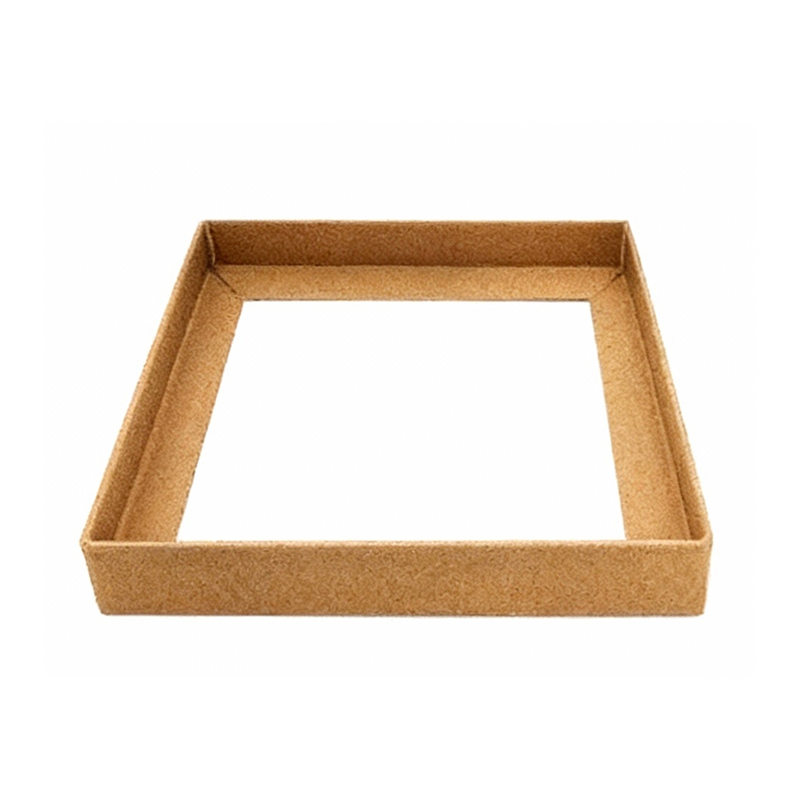
 Flat Paper Protectors for Surface and Layer ProtectionFlat paperboard strips protect large surfaces and separate layers, preventing scratches and spreading stacking pressure where folded corner pieces are not needed.View Product →
Where Flat Protectors Earn Their Keep
Because they protect a surface rather than a corner, flat protectors turn up in places where people first assume they need something folded. A few of the most common:
- Strapping on flat cartons and flat-packed furniture. A pad under PET or PP strap stops the strap from biting into the board and keeps tension even across the top panel.
- Layer separation on pallets. Placed between tiers, protectors absorb the micro-movement of transport so printed faces are not rubbing against the layer above.
- Sheet and panel bundles. Metal sheet, laminate, stone slabs and similar flat goods benefit from a soft interface at the bundle edges where straps pull hardest.
- Coated and painted components. Appliance faces, powder-coated parts and furniture panels are quick to mark; a thin board is often all the barrier needed.
- Produce and cold-chain cartons. White, moisture-resistant protectors are popular for fruit and seafood shipments where condensation is a given.
- Print and paper goods. Books, catalogues and photographic material pick up edge damage easily, and a light protector at the bundle ends solves most of it.
Choosing Thickness, Width and Length
Buyers tend to fixate on thickness, but ply count and board grade matter just as much. A 3 mm protector made from dense, well-laminated recycled board will usually outperform a thicker but loosely bonded alternative. Use the table below as a starting point, then test with your actual strap tension and load.
| Thickness band | Common widths | Where it usually fits |
|---|---|---|
| 1.5 to 2 mm | 30 to 50 mm | Light cartons, single strap runs, books and printed material |
| 3 mm | 50 to 70 mm | General export cartons, flat-packed furniture, pallet layer separation |
| 4 to 5 mm | 70 to 100 mm | Heavy panels, sheet bundles, high-tension PET strapping |
| 5 mm and above | 100 mm and up | Demanding loads, repeated handling, reusable pack frames |
Length is usually driven by the footprint of the strap or the width of the bundle. If your packing line works at speed, reels or perforated sheets cut application time noticeably, while pre-cut lengths reduce waste and make the workstation tidier. For a deeper comparison of length, width and ply options, this sizing guide for paper edge protectors is a useful companion read.
Perforated, White and Other Practical Variants
Once the basic grade is settled, a few variants do most of the work in real packing halls.
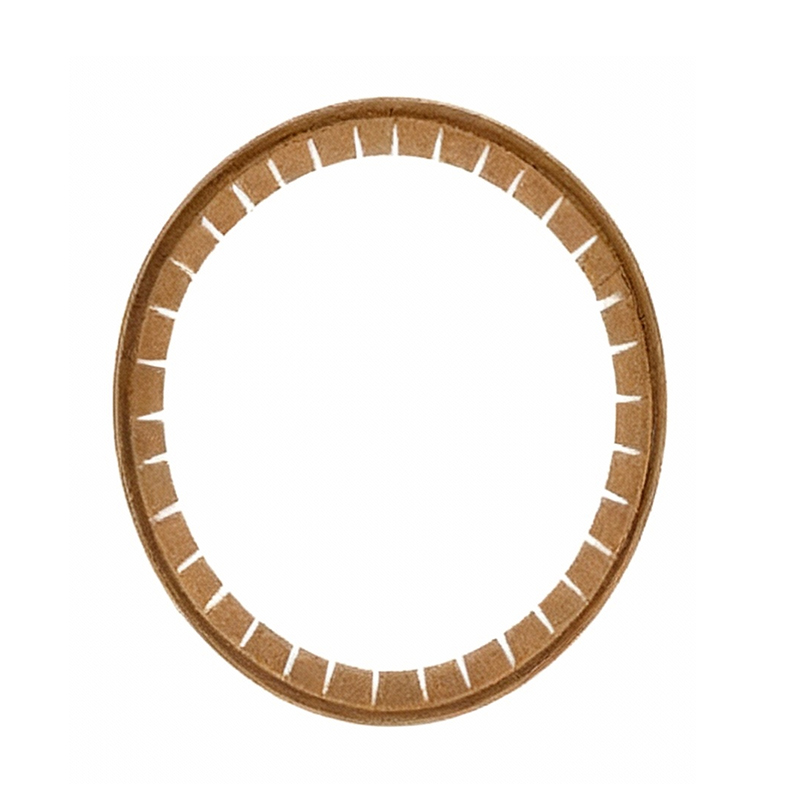
Perforated protectors carry pre-cut slots that the strap threads through. The pad stays exactly where it was placed, which matters on vertical or overhead strapping where a loose pad will slide. It is a small design detail that saves a surprising amount of rework.
White and moisture-resistant finishes are chosen mainly for export presentation and humid routes. They cost a little more, so it is worth confirming whether the customer actually sees the packaging before specifying them across the board.
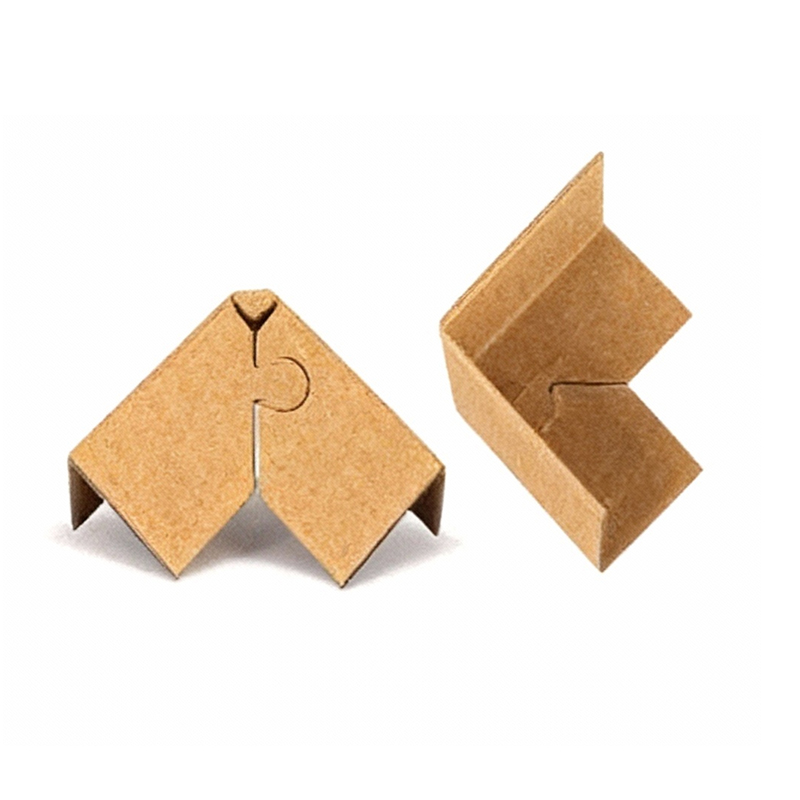
 Perforated Paper Corner Protectors for Strapping and FixingPre-drilled paper corner protectors allow rope or strap threading to secure irregular goods, while folded L- or U-shaped profiles cover edges flat strips cannot.View Product →
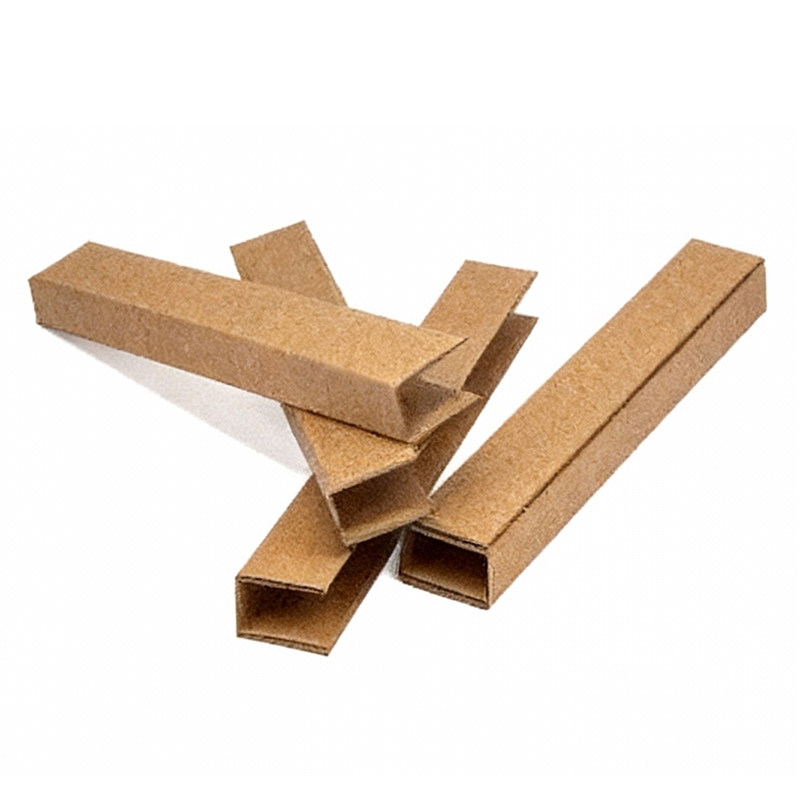
It is also worth remembering when a flat board is the wrong answer. If the load needs to be pulled down over an actual edge, or if the profile has to cover a corner on three faces, a folded L-shaped or U-shaped section will do more than a flat strip ever can. Many packing stations keep both on hand rather than choosing one.
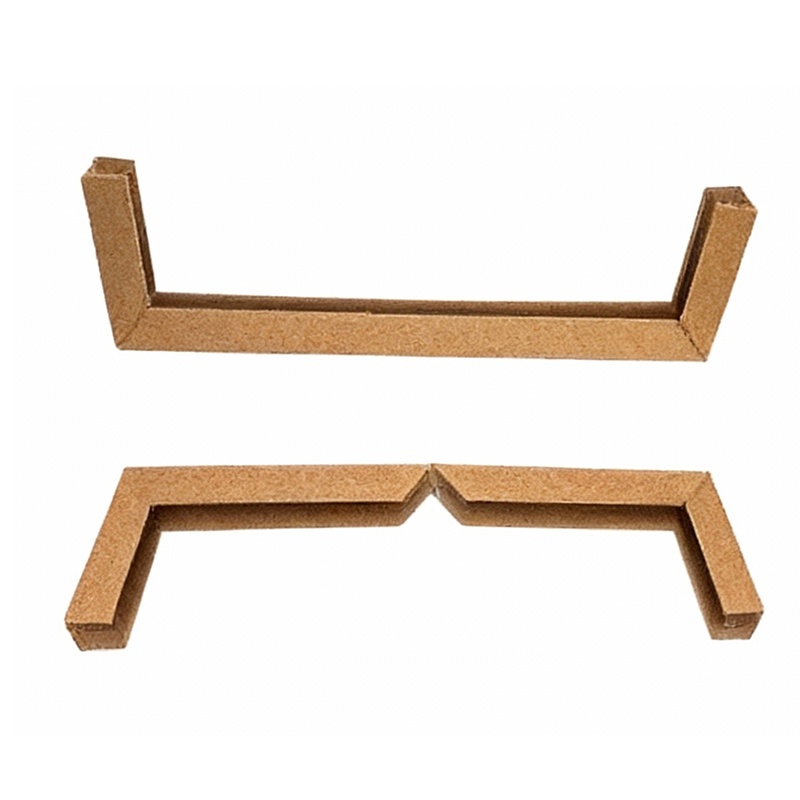
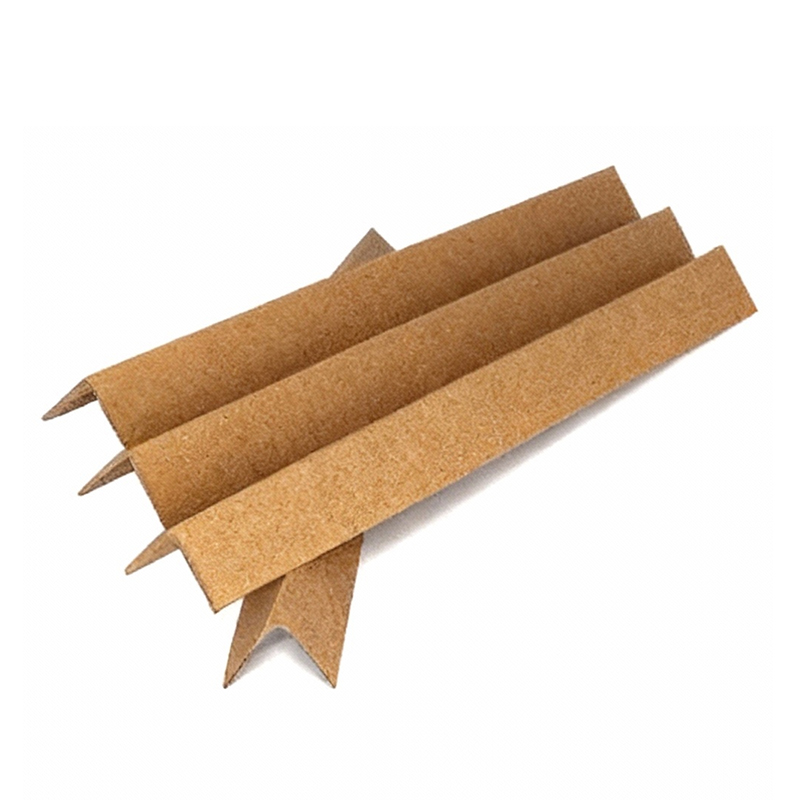 Heavy-Duty L-Shaped Paper Edge Protectors for Carton ReinforcementFolded L-shaped paper profiles reinforce carton edges and pallet loads, giving three-face corner coverage where flat strips cannot when loads need pulling over an edge.View Product →
Applying Them Without Wasting Time
Application is not complicated, but a little discipline pays off:
- Place the protector before tensioning, never after. A pad pushed under a tight strap will wrinkle and lose contact area.
- Centre the strap on the pad so the load spreads evenly across the board's width.
- Use the same grade on both sides of a carton, otherwise the pack can bow under tension.
- Keep pads slightly wider than the strap; a 50 mm strap on a 30 mm pad defeats the purpose.
- Store in a dry area and keep reels off the floor, since damp board loses compression strength quickly.
Sourcing Protectors That Fit Your Line
Off-the-shelf sizes cover a lot of ground, but most operations eventually want something specific: a 62 mm width for a particular strap, a white finish for one export customer, or a reel instead of cut sheets to speed up the packing bench. Customization is routine in this category, and it is worth asking for samples at your real strap tension rather than accepting a datasheet figure.
Shanghai We Pack Co., Ltd. has been supplying transport packaging since 2019 as part of a group with around 18 years in the field, with in-house design, testing and production under one roof. That combination helps when a protector has to work alongside strapping tools, stretch film or dunnage rather than in isolation; a similar mixed-material approach is described in this packaging protection case study for precision equipment. If you are weighing up a switch, sending a sample pack and a strap offcut is usually the fastest way to get a workable recommendation.
Quick Answers to Common Questions
Are flat protectors recyclable?
Yes. Standard grades are made from recycled kraft paperboard bonded with starch adhesive and can be recycled with ordinary cartons, provided they are not heavily contaminated by tape or plastic strapping.
How thick should a protector be for PET strapping?
As a rule of thumb, 3 mm handles most export cartons, while 4 to 5 mm is more comfortable under high-tension PET strap on heavier panels. Test with your actual tension before committing to a full order.
Can flat protectors replace corner boards?
Not always. They replace corner boards on flat faces and under straps, but where a genuine edge or corner needs wrapping, a folded L-shaped or U-shaped profile remains the better choice.
Get the grade and the placement right, and a few cents of paperboard per carton will quietly prevent the damage claims, reprints and returned pallets that cost far more than the protector ever will.
Related Products

PRODUCT
CONTACT INFO
-
 +86-137 7421 9489
-
 +86-021-67558008
-
 [email protected]
-
 No.769 ,23# building, Fengliang Road,Fengcheng town,Fengxian District,Shanghai,China
MOBILE QR CODE
Copyright © Shanghai We Pack Co., Ltd. All Rights Reserved.
Cargo Securing Solutions Cargo Transport Protection Solutions

