
 Español

Home / News / Industry News / Stretch Wrap Rolls: The Complete Buyer's Guide to Types, Gauges & Best Uses
Industry News


Stretch Wrap Rolls: The Complete Buyer's Guide to Types, Gauges & Best Uses
 2026.04.03
 Industry News
Content
- 1 What Is a Stretch Wrap Roll and What Is It Used For?
- 2 Main Types of Stretch Wrap Rolls Available
- 3 Understanding Stretch Wrap Gauge and What It Means for Your Application
- 4 Hand vs. Machine Stretch Wrapping: Which Is Right for Your Operation?
- 5 How to Choose the Right Stretch Film Roll for Your Needs
- 6 Stretch Wrap Roll Sizes and Specifications Explained
- 7 Best Practices for Applying Stretch Wrap Rolls Effectively
- 8 How to Reduce Stretch Film Costs Without Sacrificing Load Security
What Is a Stretch Wrap Roll and What Is It Used For?
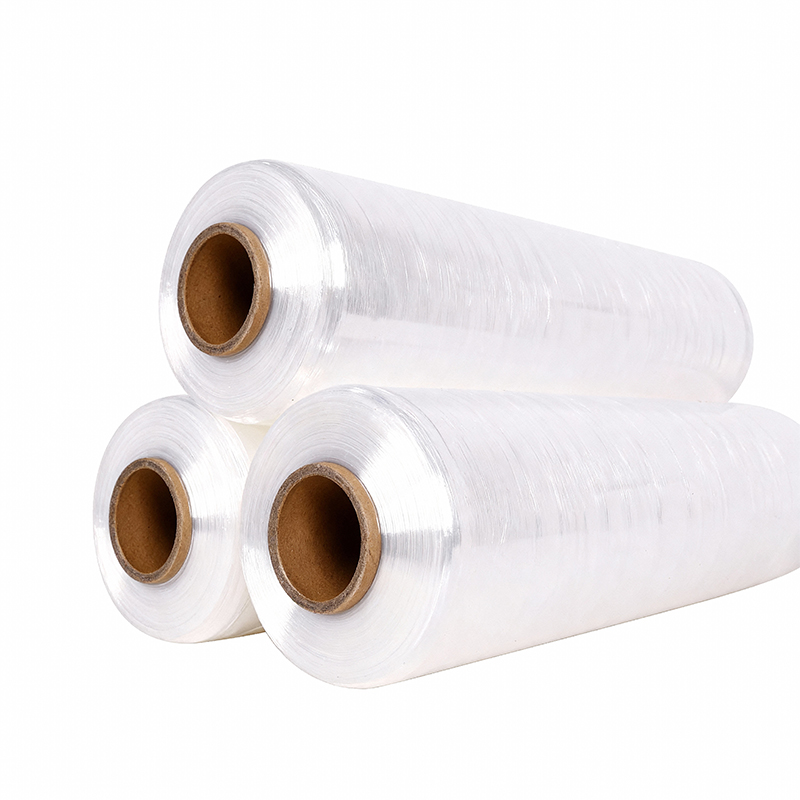
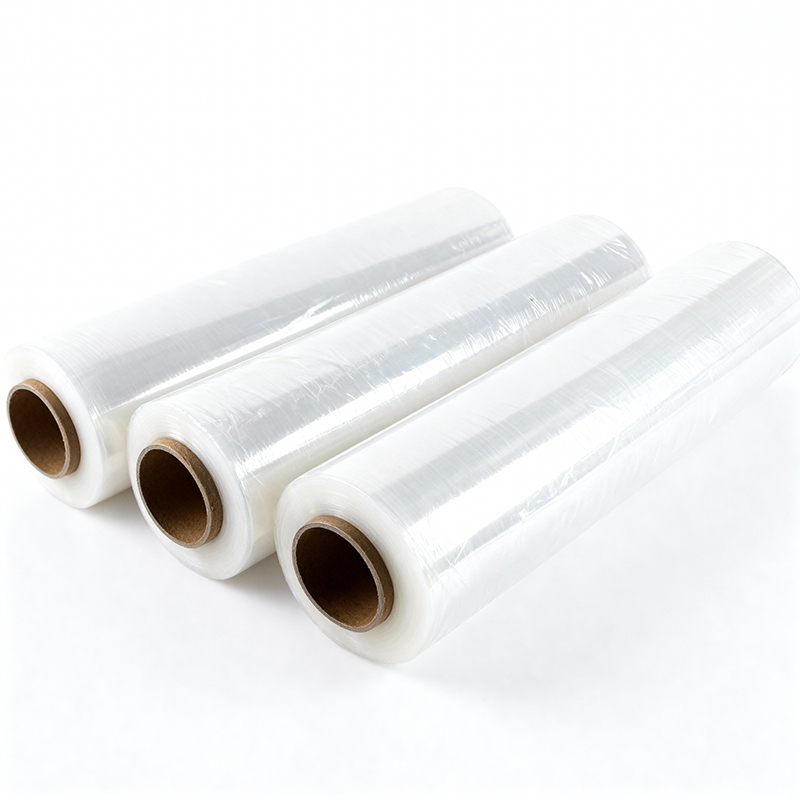
A stretch wrap roll is a highly elastic plastic film wound onto a core, designed to be stretched and wrapped tightly around products, pallets, or bundled items to secure, stabilize, and protect them during storage and transportation. The film clings to itself without requiring adhesives, heat, or fasteners, making it one of the most practical and widely used packaging materials in warehousing, logistics, manufacturing, and retail distribution.
Stretch wrapping film is most commonly made from linear low-density polyethylene (LLDPE), which gives it the combination of high stretchability, puncture resistance, and strong load retention that makes it so effective. When wrapped around a pallet load, the film's elastic memory pulls the layers together, holding products firmly in place and preventing shifting during transit. Beyond pallet unitizing, stretch wrap rolls are also used to bundle smaller items, protect surfaces from dust and scratches, cover irregularly shaped goods, and even secure outdoor equipment during storage.
Main Types of Stretch Wrap Rolls Available
Not all stretch film rolls are created equal. The right type depends on how the film will be applied, the weight and nature of the load, and the environmental conditions the wrapped product will face. Here is a breakdown of the most common categories:
Hand Stretch Wrap Roll
Hand stretch wrap is designed to be applied manually, either by holding the roll directly or using a handheld stretch wrap dispenser. These rolls are typically 12 to 18 inches (300–450mm) wide and wound on a 2-inch or 3-inch core. They are lighter in weight — usually 2 to 5 lbs per roll — so they can be comfortably handled and rotated around a pallet by one person. Hand stretch film is the go-to choice for low to medium volume operations, small warehouses, and situations where a machine wrapper is not cost-justified. Standard hand film stretches 100–200% before breaking, while "pre-stretched" hand film has already been elongated during manufacturing, requiring less effort to apply and offering more consistent wrapping with less physical fatigue.
Machine Stretch Wrap Roll
Machine stretch film rolls are used with semi-automatic or fully automatic pallet wrapping machines. These rolls are significantly larger — typically 20 inches (500mm) wide and wound onto a 3-inch core, with roll weights ranging from 10 to 30 lbs or more. Machine wrapping equipment pre-stretches the film mechanically, typically 150–300%, before it contacts the load. This mechanical pre-stretching reduces the amount of film used per pallet, lowers packaging cost per load, and produces a more consistent wrap pattern than hand application. For high-volume operations wrapping dozens or hundreds of pallets per day, machine stretch film delivers substantial labor and material cost savings.
Cast Stretch Film
Cast stretch wrap is manufactured through a cast extrusion process where molten resin is extruded through a flat die and rapidly cooled on a chill roll. This process produces film with excellent clarity, consistent gauge, quiet unwinding, and good one-sided cling. Cast film is generally less expensive to produce than blown film and is the most widely used type in general pallet wrapping applications. Its clarity makes it easy to see barcodes, labels, and product colors through the wrap without removing it.
Blown Stretch Film
Blown stretch wrap is made by extruding molten resin upward through a circular die and inflating it into a bubble, which is then collapsed and wound into rolls. This process creates a film with higher puncture resistance, greater load retention memory, and better performance in demanding or outdoor environments compared to cast film. Blown film is typically noisier when unwinding, has a slightly hazy appearance, and costs more — but it is the preferred choice for wrapping sharp-edged loads, heavy industrial products, or items that will be stored outdoors where UV resistance matters.
Pre-Stretched Film
Pre-stretched stretch wrap rolls are manufactured by stretching the film to near its maximum elongation during the production process and then winding it in that pre-tensioned state. Because the film is already elongated, it requires minimal force during application — making it ideal for hand wrapping large loads without physical strain, and well suited for wrapping fragile items that could be damaged by the tension of standard-stretch film. Pre-stretched film also has a thinner gauge than standard film at the same roll weight, meaning more wraps per roll and less plastic used overall.
Colored and Specialty Stretch Wrap
Beyond standard clear film, stretch wrapping film is available in a range of specialty formats. Colored stretch wrap (black, red, blue, green, etc.) is used for load identification, color-coded inventory management, or to conceal pallet contents for security. UV-resistant stretch film is formulated for outdoor storage where standard LLDPE would degrade under sunlight. Anti-static stretch wrap is used in electronics warehousing to protect sensitive components, while vented stretch film — perforated with small holes — is used for fresh produce that needs airflow to prevent moisture buildup and spoilage.
Understanding Stretch Wrap Gauge and What It Means for Your Application
Gauge refers to the thickness of the stretch film, and it is one of the most important specifications to understand when choosing a pallet wrap roll. Gauge is typically measured in microns (µm) or gauge units (where 100 gauge = 1 mil = 25.4 microns). Thicker films offer greater puncture resistance and load holding force but use more plastic per wrap and cost more. Thinner films are more economical for light loads but may not provide enough holding force for heavy, sharp-edged, or unstable pallet loads.
| Gauge (Microns) | Approximate Mil | Typical Use Case | Load Type |
| 12–15 µm | 0.47–0.59 mil | Pre-stretched hand film, light bundling | Light, smooth loads under 500 kg |
| 17–20 µm | 0.67–0.79 mil | Standard hand wrap, general pallets | Medium loads, regular warehouse use |
| 23–25 µm | 0.90–0.98 mil | Heavy-duty hand or machine wrap | Heavy loads, uneven surfaces |
| 30–35 µm | 1.18–1.38 mil | Industrial machine wrap | Sharp edges, very heavy loads over 1,000 kg |
| 40+ µm | 1.57+ mil | Specialty heavy industrial applications | Extremely heavy, abrasive, or hazardous loads |
It is worth noting that advances in LLDPE resin technology and multi-layer film co-extrusion have produced "high-performance" or "nano-layer" stretch films that deliver the load containment force of a thicker traditional film at a significantly reduced gauge. A 12-micron high-performance stretch film roll may outperform a standard 20-micron roll in puncture resistance and holding force — so comparing gauge numbers alone across different film technologies can be misleading. Always ask suppliers for containment force data, not just thickness.
Hand vs. Machine Stretch Wrapping: Which Is Right for Your Operation?
Choosing between hand stretch wrap rolls and machine stretch film rolls is fundamentally a question of volume, labor cost, and consistency requirements. Both methods have legitimate roles in packaging operations, and many facilities use both depending on the task.
Hand wrapping is flexible and requires no capital investment in equipment. It works well for operations wrapping fewer than 15–20 pallets per day, irregular-shaped loads that are difficult to run through a turntable wrapper, or situations where loads need to be wrapped at various points in the facility rather than at a fixed wrapping station. The main drawbacks are physical labor intensity, inconsistent wrap quality between operators, and higher film consumption — untrained workers often apply film with insufficient pre-tension, wasting material and reducing load security.
Machine wrapping becomes cost-effective at volumes above 15–20 pallets per day. Turntable wrappers, rotary arm wrappers, and fully automatic inline wrappers apply film with consistent tension, overlap, and wrap count on every load, eliminating operator variability. Machine film is pre-stretched mechanically at 200–300%, meaning the same load containment is achieved with significantly less film than hand wrapping. Over a full year of high-volume operation, the savings in film cost and labor typically repay the equipment investment many times over.
How to Choose the Right Stretch Film Roll for Your Needs
With so many options available — cast vs. blown, standard vs. pre-stretched, hand vs. machine, dozens of gauges and widths — the selection process can feel overwhelming. Working through a few key questions will quickly narrow down the right product:
- What is the load weight? Light loads under 300 kg can be wrapped with thin 17–20 µm hand film. Loads over 800 kg, or stacked to full pallet height with heavy goods, need heavier gauge film or high-performance formulations with superior containment force.
- Does the load have sharp edges or protrusions? Boxes with sharp corners, metal components, lumber, or pipes will puncture thin cast film. Choose blown stretch film or a high-puncture-resistance cast film rated for sharp-edge contact.
- Will the wrapped load be stored indoors or outdoors? Outdoor storage requires UV-stabilized stretch wrapping film. Standard LLDPE film degrades and becomes brittle within weeks under direct sunlight, losing all load containment capability.
- How many pallets do you wrap per day? Under 15 pallets per day favors hand stretch wrap. Over 20–25 pallets per day, investing in a semi-automatic turntable wrapper and machine film will reduce cost and improve consistency.
- Do you need load visibility? If barcode scanning through the wrap or visual product identification is needed, use clear cast film rather than blown film, which has a hazy appearance, or colored film.
- Are there special product requirements? Fresh produce needs vented stretch film for airflow. Electronics require anti-static film. High-value or confidential loads benefit from opaque black stretch wrap to conceal contents.
- What is the roll width and core size of your dispenser or machine? Always match the roll width and core diameter to your equipment or dispenser. Using the wrong core size prevents the roll from seating properly and causes application problems.
Stretch Wrap Roll Sizes and Specifications Explained
Stretch wrap rolls are sold in a range of standardized widths, lengths, and core sizes. Understanding these dimensions ensures you order the right product for your dispenser, wrapper, or manual application method.
| Specification | Hand Stretch Wrap | Machine Stretch Wrap |
| Common Widths | 12 in / 18 in (300 / 450 mm) | 20 in / 30 in (500 / 750 mm) |
| Core Diameter | 2 in or 3 in (51 / 76 mm) | 3 in (76 mm) standard |
| Typical Roll Weight | 2–5 lbs (0.9–2.3 kg) | 10–30 lbs (4.5–13.6 kg) |
| Typical Film Length per Roll | 500–1,500 ft (150–460 m) | 4,000–9,000 ft (1,200–2,750 m) |
| Gauge Range | 37–80 gauge (9–20 µm) | 63–150 gauge (16–38 µm) |
Best Practices for Applying Stretch Wrap Rolls Effectively
Even the best stretch wrapping film delivers poor results if applied incorrectly. Following proven application techniques ensures maximum load containment, minimum film waste, and consistent pallet integrity through the supply chain.
Start at the Base and Anchor the Film
Always begin wrapping at the base of the pallet, threading the film through the pallet deck boards or wrapping around a pallet corner and folding it back on itself to create a secure anchor point. The first two or three wraps at the base should be applied with maximum tension to lock the load to the pallet. Loads that are not anchored to the pallet at the base can shift or tip even when the upper portion is well wrapped, because the load and pallet are not unitized together.
Maintain Consistent Film Tension Throughout
Film tension should remain consistent as you wrap up the load. Loose wrapping provides no containment force and allows products to shift. Over-tensioning on fragile goods can crush or deform them. For hand wrapping, a quality stretch film dispenser with adjustable brake tension helps maintain consistent film elongation without requiring the operator to manually manage tension by hand. For machine wrapping, set the pre-stretch ratio and film tension according to the load weight and stability requirements.
Use Proper Overlap and Layer Count
Each pass of the pallet wrap roll should overlap the previous layer by 50% of the film width. This overlapping creates a double-layer coverage that significantly increases puncture and tear resistance. For standard warehouse pallets, a minimum of 3–4 full wraps around the load at each height level is recommended. Unstable, tall, or heavy loads should receive additional wraps or a spiral wrap pattern that covers the entire height of the load in a continuous overlapping band from bottom to top and back down again.
Finish with a Secure Tail
When completing the wrap, tear or cut the film and press the tail firmly against the wrapped load so that the film's natural cling properties bond it securely. Do not leave a loose film tail hanging from the pallet — loose tails can catch on forklifts, conveyor rollers, or racking systems, unraveling the wrap and compromising load security during handling. On machine wrappers, the film wipe-down arm or heated film cut-and-seal mechanism handles this automatically.
How to Reduce Stretch Film Costs Without Sacrificing Load Security
Stretch wrapping film is a consumable cost that adds up quickly in high-volume operations. There are several practical strategies to reduce film consumption and cost per pallet without compromising the integrity of your wrapped loads:
- Switch to high-performance film: Modern nano-layer or multi-layer stretch films deliver equivalent or better containment force at gauges 30–50% thinner than standard film. The higher cost per roll is typically offset by using significantly fewer meters of film per pallet.
- Maximize pre-stretch on your machine wrapper: Many facilities run their stretch wrappers at 150–200% pre-stretch when the equipment is capable of 250–300%. Increasing pre-stretch ratios reduces the film used per pallet while maintaining holding force, as long as you are not exceeding the film's elongation limit.
- Standardize your wrap program: Audit your current wrap patterns and reduce unnecessary wrap layers on loads that are well-stacked and stable. Many operations over-wrap out of habit rather than necessity. A wrap audit comparing load integrity versus film consumption can identify significant savings.
- Train hand-wrapping staff properly: Untrained workers typically apply film with 50–100% less tension than optimal, meaning they use more wraps to achieve the same containment. Training on proper technique and using dispensers with tension control can cut hand-wrap film consumption by 20–40%.
- Buy in larger quantities: Stretch wrap rolls purchased by the pallet or truckload typically cost 10–25% less per roll than buying by the case. If your storage space allows, bulk purchasing of your standard film specification is one of the easiest ways to reduce per-unit packaging cost.
- Consider recycled-content or recyclable films: Several manufacturers now offer stretch films made with recycled LLDPE content or designed for easy inclusion in PE film recycling programs. These can reduce material costs while supporting sustainability commitments — an increasing requirement from retail and logistics partners.
Related Products




PRODUCT
CONTACT INFO
-
 +86-137 7421 9489
-
 +86-021-67558008
-
 [email protected]
-
 No.769 ,23# building, Fengliang Road,Fengcheng town,Fengxian District,Shanghai,China
MOBILE QR CODE
Copyright © Shanghai We Pack Co., Ltd. All Rights Reserved.
Cargo Securing Solutions Cargo Transport Protection Solutions

