
 Español


Home / News / Industry News / Folded U-Shaped Paper Corner Protector: Sizing, Uses & Buying Tips for Shippers
Industry News


Folded U-Shaped Paper Corner Protector: Sizing, Uses & Buying Tips for Shippers
 2026.11.17
 Industry News
Every packaging engineer has a version of this story: a pallet of anodised aluminium profiles arrives on site, and three of the bundles have chewed corners where the strapping bit into the metal. The fix usually costs less than the damage did. A folded U-shaped paper corner protector slides over the edge, spreads the strap load across a wide paper face, and keeps the product itself away from anything harder than itself.
What follows is drawn from the questions customers actually ask us - exporters, fabricators, coil handlers and third-party logistics teams - and from the details that decide whether a protector stays on the load for six thousand kilometres or falls off at the first handling point. If you are building a whole edge-protection programme rather than buying a single item, it helps to start with an overview of transport protection solutions and work backwards to the profile you need.
Content
What a Folded U-Shaped Paper Corner Protector Actually Is
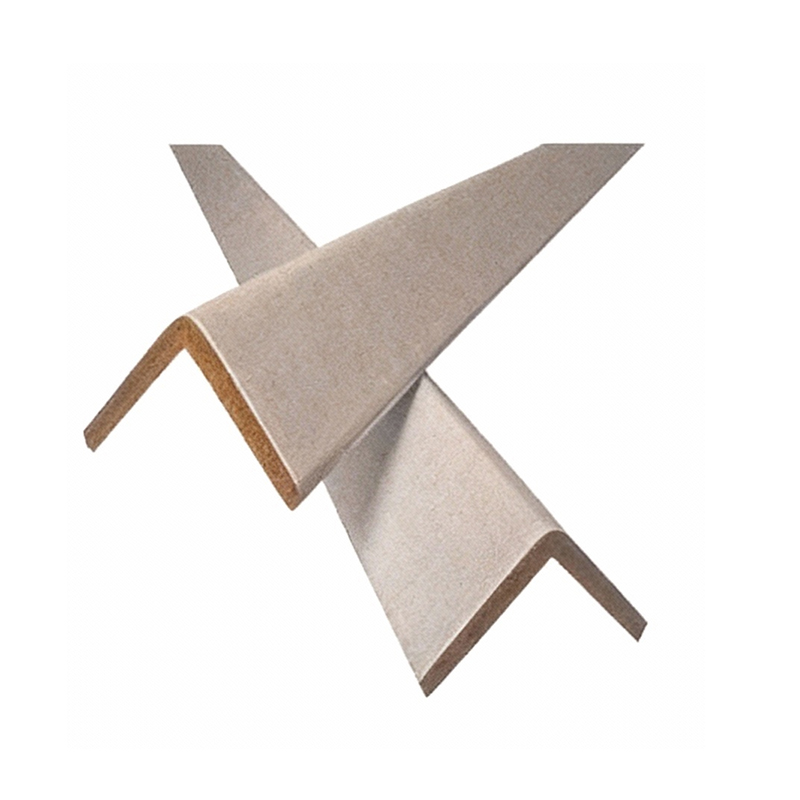
A folded U profile begins life as a flat laminate, usually three to seven layers of kraft paper bonded with starch adhesive - a combination that is repulpable and widely accepted in recycling streams. The laminate is formed into a U channel, and the two long open edges are turned back on themselves and glued. What you see at the rim is therefore a rolled, double-thickness lip rather than a raw cut edge.
That single detail separates a folded U from an open U, and it does three jobs at once. It stops the paper from delaminating and shedding fibre onto the goods. It presents a smooth radius to strapping and to the product. And it stiffens the profile so the protector holds its shape when someone pushes it onto a bundle one-handed, halfway up a loading bay.
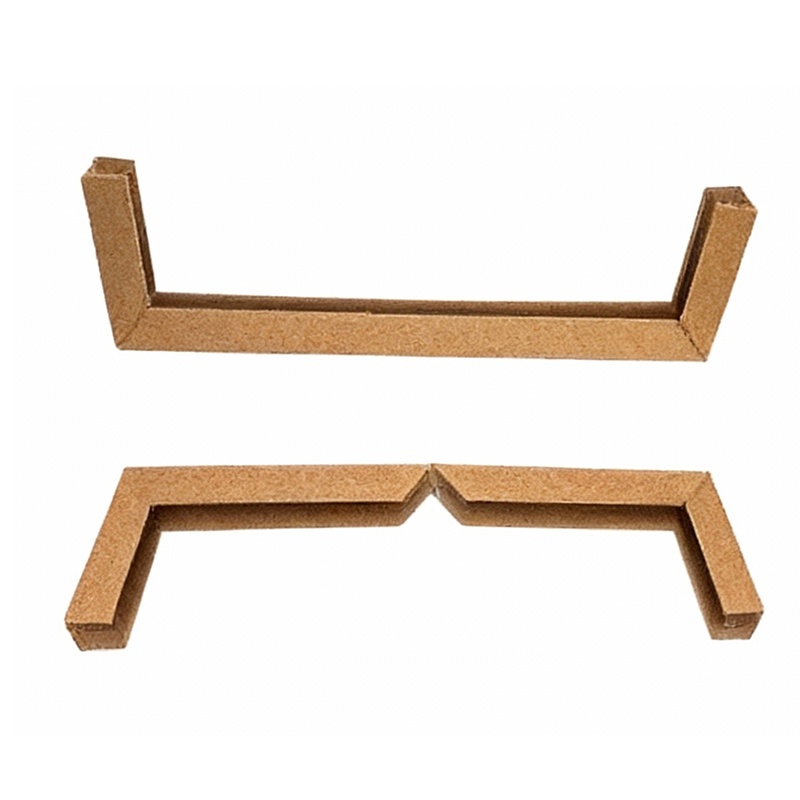
 Enclosing Folded U-Shaped Paper Corner ProtectorFull-wrap paper corner protector covers bundle ends and faces in one piece; recyclable, FSC-certified, customizable thickness and length for inspected loads.View Product →
The enclosing version goes a step further, wrapping around the end of a bundle so the corners and the face between them are covered in one piece. That extra coverage earns its keep when the goods are visible on arrival: furniture panels, printed board, anodised extrusions, brushed stainless tube. Where the customer will open the container and inspect, a wrapped end reads as care taken.
Why Geometry Beats Grammage
Buyers often ask for a heavier wall and assume thickness is everything. In our experience geometry does more work than grams. A 4 mm folded protector with a rolled rim resists crushing better than a 5 mm open protector of the same channel width, because the fold behaves like a flange and carries load around the corner instead of letting it concentrate along a single crease line.
Behaviour under strap tension matters just as much. Tight PET strapping on an open U tends to collapse the legs inward, and once the legs fold the protector is no longer doing anything useful. On a folded profile the rim holds the legs apart, so the strap sits flat against a broad paper face and the tension is distributed instead of cutting through.
There is a handling point as well. Folded edges are comfortable to push into position without gloves, which sounds trivial until you watch a crew fit two hundred protectors in an afternoon and start skipping the awkward ones.
Where Folded U Profiles Fit Best
- Pipe, tube and conduit bundles, where the U straddles a round profile and stops strapping from biting into the wall.
- Extruded profiles, window frames and track sections that need three faces protected in one movement.
- Coils, reels and cable drums, where the edge of the wrap is the most vulnerable part of the load.
- Doors, panels, sheet metal and stone slabs, especially where corners and the adjacent face must be covered together.
- Machinery frames and fabricated assemblies, where odd angles make a standard L protector awkward to seat.
- Timber boards and engineered wood, where a soft paper face prevents strap marking on finished surfaces.
Round loads deserve a note of their own. A folded U will straddle a pipe neatly, but if you are protecting a single round item with only light handling risk, a standard
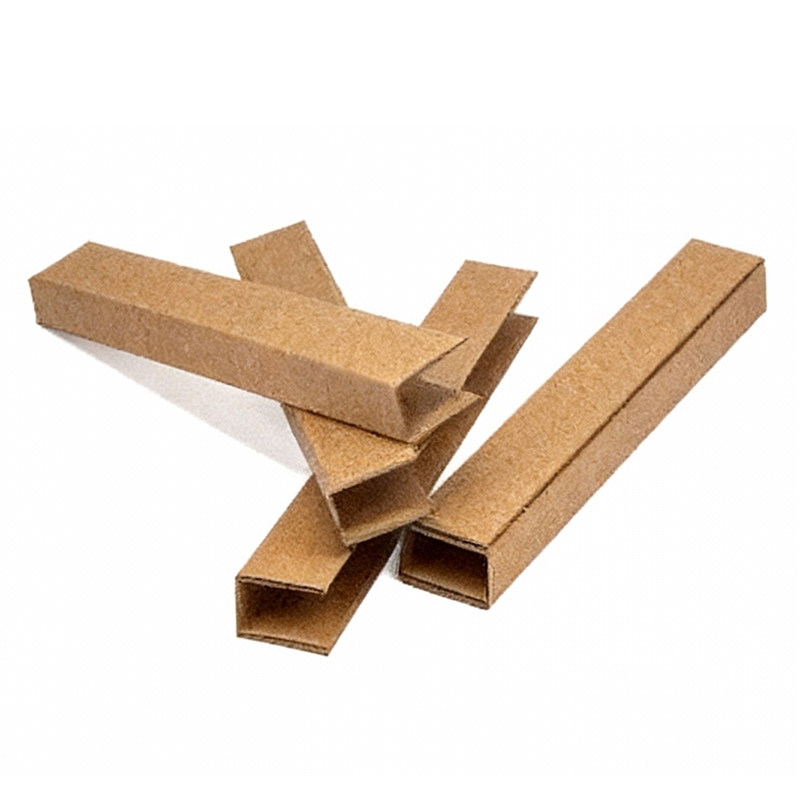
 U-Shaped Paper Corner Guard for Pipe PackagingPaper corner guard straddles pipes and cylindrical items for light-handling edge protection; FSC-certified, recyclable, with customizable slot width and length.View Product →
does the same job for less paper and less money. For coils and rolls, where the whole circumference of an edge is exposed, a closed profile is the better answer.
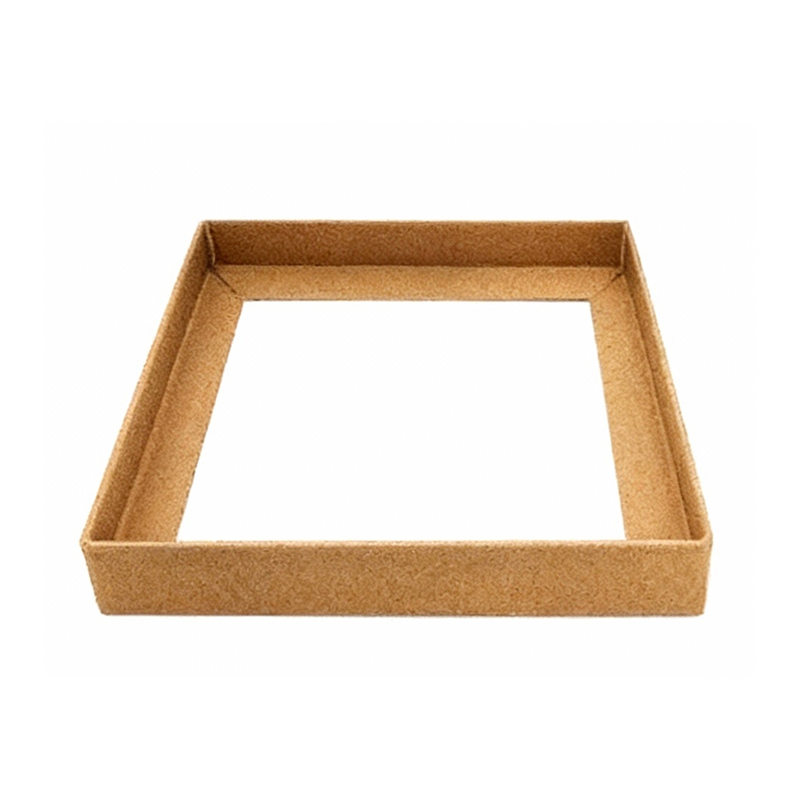
 Ring-Shaped Paper Protector for Coil and Roll EdgesClosed paper edge protector for coils and rolls; measure channel width, leg length, and wall thickness to match actual load dimensions.View Product →
Sizing: Channel Width, Leg Length and Wall Thickness
Three numbers decide whether a protector fits: the channel width, which must clear the material it straddles; the leg length, which sets how far protection reaches down each face; and the wall thickness, which sets how much strap tension and impact the profile absorbs. Measure the actual load, not the drawing - a nominally 50 mm board is rarely 50 mm once it has absorbed a little humidity.
| Channel width | Leg length | Wall thickness | Typical load | Usual fixing |
|---|---|---|---|---|
| 20-25 mm | 50 mm | 3 mm | Thin panels, small cartons | Tape or light PP strap |
| 30-40 mm | 60-80 mm | 4 mm | Timber boards, doors | PP or PET strap |
| 45-60 mm | 80-100 mm | 5 mm | Pipe bundles, extrusions | PET strap with buckle |
| 70-100 mm | 100-150 mm | 6-8 mm | Heavy coils, machinery edges | Heavy PET or steel strap |
A Practical Rule of Thumb
As a starting point, choose a leg length at least one and a half times the channel width, and step up one wall thickness whenever the packed weight exceeds roughly 500 kg per bundle or the load will be double-stacked. Then test it: fit one protector, strap the bundle as you would for real, and drop it twenty centimetres onto a hard floor. If the rim creases or the legs splay, go up a size. That two-minute test saves a great deal of claim paperwork.
Fixing the Protector to the Load
Strapping
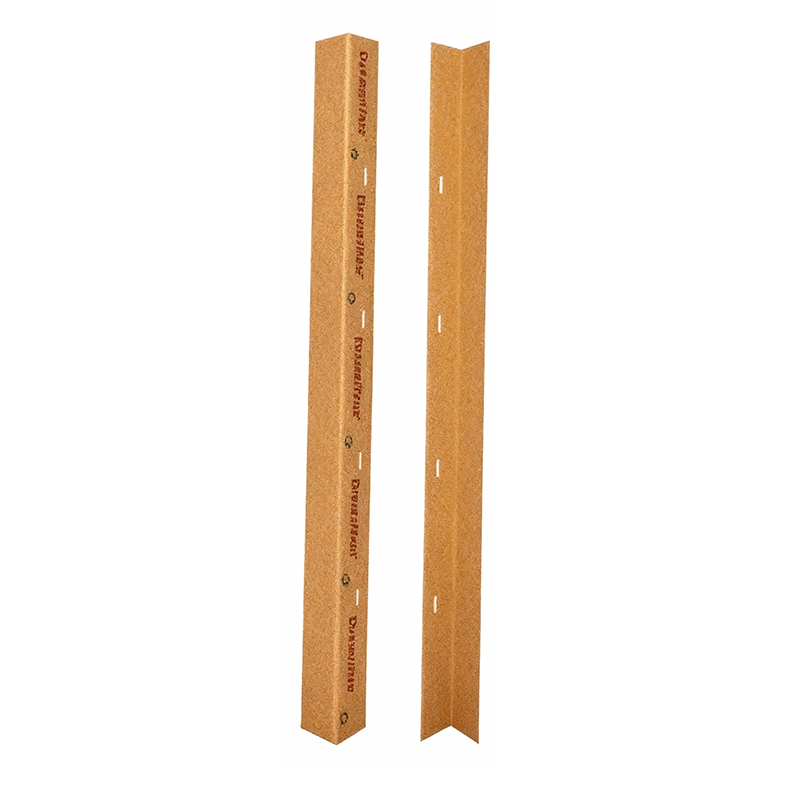
Strapping is the most reliable method, provided the strap runs over the flat of the protector rather than across the rounded rim. For bundles that will be strapped anyway, a perforated version with pre-punched slots lets the strap pass through the paper instead of pinching it against the goods, which keeps the profile square and stops it migrating during transit.
Tape, Adhesive and Nesting
For lighter loads, a decent acrylic tape or a hot-melt spot is enough, and it speeds up the line considerably. Where several protectors share a face, nest them end to end with a small overlap rather than leaving gaps; gaps are where strap tension concentrates and where damage starts. Moisture is the quiet enemy here, which is why we ship paper protectors with controlled humidity - a recent consignment of paper corner protectors shipped to the United States was packed to a moisture specification precisely so the profiles would not soften in a sea container.
Mistakes We See Most Often
- Measuring the product drawing instead of the finished pack, so the channel is a few millimetres tight and the legs buckle on fitment.
- Using a protector shorter than the strap contact area, which simply moves the crush damage a little further along the edge.
- Fitting protectors before the goods are dry, sealing moisture inside the wrap.
- Mixing folded and open profiles on the same pallet, which produces uneven stack height and unstable loads.
- Assuming a heavier wall compensates for a poor fit. It does not; a loose protector will always work its way free.
Paper, Recycling and Reuse
Folded paper protectors are usually the easiest part of a packaging specification to defend. They are repulpable, they carry no plastic film unless you ask for one, and they can be reused two or three times on internal movements before the rim softens. Several customers run them on outbound loads and then collect them at the destination for a second life on inbound raw material. If your buyers ask for evidence on recyclability or fibre sourcing, that conversation belongs in the specification stage rather than at the quotation stage.
Getting a folded U-shaped paper corner protector right is rarely about finding the cheapest profile on a list. It is about matching channel width, leg length and wall thickness to one specific load, then testing it once under real strap tension. Send us the edge profile and the packed weight, and we will tell you honestly whether a folded U is the right shape - and if a simpler or cheaper profile will do the job just as well, we will say so.
Related Products

PRODUCT
CONTACT INFO
-
 +86-137 7421 9489
-
 +86-021-67558008
-
 [email protected]
-
 No.769 ,23# building, Fengliang Road,Fengcheng town,Fengxian District,Shanghai,China
MOBILE QR CODE
Copyright © Shanghai We Pack Co., Ltd. All Rights Reserved.
Cargo Securing Solutions Cargo Transport Protection Solutions

